
Fifteen years after typhoon "Yolanda" killed thousands and devastated Eastern Visayas, certain sectors are ensuring that the memories - and the lessons - of the disaster will remain enshrined in the hearts of Waraynons.
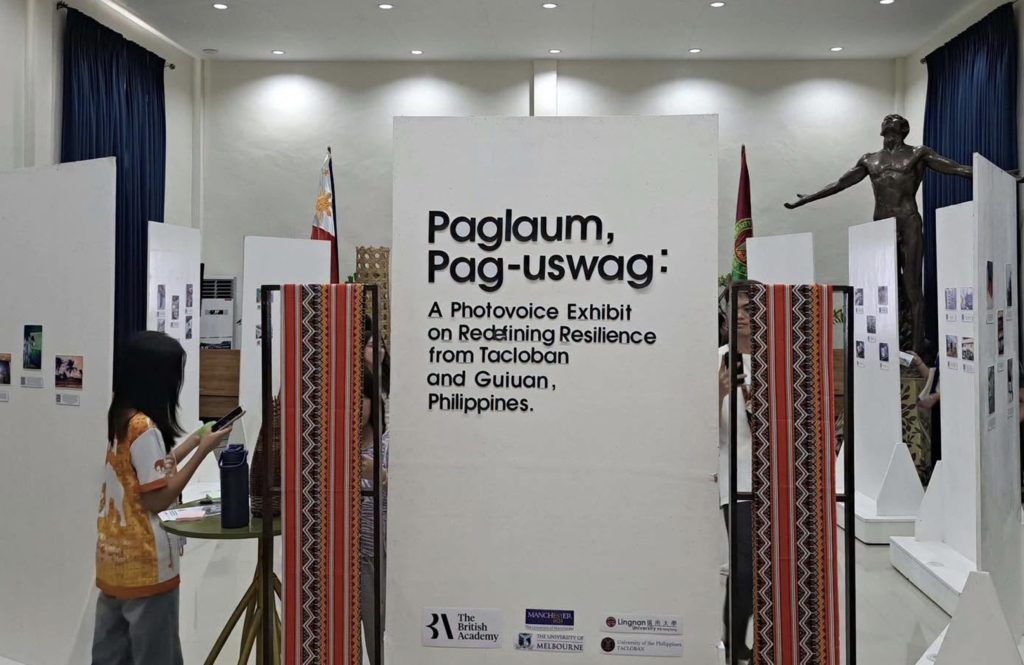
The University of the Philippines' Tacloban campus recently unveiled a comprehensive exhibit highlighting the collective and individual experiences of "Yolanda" survivors and victims in the run-up to the 15th anniversary of the disaster on November 8.
Dubbed "Paglaum, Pag-uswag: A Photovoice Exhibit on Redefining Resilience from Tacloban and Guiuan,” the exhibit showcased photographs, brochures, and poetry books highlighting the lived experiences and aspirations of community members in disaster situations.
“The term resilient is something that other people tell us we are. What makes this exhibit, as a whole, is that we can hear what resilience means from people on the ground. These are the visions of what life can actually mean despite the drastic climate changes we are experiencing and the difficulties we face,” Irene Tan, UP Tacloban vice chancellor for academic affairs told local media.
The exhibit marked the culmination of the AHON project, or “AHON: Stories and Imaginaries of Resilience and Progress in a Changing Climate,” a research project led by Dr. Angela Mae Minas of the University of Manchester in England, in partnership with several universities, including UP Tacloban.
“Ahon,” which means “to rise up,” seeks to create spaces for grassroots perspectives and capture communities’ visions and aspirations of a “good life” to help chart a path toward climate-resilient development.
As disasters continue to affect communities across the Philippines, the project shifts the focus to what hope (paglaum) and progress (pag-uswag) mean to people directly affected by these events.
Students and personnel explored the exhibit and shared their thoughts about it through a freedom wall and a QR code for feedback.
Sigmund Fletcher Tarrayo, a faculty member of UP Tacloban’s Department of Economics and Political Science, expressed hope that opening the exhibit to the public would spark meaningful conversations on advancing and strengthening local emergency preparedness and disaster mitigation strategies.
“This is an appeal to the national government that not all disaster risk reduction management plans should be a one-size-fits-all [or a generalized intervention package], it should be localized and contextualized, and more importantly, it should be in response to the needs of the community,” Tarrayo said.
As Eastern Visayas learns to move forward from the painful memories of "Yolanda," officials stressed that the AHON project highlights lived experiences, measures progress, and integrates local realities into public policies that can help shape how communities adapt to present and future disasters while building trust within the communities.
(With report from PIA/OpinYon News Team)
#OpinYon8News #Yolanda