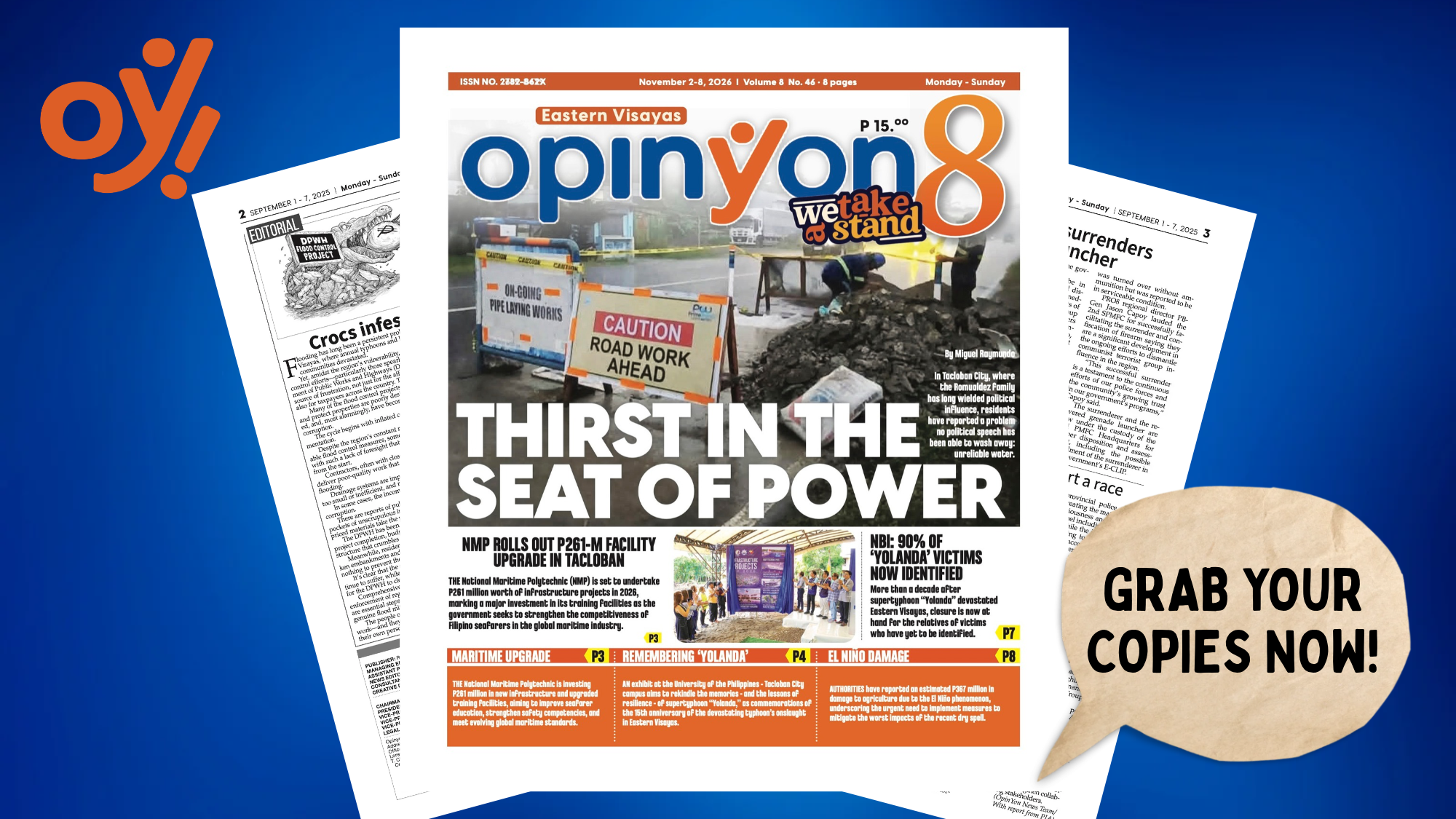

In Tacloban City, where the Romualdez family has long wielded political influence, residents have reported a problem no political speech has been able to wash away: unreliable water.
Low pressure. Interrupted supply. Leaking pipes. Bills that keep coming even when water does not.
The numbers raise harder questions than the complaints alone.
In May 2025, the Leyte Metropolitan Water District (LMWD) moved to end its 25-year joint venture with PrimeWater Infrastructure Corp., citing persistent service failures and unmet commitments.
Signed in 2019, the agreement covered Tacloban and neighboring communities, with PrimeWater committing ₱6 billion in investments.
Yet, according to the Philippine News Agency, reported water pressure averaged just 2 pounds per square inch (PSI), against a 10-PSI benchmark cited by the district.
Customer complaints described daytime interruptions severe enough to force some residents to collect water overnight.
For households, that means additional work and expense. For small businesses, it threatens income. For hospitals and schools, unreliable supply can compromise sanitation and basic operations.
One reported case illustrates the cost. Food vendor Arlinda Toribio told PNA that she paid approximately ₱1,300 monthly for water but stayed awake at night to collect enough for cooking and washing dishes.
This is more than a customer-service failure. It is a question of whether investment commitments translated into measurable improvements.
Where did the water go?
The supply problem predates the contract dispute.
In November 2024, PNA reported that LMWD faced a daily supply deficit of 4.2 million liters.
A ₱500-million transmission-line project was expected to add 10 million liters daily, serving northern resettlement communities and downtown Tacloban. Completion was targeted for early 2025.
But building infrastructure is not the same as delivering reliable water. Supply depends on functioning sources, treatment facilities, transmission lines, distribution networks and adequate pressure at the consumer's tap.
In May 2025, the Philippine Information Agency reported that LMWD's review identified undelivered contractual commitments, aging and leaking pipelines, non-revenue water and inadequate long-term investment.
Non-revenue water is particularly important as it refers to water produced but lost or otherwise not billed because of leaks, illegal connections, metering inaccuracies or other causes.
Every avoidable loss puts pressure on a system already struggling to meet demand.
The main questions now are how much water is produced daily? How much reaches paying customers? How much is lost?
Which promised investments were completed, and what improvements did they deliver?
Without current, independently verifiable figures, claims of recovery, or in this case, continuing deterioration remain difficult to assess.
In addition, Tacloban's political importance makes scrutiny unavoidable.
The Romualdez family has held prominent local and national positions, but their political influence alone shows no evidence that the family had done enough to address the water crisis from the consumers' end.
The legitimate issue here is accountability: what have elected officials done to ensure reliable service, enforce contracts and protect consumers?
The dispute itself remained unresolved up until today, wherein reports said LMWD was evaluating its legal options following a reported change in PrimeWater's ownership. The district had issued a notice of material breach in May 2025 and a notice of intent to pre-terminate the agreement in July 2025.
However, a notice of intent is not a completed termination. The contractual dispute still failed to address the current issue on dry taps and a meter that continues to run.
Up to this date, PrimeWater still handles the day-to-day water distribution system as the full contract has not yet been legally or fully dissolved.
Sources say that as of mid- 2026, negotiations and official assessments are still actively underway to finalize the exit.
LMWD and PrimeWater should publish updated production figures, service-interruption records, water-loss rates, investment expenditures and a clear account of corrective measures.
Regulators and local officials should ensure that consumers are not left paying for a service they cannot reliably access.
Tacloban's experience should also prompt a wider regional review. Eastern Visayas needs comparable data on water access, continuity, quality and affordability instead of isolated announcements about projects.
Water security is measured at the tap, not at the groundbreaking ceremony.
In the seat of political power, residents should not have to stay awake to secure tomorrow's water. They deserve measurable results, transparent billing and officials prepared to answer for them.
#OpinYonNews #CoverStory