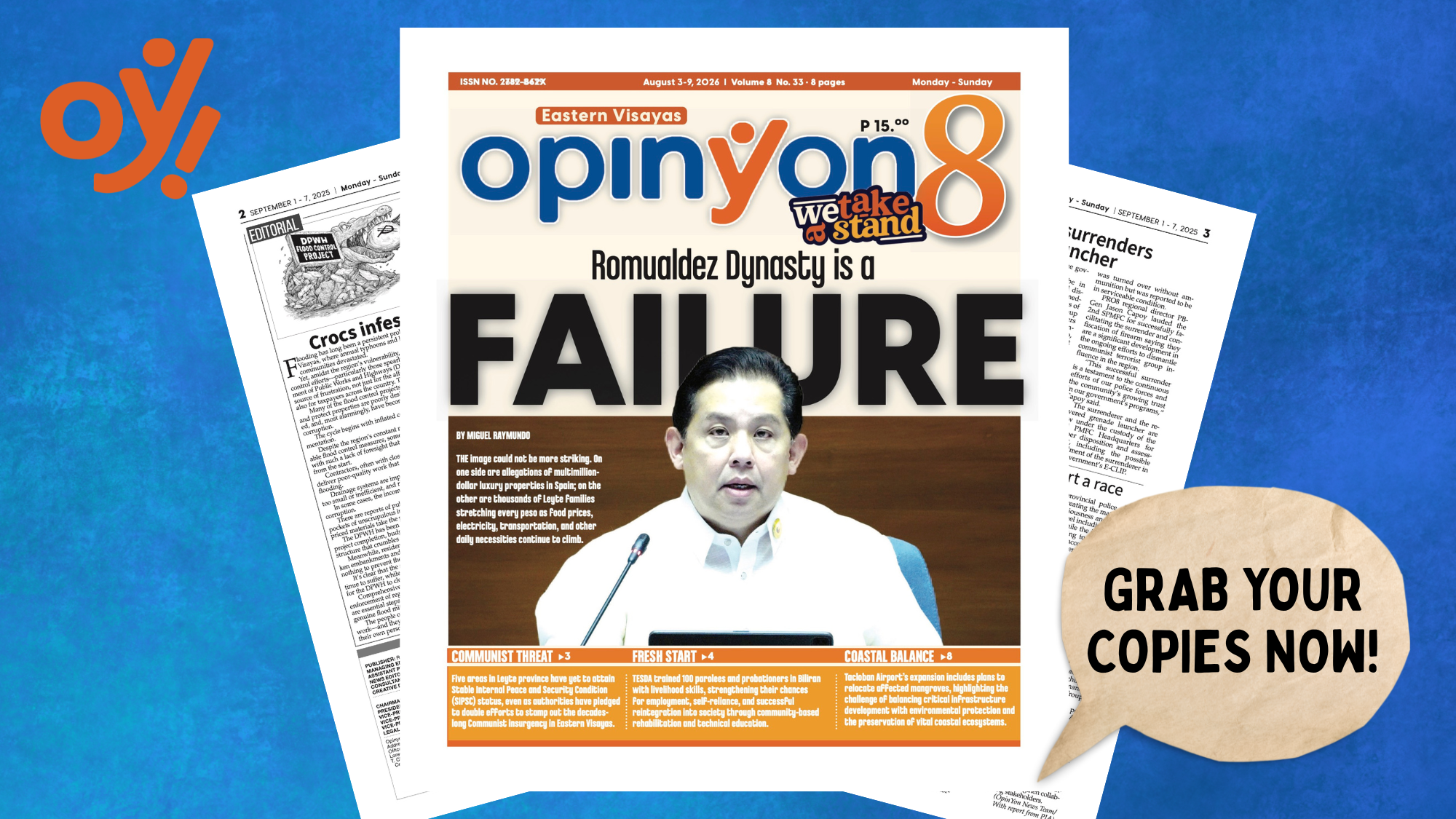

The image could not be more striking. On one side are allegations of multimillion-dollar luxury properties in Spain and questions raised by the Office of the Ombudsman over the wealth and transactions allegedly linked to powerful political figures.
On the other are thousands of Leyte families stretching every peso as food prices, electricity, transportation, and other daily necessities continue to climb.
Whether the allegations ultimately withstand legal scrutiny remains for the courts and investigative bodies to determine. Those named are entitled to due process and the presumption of innocence.
But politically, the contrast has become impossible to ignore.
For many Leyteños, the issue is no longer simply about alleged properties abroad.
It is about whether decades of political power have translated into meaningful progress at home.
The Office of the Ombudsman recently launched a preliminary investigation involving House Speaker Martin Romualdez in connection with allegations arising from flood-control projects. Separate reports, including those published by Bilyonaryo.com, have also drawn attention to allegations involving luxury real estate in Spain allegedly connected through corporate entities linked to the Romualdez family.
Those claims remain allegations and have not been conclusively established in court.
Yet regardless of the legal outcome, the revelations have reignited an old question that has echoed across Leyte for generations.
How can one of the Philippines' most politically influential provinces still be struggling economically after decades under the leadership of one of its most powerful political families?
The numbers paint a sobering picture.
According to the Philippine Statistics Authority, inflation in Leyte and Tacloban has remained elevated, with food, transportation, and utilities continuing to strain household budgets.
The purchasing power of the peso has steadily declined over recent years, leaving families able to buy less with the same income.
For minimum-wage earners, every increase in the cost of rice, fuel, or electricity means difficult choices at home.
Economic growth has also failed to erase longstanding structural challenges.
Many municipalities continue to depend heavily on agriculture and fishing.
Higher-paying private-sector jobs remain limited, prompting thousands of young professionals to leave Leyte each year in search of better opportunities in Metro Manila or overseas.
While public infrastructure has improved in several areas, critics argue that sustained industrial investment capable of generating long-term employment has lagged behind.
Supporters of the Romualdez family point to billions of pesos in national government investments following Super Typhoon Yolanda, new roads, bridges, flood-control systems, schools, and health facilities.
They argue that many development projects would not have materialized without strong national representation and that economic difficulties are part of broader national and global challenges rather than failures of local leadership alone.
Critics, however, say infrastructure alone cannot be the measure of success.
They argue that after generations of political dominance, Leyte should have become a regional economic powerhouse and not a province where many households remain vulnerable to inflation, underemployment, and outward migration.
That debate has grown louder as reports of alleged overseas luxury assets circulate alongside stories of ordinary families struggling to afford basic necessities.
It is a contrast that resonates emotionally, even as the allegations themselves remain subject to investigation and legal proceedings.
Political analysts note that public trust is shaped not only by legal findings but also by perceptions of fairness and shared prosperity.
In provinces dominated by political dynasties, voters increasingly ask whether the benefits of long-held influence have reached ordinary citizens or remained concentrated among a privileged few.
The Ombudsman's investigation will determine whether sufficient evidence exists to support the allegations now under review.
But outside the courtroom, another verdict is already being debated in public markets, barangay halls, transport terminals, and neighborhood stores across Leyte.
For many residents, the central issue is no longer who holds power.
It is whether that power has delivered the economic transformation repeatedly promised over the years.
The allegations surrounding overseas wealth may ultimately be resolved through the legal process.
The question of whether Leyte has fulfilled its economic potential after decades of influential leadership will be answered instead by the lived experience of its people.
And for many families still struggling to keep pace with rising prices and absence of income opportunities, that answer remains painfully unfinished.
What appears in the horizon is that the Romualdez dynasty was, and is, a failure and a big lie.
#Opinyon8news #Coverstory #Romualdez