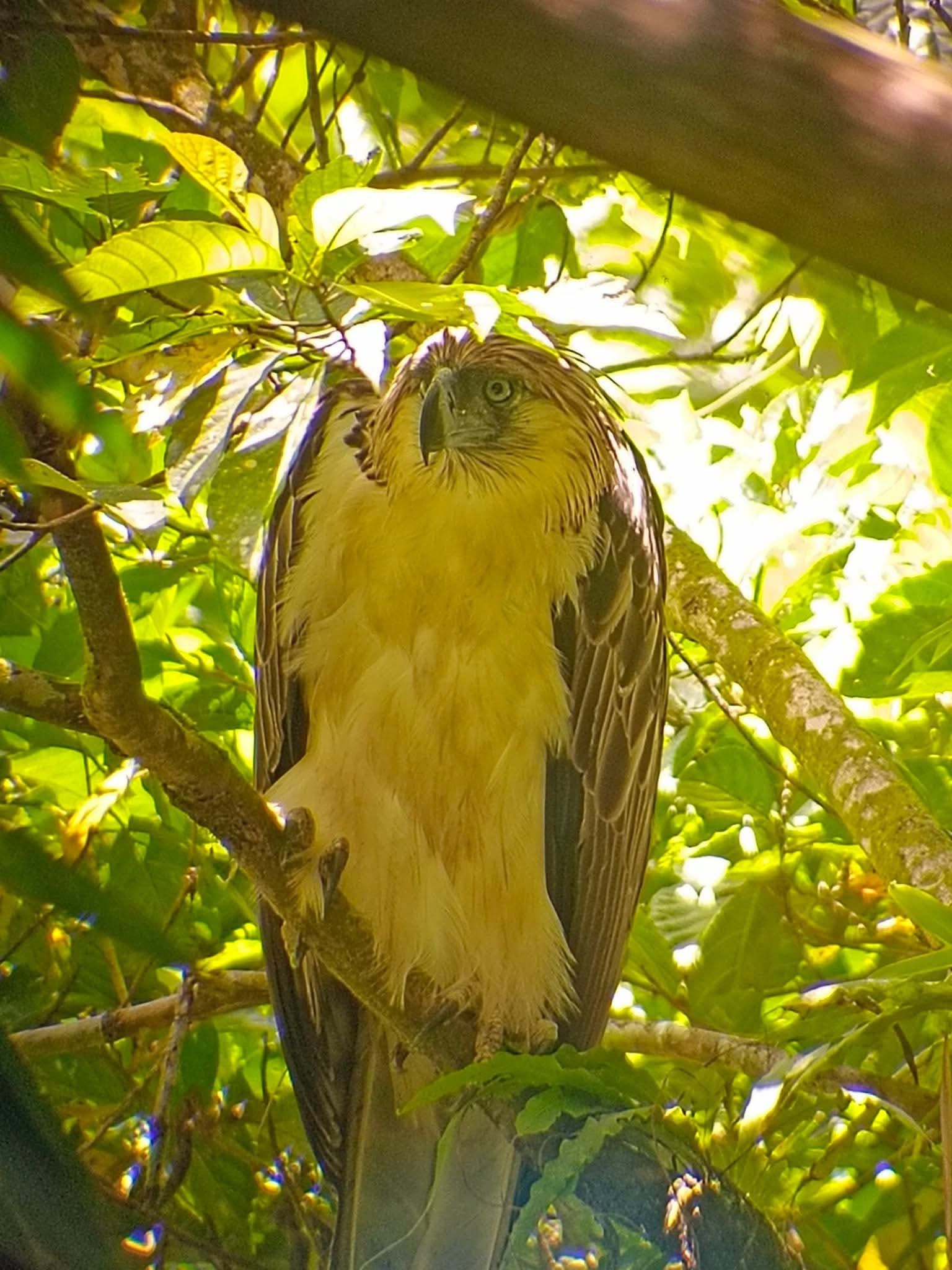

More than 10,300 hectares of forestland in Leyte have been identified as potential release sites for the critically endangered Philippine Eagle, but researchers say habitat suitability alone will not guarantee the species' successful return.
A study published in the June 2026 issue of the Philippine Journal of Science identified 10,320 hectares across the Anonang-Lobi Mountain Range in Central Leyte and Mt. Nacolod in Southern Leyte as potential habitats for the country's national bird.
Of the total, 9,554 hectares were classified as highly suitable, while 766 hectares were rated suitable, subject to further assessment and conservation measures.
The research, conducted by scientists from the University of the Philippines Diliman and the Philippine Eagle Foundation (PEF), used geographic information systems to assess forest cover, elevation, terrain, human settlements, roads and other factors that could affect the birds' survival.
The identified areas cover portions of Ormoc City, Baybay City, Kananga, Jaro and Burauen, as well as Silago, Mahaplag and Sogod in Southern Leyte.
The study's findings come as conservation groups continue efforts to establish a breeding population in Leyte. Two eagles, Carlito and Uswag, were released in Burauen in June 2024, followed by three more in 2025.
The five birds form part of an initial 16-eagle reintroduction plan, with the long-term target of establishing six breeding pairs in the Anonang-Lobi range.
The challenge, however, goes beyond finding suitable forest areas. Philippine Eagles require extensive territories to hunt and breed, while their slow reproductive cycle makes population recovery particularly difficult. The species typically produces only one egg every two years, limiting how quickly numbers can grow.
Human activities also remain a major threat. Deforestation, hunting, illegal activities and power-line hazards can undermine conservation efforts even in areas identified as suitable habitats.
In May 2026, the Department of Environment and Natural Resources, Philippine Eagle Foundation and Philippine National Police formalized a partnership to strengthen eagle protection and forest conservation in Leyte and Samar.
Researchers emphasized that the mapped areas still require ground validation to establish actual habitat conditions and identify threats that geographic data may not capture. Better information on power-line networks and stronger community participation will also be necessary.
The 10,320 hectares offer a starting point, not a guarantee of recovery. The real measure of success will be whether Leyte can protect enough connected forest to sustain a breeding population long after the initial releases.
#OpinYon8News #WeTakeAStand