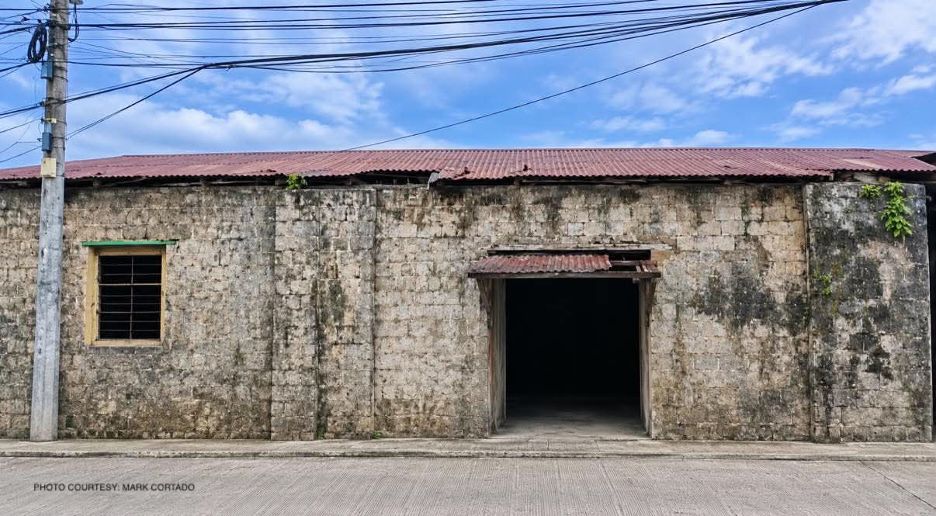

The city government of Borongan, Eastern Samar has taken steps to preserve a historic relic of the Spanish occupation of the Philippines - the century-old Almacen de Borongan, also known as Tabacalera.
This, after the Sangguniang Panglungsod approved, on the third and final reading, an ordinance providing for the protection, conservation, and adaptive reuse of the historic structure during its 65th regular session.
With the resolution, the structure is now poised to become a city heritage museum.
The building, dating to around 1880, originally served as a tobacco storage facility during the Spanish colonial period.
The term almacen is a Spanish word for warehouse, while tabacalera refers to an establishment associated with the tobacco trade.
Its coral-stone foundation reflects the architecture of old Spanish-era trading structures and reminds people of Borongan’s early commercial activities.
Before World War II, a Chinese migrant entrepreneur known locally as “Sewa” acquired the property and later used it as a warehouse for copra and other merchandise.
The Laohoo family, descendants of Sewa, eventually donated the historic property to the city government, opening the way for its preservation and development as a public heritage site.
City Councilor Ma. Rozene Daza, chairperson of the Committee on Tourism, Culture, and the Arts, described the ordinance as a milestone in the city’s heritage preservation efforts.
“This ordinance is a historic milestone for our local legislation,” Daza said, stressing that sustainable urban development must go hand in hand with heritage preservation.
She said the measure provides legal protection and funding for the Almacen, helping position Borongan as a cultural tourism destination in Eastern Visayas.
National support
The City Government of Borongan has partnered with the National Commission for Culture and the Arts (NCCA) to ensure that the restoration follows appropriate conservation standards.
NCCA Conservation Architect Joel Vivero Rico inspected the structure in Barangay Sabang South and found its original coral-stone foundations structurally sound despite years of exposure to coastal conditions.
Mark Lucio Cortado Jr., city population and development officer and head of the LGU’s Cultural Heritage Unit, said the city is working with the NCCA on a Conservation Management Plan to guide the building’s restoration and future use.
“The structural soundness of the Tabacalera’s foundation is a gift from our ancestors,” Cortado said.
He added that the planned museum will serve as a learning space where students, historians, and local artists can explore the artifacts, stories, and historical figures that shaped Borongan and Eastern Samar.
Mayor Jose Ivan “Dayan” Agda welcomed the NCCA’s technical support, emphasizing that the project aims to preserve the city’s identity and pass its history on to future generations.
“Preserving the Almacen de Borongan is not just about saving an old layout of stones; it is about anchoring the soul and identity of our city,” Agda said.
He said converting the old Tabacalera into a public museum would give younger generations a tangible connection to their heritage while ensuring that the city’s development remains rooted in its history.
Declaring the Almacen de Borongan a City Cultural Property is part of the local government’s efforts to protect its historical landmarks and strengthen cultural tourism.
(With report from PIA/OpinYon News Team)
#Borongan #Samar #OpinYon8News