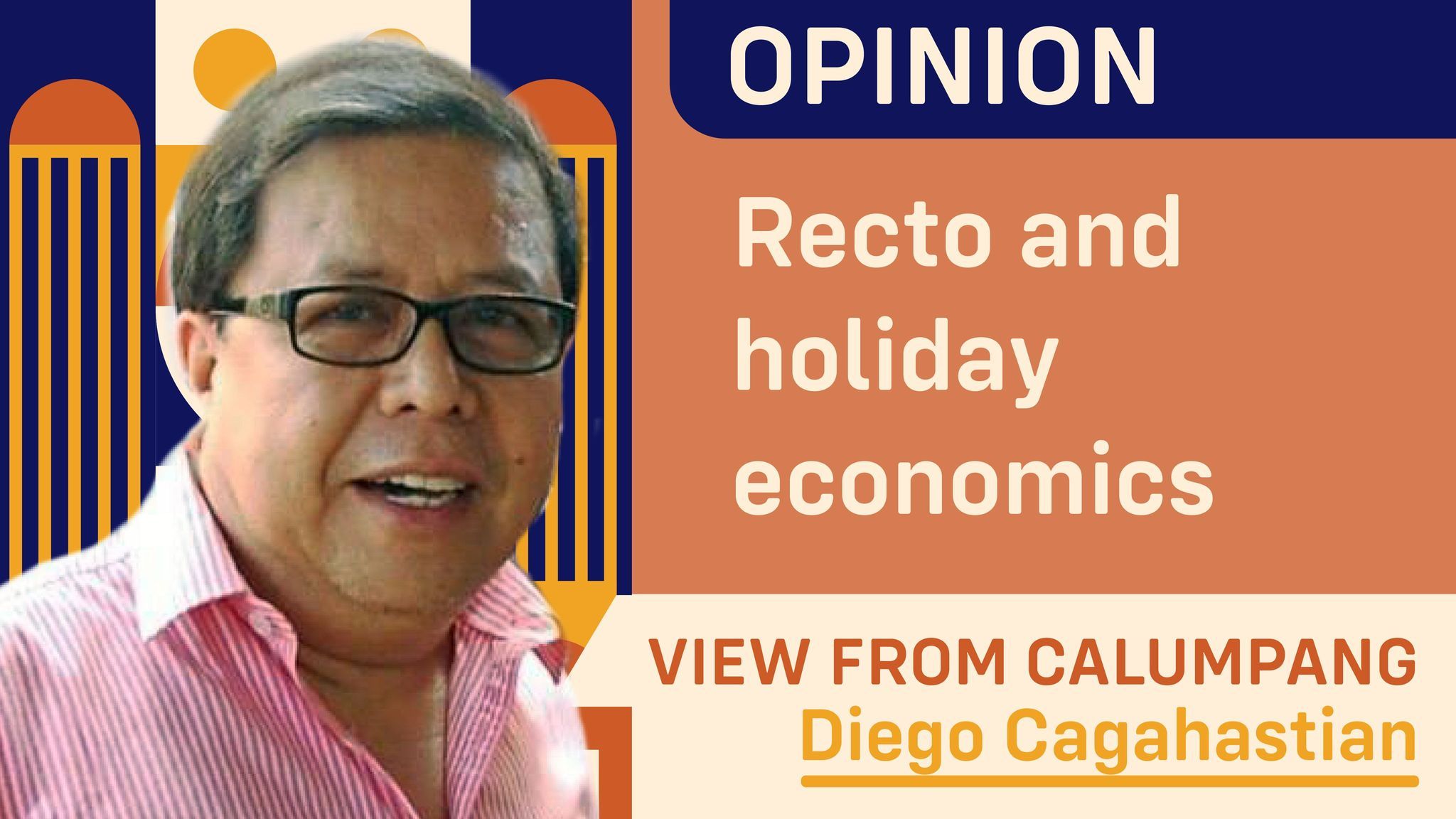

Many Filipinos are happy that former Finance Secretary Benjamin Diokno is leaving the Department of Finance and will be replaced by former senator and congressman Ralph Recto. Among those who welcomed the change is Senate President Juan Miguel Zubiri who called Recto a “dear friend.”
Zubiri said, “In the Senate, we always regarded him as the resident numbers genius. This was not just for his mathematical ability, but more importantly for his ability to immediately see the big picture implications of these numbers. I have no doubt that he will be a good Finance Secretary, who will continue to push the country along the road to greater economic prosperity.”
Outgoing finance secretary Diokno and the rest of the economic team also expressed their words of warm welcome to Recto. These early welcomers are Secretary Amenah Pangandaman of the Department of Budget and Management and Secretary Arsenio Balisacan of the National Economic and Development Authority (NEDA).
Even the local business community—or, at least some business leaders—are happy that Recto is joining the cabinet. They include Enunina Mangio, president of the Philippine Chamber of Commerce and Industry (PCCI) and Cecilio K. Pedro, president of the Filipino Chinese Chambers of Commerce and Industry, Inc. (FCCCII).
Economy not rosy
Recto will be coming in at the Department of Finance this month, in a manner described by some as “hitting the ground running.” Despite the rosy picture on the PH economic that Diokno painted, we all know that it isn’t true. And Recto will inherit from him a number of real headaches. And we can only wish Recto well.
One small matter that the new secretary of finance should look into is the so-called holiday economics. The PCCI said the government should not add holidays to the existing calendar this year as this could disrupt operations and add cost to business.
In a statement, PCCI president Enunina Mangio said the group supports the promotion of long weekends but this should be balanced without increasing the number of total holidays. There are 18 scheduled regular holidays this year of which eight are special non-working holidays.
PCCI made this call as government has the propensity to declare as holiday certain dates that are sandwiched between a holiday and a Saturday or a Sunday.
Unscheduled holidays tend to not just disrupt operations but also to add cost to companies which have to pay overtime or holiday pay to their workers. There will be at least four long weekends this year.
For a consumption-driven economy like the Philippines, long weekends provide benefits such as more opportunities for families for their recreation and social interaction. Long weekends also encourage domestic travel and potentially increases tourism expenditure.
Long weekends this year include March 28 (Maundy Thursday) until April 1 (Easter Sunday).
March 28 (Maundy Thursday) and March 29 (Good Friday) are regular holidays, while March 30 (Black Saturday) is a special non-working day. There will also be a long weekend from August 24 (Saturday) to Aug. 26 (Monday), which is National Heroes Day.
Next long weekend is from Nov. 1 (Friday) to Nov. 3 (Sunday). November 1 and 2 are both special non-working days, in observance of All Saints’ and All Souls’ Days. Another long weekend is Dec. 28 (Saturday) to Dec. 31 (Tuesday), since Dec. 30 (Rizal Day) is a regular holiday while Dec. 31 is a special non-working day.
Happy long weekends!
#ViewFromCalumpang #DiegoCagahastian #RectoAndHolidayEconomics #RalphRecto #BenjaminDiokno #DepartmentOfFinance #Zubiri #OpinYonColumn #OpinYon #WeTakeAStand