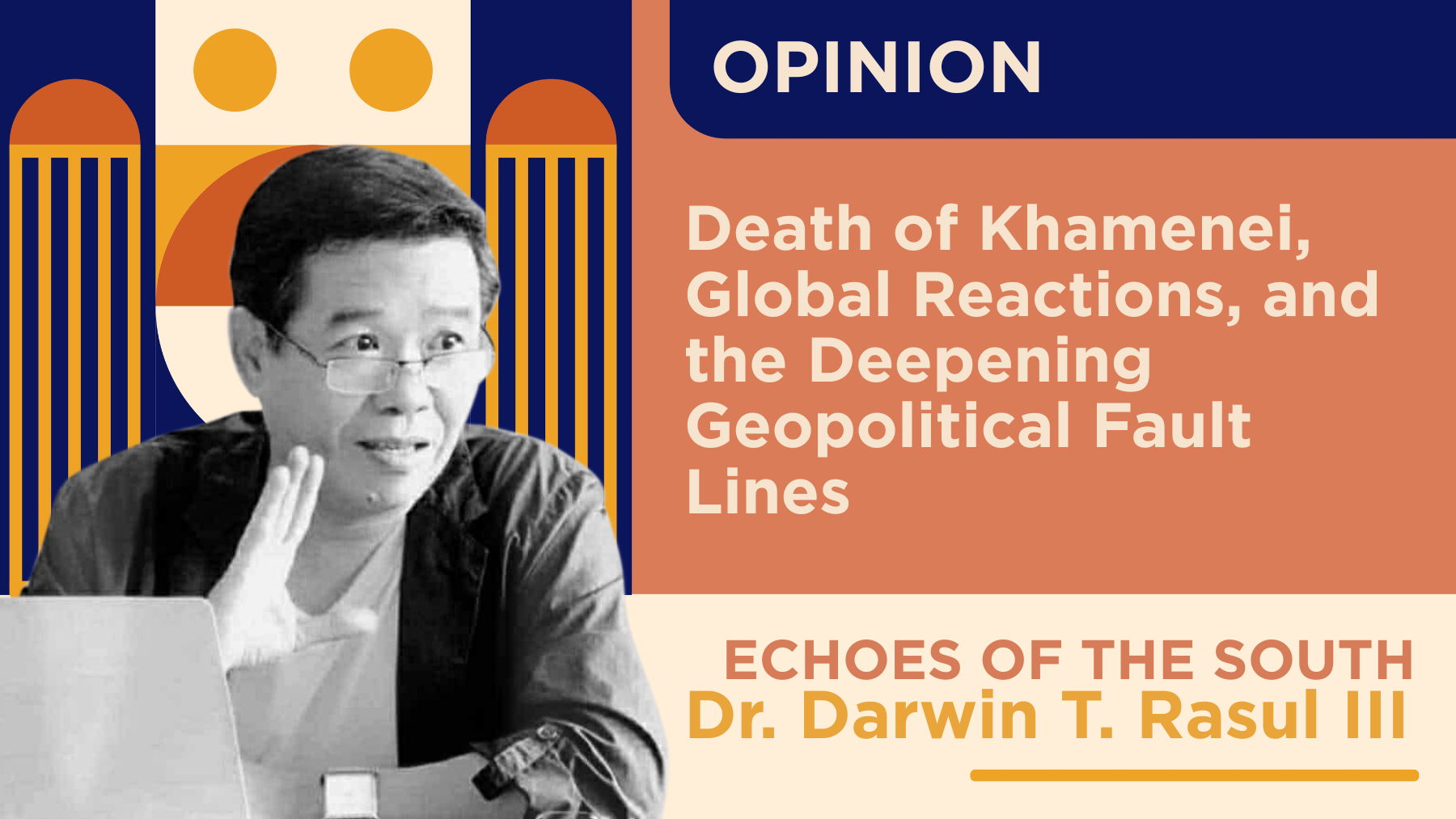

Iranian state media and several international reports confirm that Supreme Leader Ayatollah Ali Khamenei was killed in joint U.S.–Israeli strikes on February 28, 2026, along with senior officials and members of his family. Tehran immediately declared national mourning and vowed decisive retaliation, while leaders around the world urged restraint.
The escalation has roots in decades of mistrust and strategic rivalry. The United States and Israel have long coordinated against what they describe as Iran’s destabilizing actions, particularly its ballistic missile program, nuclear ambitions, and support for armed groups across the Middle East. Israel sees Iran as an existential threat, while Washington frames its policy as deterrence against nuclear proliferation and regional instability.
This strategic alignment reflects both security considerations and the consequences of leadership prone to impulsive rhetoric, authoritarian tendencies, and instability, factors that can intensify crises. From Tehran’s perspective, years of sanctions, covert operations, and diplomatic isolation demonstrate a persistent effort to undermine Iran’s political system.
Russian President Vladimir Putin condemned the killing as a “cynical violation” of morality and international law, describing it as a direct affront to sovereignty and basic human norms. China issued a strong condemnation, calling the strikes a serious violation of Iranian sovereignty and demanding an immediate halt to military operations, while urging U.S.-aligned Arab states to reconsider further involvement. North Korea also denounced the strikes as illegal aggression driven by hegemonic ambitions. These responses from Moscow, Beijing, and Pyongyang signal growing international support for Iran, positioning these powers as diplomatic and strategic counterbalances to U.S.–Israeli operations, dubbed “Operation Epic Fury,” according to AP News.
The sectarian divide deepens the crisis. The Sunni–Shia split, rooted in early Islamic history, now intersects with modern politics. Most Gulf Arab states are Sunni-led, while Iran remains the preeminent Shia nation. Many Sunni governments, including Saudi Arabia, Bahrain, Qatar, Kuwait, the United Arab Emirates, and Jordan, view Iran’s support for Shia communities and militias as threatening.
Their military alignment with the United States, hosting bases from Bahrain’s Fifth Fleet headquarters to Qatar’s Al Udeid, and installations across Kuwait, UAE, Saudi Arabia, and Jordan, exposes the tension between strategic interests and Muslim solidarity. Critics argue these states have prioritized Western partnership and regime security over unity in the Muslim ummah, a choice widely viewed across the Islamic world as both political and moral failure.
Iran’s allies complicate the picture further. Russia and China have strengthened economic and political ties with Tehran as a counterbalance to Western influence, while North Korea has expressed rhetorical support and reportedly maintained technical cooperation. While none has committed to direct military intervention, their statements highlight the potential for escalation. Should Moscow, Beijing, or Pyongyang provide military assistance, a regional conflict could escalate into a confrontation involving major powers, sharply raising the risk of miscalculation. The Times of India notes that global observers are closely monitoring these dynamics.
Within Iran, the impact is immediate and powerful. Reports of Khamenei’s death, including family members, have sparked massive rallies of grief and anger, cutting across political lines. With leadership succession uncertain and public outrage swelling, the question becomes urgent: can negotiated restraint still be achieved, or does a broader war loom in the coming days? Disruption around the Strait of Hormuz, which handles roughly one-fifth of global seaborne oil, raises the stakes further, threatening energy security and global economic stability.
From a political science perspective, patterns are familiar: states align to counter threats, major powers defend influence, and historical memory shapes public support for decisive action. Once deterrence and escalation logic take hold, events often acquire momentum independent of individual decisions. Iran’s combination of national unity, regional alliances, and global diplomatic backing positions it as a resilient actor, and how it responds will reverberate far beyond the Middle East.
Dr. Darwin T. Rasul III is a prolific writer, book author, and editorial opinion columnist with extensive experience in governance and political consultancy. He started his career as a legislative researcher and political consultant for some senators in the Senate of the Philippines from 1988 to 1992. He later served as ARMM's cabinet assistant secretary for seven years from 2012 to 2019, during which time he was also editor-in-chief of its official publication. From 2021 to 2024, he was engaged internationally by the European Union (EU), Germany, as a distinguished expert-consultant, writing and annotating legislative briefs of all laws passed by the Bangsamoro Transition Authority (BTA-BARMM). He is currently the chief editor of the Bangsamoro Free Press.
#WeTakeAStand #OpinYon #OpinYonNews #EchoesOfTheSouth