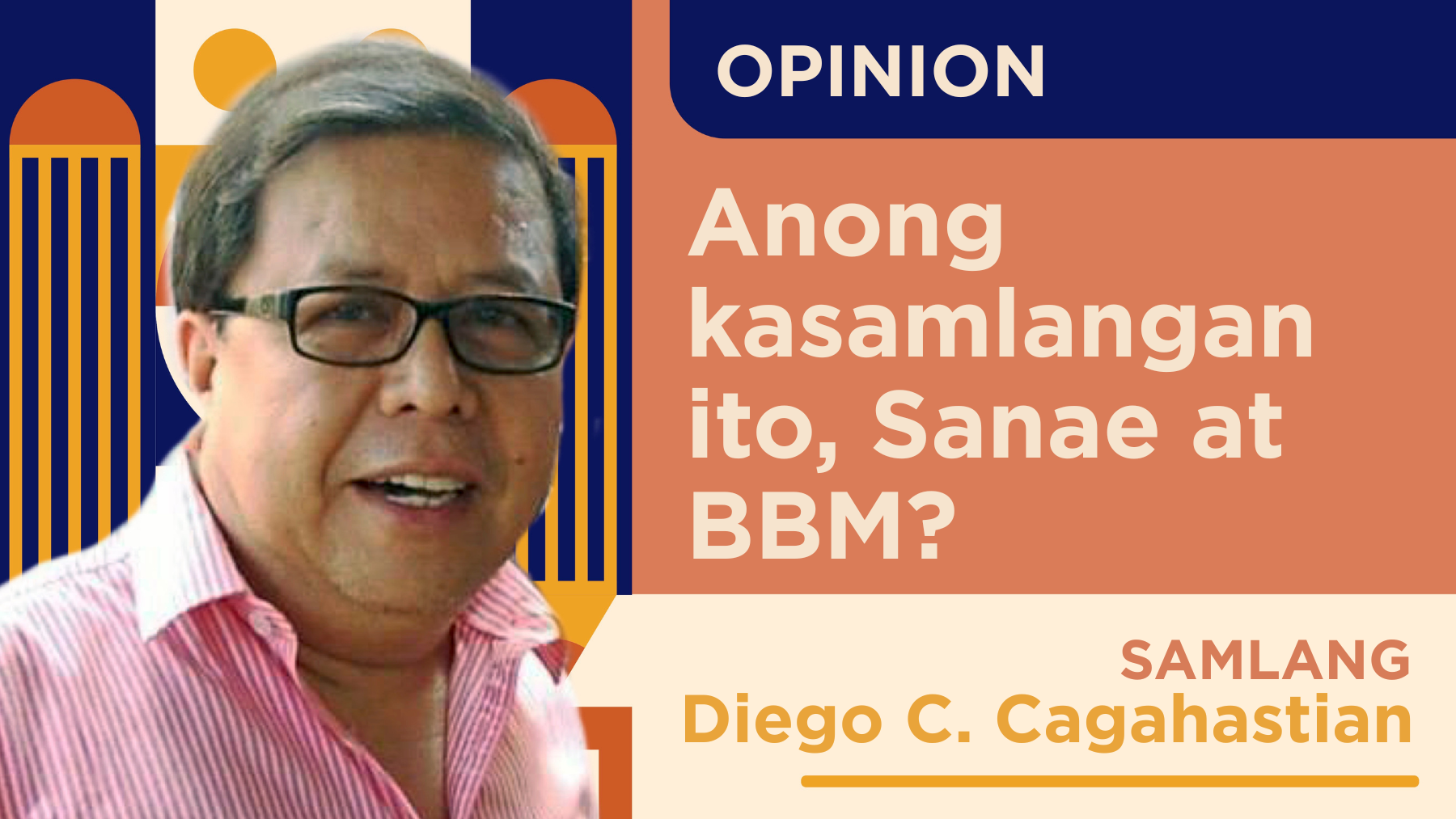

While President BBM and Japanese Prime Minister Sanae Takaichi are gloating over the “accomplishments” of the recent state visit of the Philippine President to Tokyo, the other countries in the Southeast and East Asian regions are feeling concerned.
China, for one, has condemned the visit and aired its fierce opposition to agreements made, saying the maritime border talks, defense collaboration, exchanges of military information, sales of armaments and grey ships, and joint stance on regional security as “illegal and a deliberate escalation of tensions.”
The said tensions are in the South China Sea and the Taiwan Strait, and clearly had the imprimatur of the United States. In fact, the US hand has been deeply dipping into all major political moves of Japan and the Philippines lately.
Marcos sees Japan now as a defense partner, whereas just a generation ago, his father President Ferdinand Edralin Marcos and the guerrillas were fighting the Japanese invaders.
Look how America changes mindsets, culture, and political history in the case of the Marcos father-and-son. Bongbong now abets the firing of US-made missiles from Bicol to Nueva Ecija during the last Balikatan war games—and by Japanese troops at that!
This is sad for many of us Quezonins because the province of Tayabas, which later was named after President Manuel L. Quezon, suffered extreme hardship during World War 2. Many Tayabasins still remember the brutality, harassment, and humiliation they suffered from the invading Japanese Imperial Army. Most telling was the brutal treatment of guerrillas and prominent citizens who gave up their lives for freedom.
Still fresh in the collective memory of Quezonins are particular war crimes committed by the Japanese against the people of Quezon. One incident in particular was the massacre of 77 civilians in Agdangan town on Oct. 15, 1944 following the ambush of a Japanese courier in the area.
The whole town of Tayabas was leveled to the ground following a devastating bombing raid that killed scores of residents and caused huge fires.
Inspired by deep nationalism, Quezonins tried to destroy the Malagonlong Bridge with explosives to slow the Japanese advance. Spanish-era structures in Tayabas were destroyed, such as the Puente dela Princesa.
Quezon is just one province, and more provinces and cities in Luzon, Visayas and Mindanao were victims of the brutal Japanese occupation. This is reason enough for many Filipinos to remember the atrocities of World War 2.
These war crimes were the reason why after Japan’s defeat, the Allied Powers who won the war insisted on a pacifist Constitution for Japan; that they were allowed to have an armed force but only for self-defense.
China President Xi Jinping, in his recent meeting with Russian leader Vladimir Putin, said about the losers of World War 2: “As permanent members of the UN Security Council, China and Russia must firmly carry out the mission and responsibility of major countries, defend the authority of the UN and international fairness and justice, oppose all unilateral bullying acts that turn the wheel of history backward, and especially oppose all provocations that negate the victorious outcomes of World War 2 or that seeks to ‘reverse the verdict on’ and ‘summon back the spirits of’ fascism and militarism— jointly pushing for the building of a more just and reasonable global governance systems.”
#WeTakeAStand #OpinYon #OpinYonNews #SAMLANG