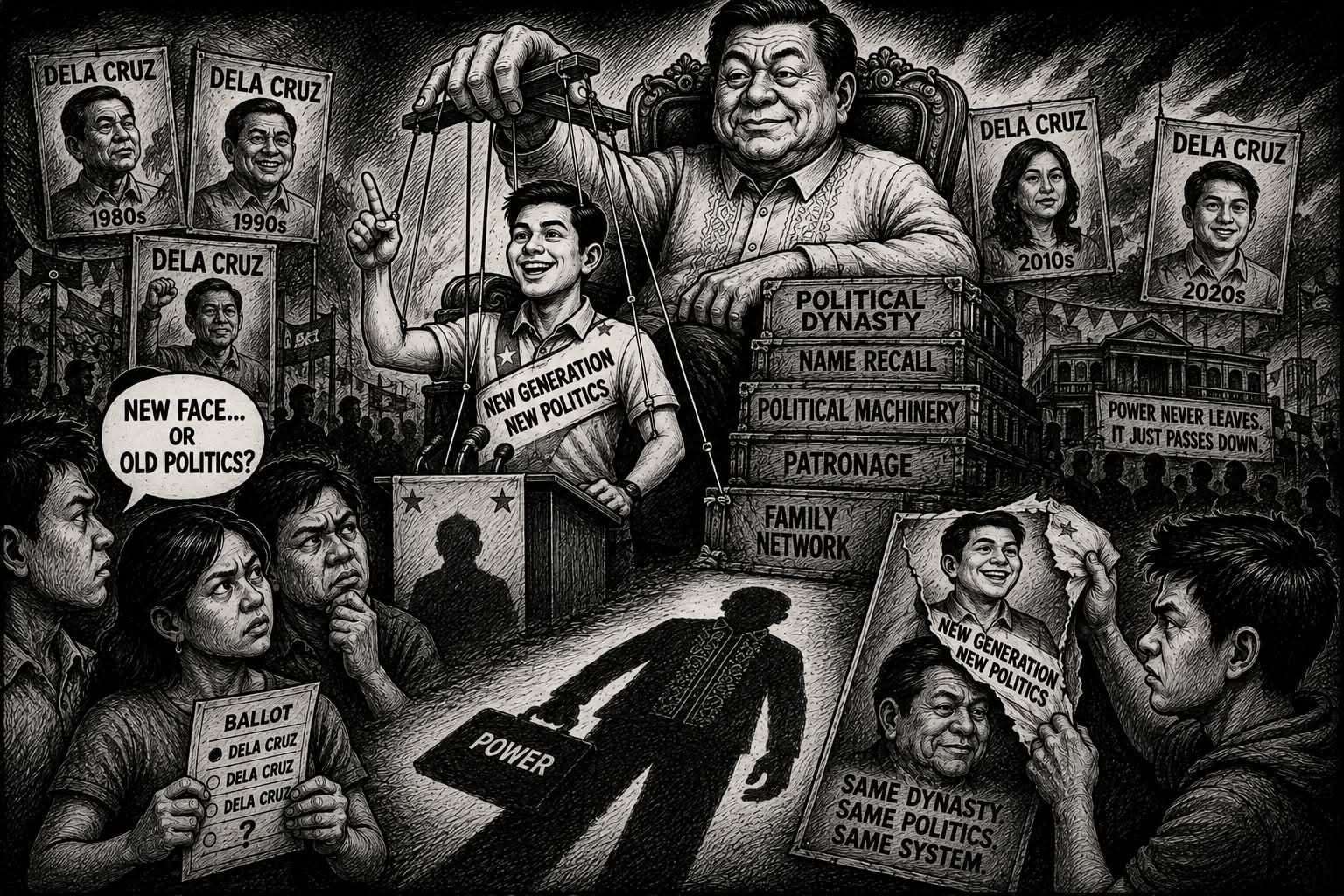

When the future inherits the past
We have been told for generations that the youth are the hope of the nation.
And perhaps they are.
But what happens when that “hope” comes wrapped in the same old political surname?
Across the country, a new generation is stepping into politics.
They are younger, more polished, more fluent in social media and more comfortable speaking the language of change.
They promise fresh ideas, new leadership and a break from the politics of yesterday.
But look closer.
Many are not really newcomers. They are the sons, daughters, nephews and nieces of politicians who have held power for decades.
They may be young in age, but they are inheriting political machinery, established networks, name recall and, in some cases, positions once occupied by their parents.
That raises an uncomfortable question: Are we witnessing a change in leadership or simply a change in faces?
Political dynasties are not automatically proof of incompetence. A politician should be judged by performance, integrity and public service, not merely by a family name.
But democracy becomes weaker when public office begins to look like an inheritance.
The danger is not that young people from political families enter public service. The danger is when voters are encouraged to mistake youth for reform.
A 30-year-old politician can carry 30 years of political baggage through a surname.
The real test of the next generation is not how young they are, how many followers they have online, or how modern their campaign looks. It is whether they can challenge the systems that benefited their own families.
The country does not merely need younger politicians.
It needs new politics.
We should welcome young people into public service but we must ask the harder questions: What do they stand for? Whose interests will they defend? What will they change?
Because if the only thing that changes is the face on the campaign poster, then perhaps the future has arrived wearing the clothes of the past.
#WeTakeAStand #OpinYon #OpinYonNews