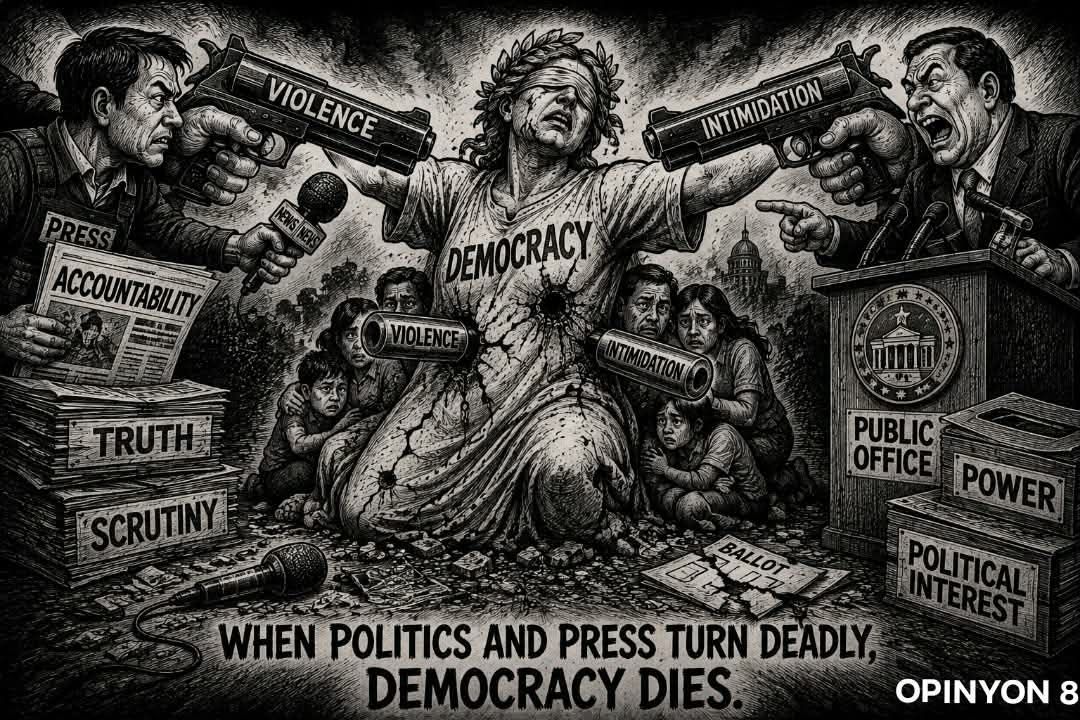

For as long as politics and journalism have existed, they have shared an uneasy relationship.
Politicians need the press to reach the public. Journalists need politicians as sources and subjects.
Yet when scrutiny turns uncomfortable, the relationship can quickly become adversarial and in its darkest form, deadly.
The feud is timeless because power has always resisted scrutiny.
Politicians who see criticism as a personal attack may try to intimidate, silence or discredit journalists.
Journalists, meanwhile, have a duty to question those in power, expose wrongdoing and pursue stories that powerful people would rather keep buried.
Most political-journalistic conflicts end with arguments, lawsuits, accusations or political retaliation.
But in countries where the rule of law is weak and violence is tolerated, the consequences can be far worse.
Journalists have been murdered for doing their jobs. Politicians, too, have been targeted by those who seek to settle political or personal grievances through violence.
Neither should ever be accepted as inevitable.
The assassination of a journalist is not merely an attack on one person. It is an attack on the public's right to know.
Likewise, the killing of an elected official is not simply a political dispute gone too far. It is an assault on democratic institutions and the rule of law.
The answer is not to demand that journalists become less critical or that politicians become immune to criticism.
The answer is to strengthen institutions that can settle disputes without bloodshed.
Politicians must learn to withstand scrutiny without treating journalists as enemies.
Journalists must remain aggressive in pursuing the truth while observing the discipline and fairness that responsible journalism demands.
A free press and accountable government are not natural enemies. They are necessary partners in a democracy.
When disagreements between them end in murder, everyone loses and democracy itself becomes the victim.
#WeTakeAStand #OpinYon #OpinYonNews