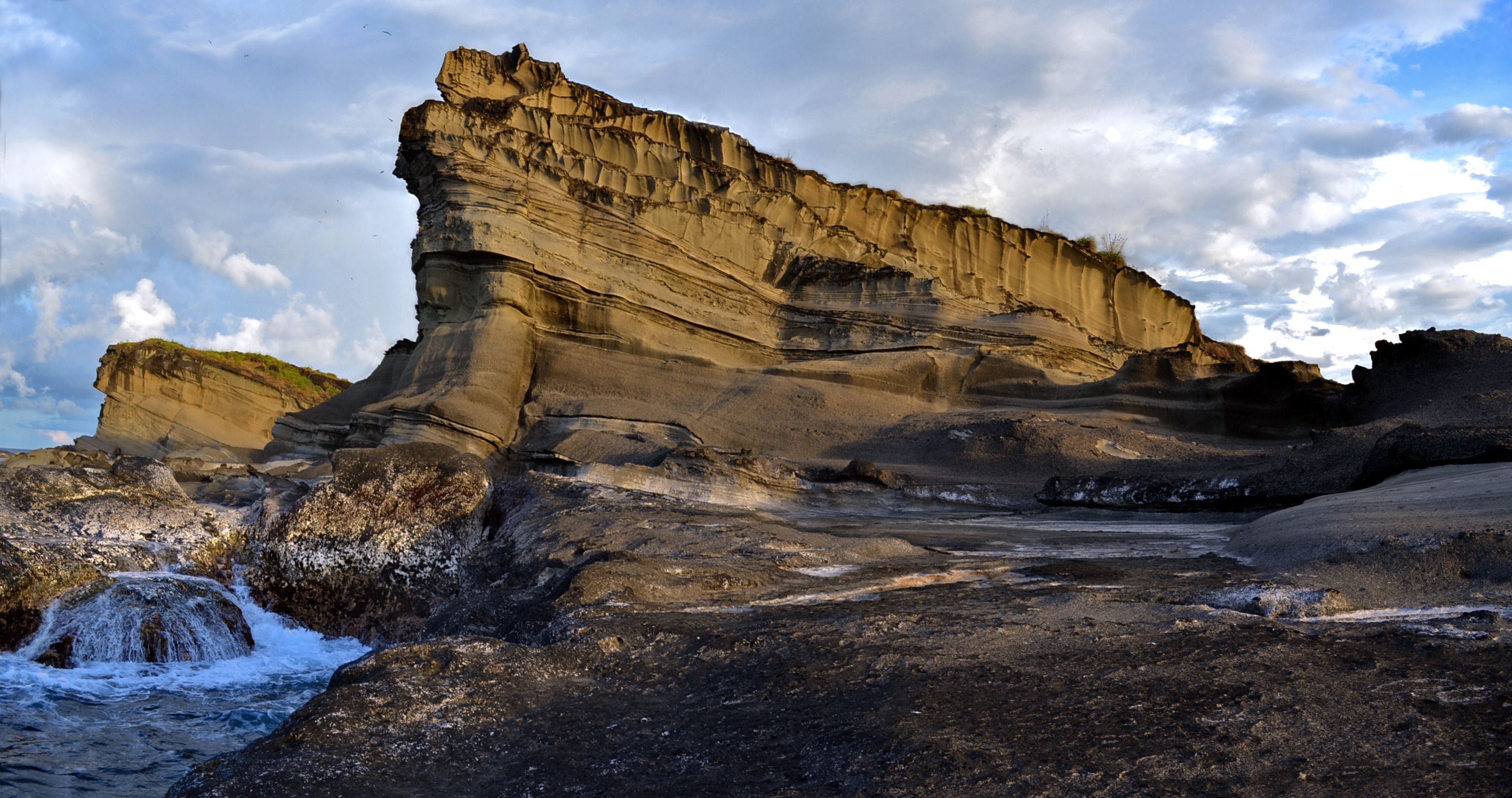

The provincial government of Northern Samar recently brought its campaign to raise awareness on the Biri Rock Formations at a recent exhibit at the University of the Philippines’ Diliman Campus in Quezon City.
For weeks, museum visitors at the University of the Philippines Diliman have been introduced to the province’s remarkable geological heritage through an exhibit featuring the famed Biri Rocks alongside rare rock specimens from various parts of Northern Samar.
Highlights of the exhibit include: analcime clasts and analcime sandstone from Biri town; retinite and fossil wood from Lope de Vega; and Allen phonolite from Barangay Balicuatro in Lavezares town.
“The analcime sandstone of Biri is considered the only known occurrence of analcime-rich sandstone in the Philippines. Distributed within Biri Island, it dates back to the Early Miocene period (23.03–17.95 million years ago), based on calcareous nannofossil evidence,” the provincial government said in a statement.
Meanwhile, the Allen phonolite is the second reported alkaline volcanic rock in the country. Found in the municipalities of Allen and Lavezares, it dates to the early Middle Miocene, about 14.2 to 15.98 million years ago, marking a significant volcanic phase.
Designated as the Philippines’ seventh National Geological Monument, the Biri Rock Formations underscore the country’s outstanding geoheritage and strengthen Northern Samar’s bid to join the UNESCO Global Geopark network.
The exhibit was enabled by the joint efforts of the provincial government, the National Committee on Geological Sciences, the National Institute of Geological Sciences (NIGS), and the Nannoworks Laboratory.
(With report from PNA)
#WeTakeAStand #OpinYon #OpinYonNews