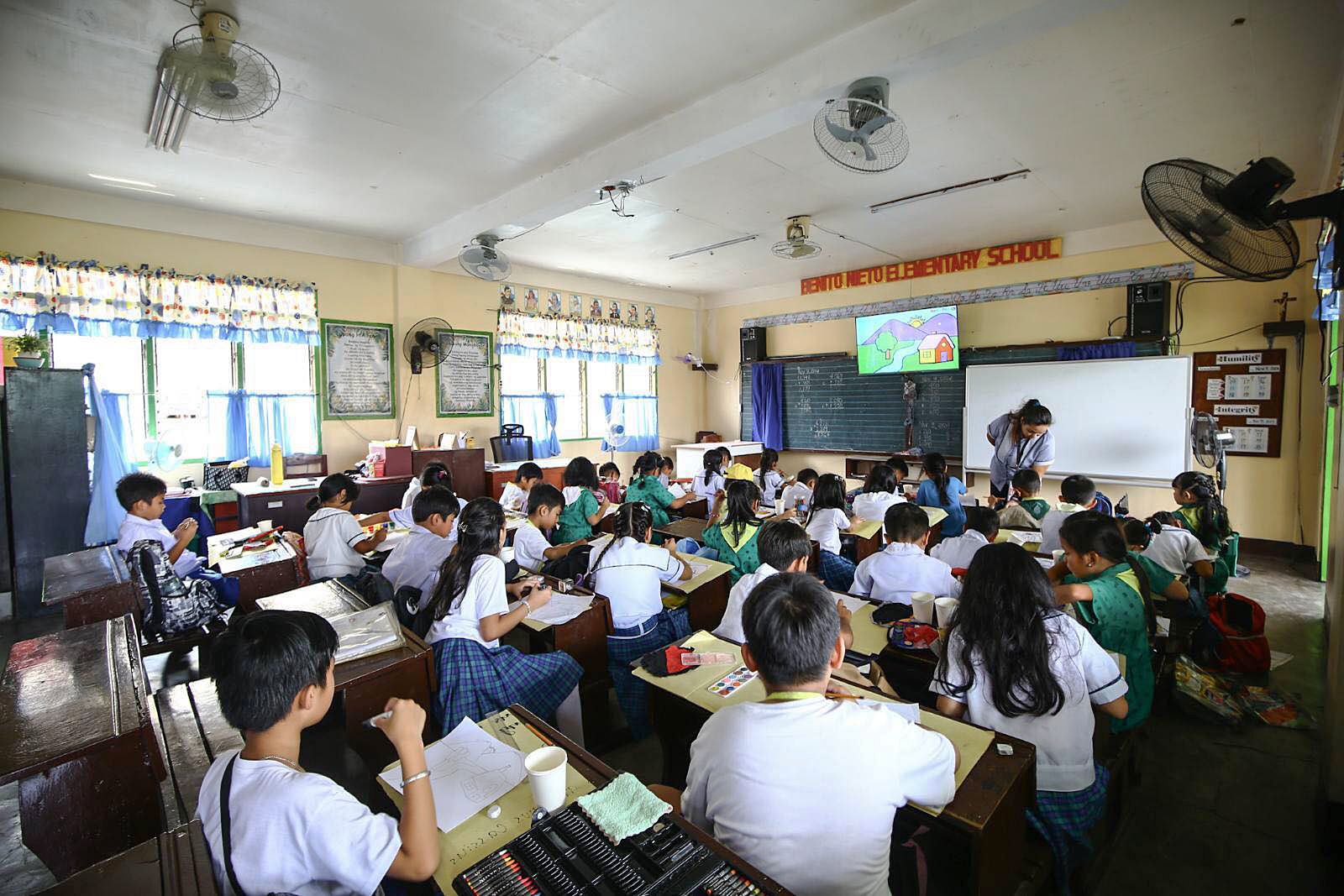

No student left behind – or everybody left behind?
As the Department of Education (DepEd) unveiled its latest strategem to arrest the “alarming” decline in cognitive skills and critical thinking among Filipino students, some believe the new policy may result in more students struggling to catch up with their studies.
Trimester calendar
The new policy, unveiled by Education Secretary Sonny Angara, involved the changing of the current system of the academic calendar into the so-called trimester system.
According to the proposed plan, the academic year will be divided into three terms: from June to September, September to December, and January to March.
There will be “breaks” between each term to give teachers more time for lesson planning, reviewing outputs, and other professional tasks that will contribute to more effective teaching.
DepEd claims that the proposal is part of a “holistic development” to ensure the proper distribution of time covering academic, co-curricular and extracurricular activities.
It aims to extend continuous learning, improve lesson pacing, and reduce the administrative workloads of the teachers.
“Itinutulak natin ito upang magkaroon ng mas mahahabang, tuloy-tuloy na panahon ng pagkatuto, mas maayos na pacing ng mga aralin, at mas mababang administrative burden para sa ating mga guro,” Angara said.
The final guidelines are expected to be released after consultations with teachers and stakeholders.
May maiiwan?
The question, however, is not only whether the implementation of the Trimester system is appropriate, but whether the new system will truly address the needs of every Filipino child and the teaching workforce.
For instance, some educators believe that the new system will leave out slow learners who still struggle with the “accelerated” pacing of the current school system.
"If ang goal ng DepEd is to have children learn fast paced learning will not be an answer, mangangarag ang ibang students,” “Mica,” a future educator, replied when asked whether the current proposal aligns with the needs of the system.
“So if there’s anything they have to focus on is to help the student have a curriculum where learning doesn’t feel like a competition,” she added as she emphasized the importance of prioritizing student pacing and reading comprehension to prevent students from graduating with weak foundational knowledge.
These same sentiments were shared by students who were interviewed by OpinYon Laguna on the proposed trimester system.
“Para sa akin, po hindi na po siya kailangan. Kasi po yung sa generation po namin, nasanay na po kami na ano po na minsan po may times na sobrang bilis po ng pacing minsan naman po sobrang bagal depende po sa kung anong event po yung magaganap,” “Clara,” a student from the Pacita Complex National High School in San Pedro City, Laguna, explained.
Fewer breaks
Other students also believe that with fewer breaks compared to the current quarter-term system, the new trimester term could also undercut into much-needed family or rest time as well as upset the balance for some working students.
This, notwithstanding the fact that the recent school calendar has been disrupted by a series of natural calamities that had struck Laguna province and other parts of the Philippines last year.
“Masyado po siyang matagal [ang proposed trimester system]. Since matagal po, madami rin po ang gawain. Tsaka yung ibang estudyante po na magbabalak ng working student is mahirapan po lalo,” another high school student who requested anonymity said.
Concerns about academic adjustment and pacing were also raised by some students who were interviewed by OpinYon Laguna.
”Yung masamang dulot lang po siguro. Parang mas nakakapagod po yun. Tapos nakakapanibago yun po para samin. Kasi di rin po namin na-expect na magiging tatlo po yung semester,” “Yesha” added.
However, other students expressed the belief that students will be able to adjust to the new system.
“Depende sa kanila kung okay lang yung tatlong semester lang. Pero baka mahirapan din sila mag-adjust since nanggaling sila lang sa apat na,” “Alda” pointed out.
The feedback shows a clear divide: some students see potential benefits for pacing, structure, and rest, while others worry about workloads, and added stress levels.
One can easily say that students, teachers and parents should adopt a “wait-and-see” approach to the new trimester calendar to see if it will really arrest the worrisome stagnation of the country’s education sector.
But one thing is painfully clear: no amount of changes in the curricula or the calendar could ever mask the fact that the Philippine education system has been deliberately broken by the powers who prey on an ignorant public.
Or as some people would say, the system isn’t broken – it’s working to its desired effect of keeping the masses servile to the oligarchs.
(With reports by Kenneth Sacro, Criselle Lucban, Jeremy Rago and Kyrie Marzo)
#WeTakeAStand #OpinYon #OpinYonNews #DepEd #Trimester