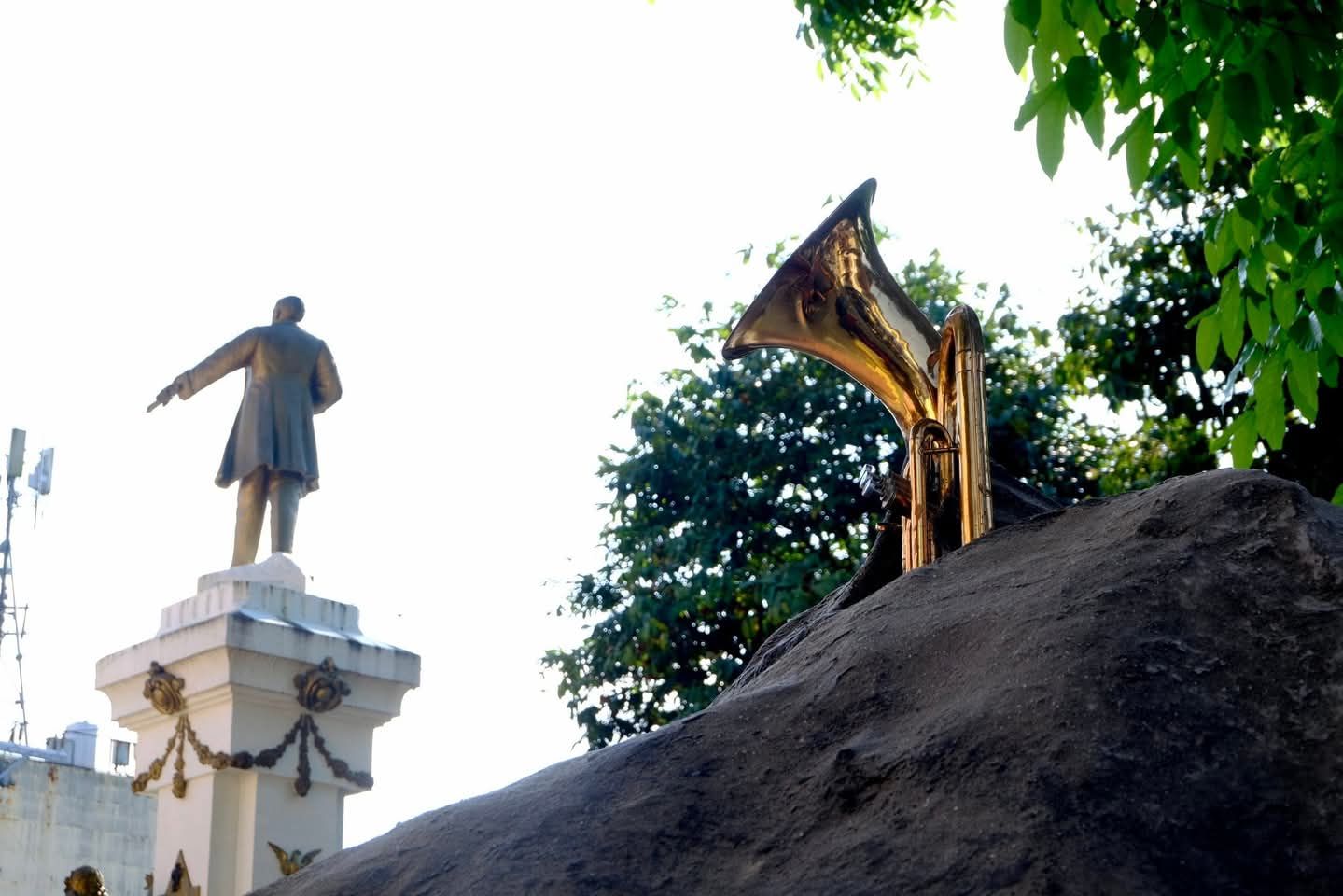

Mark Salvatus' pieces "Sa Kabila ng Tabing Lamang sa Panahong Ito," made a significant impact at the 60th International Art Exhibition of La Biennale di Venezia 2024 in Italy, where they were prominently displayed.
Salvatus, on this international platform, began a new phase, presenting himself as a voice for Philippine contemporary art.
He offered a glimpse into the complexities of his thoughts on history, identity, and revolution, illustrating how these themes resonate with the current socio-political landscape in Lucban.
After his triumph in Venice, a selection of pieces from that exhibition found a new home at the Marble Hall of the National Museum of Anthropology in Manila. This was part of the official homecoming exhibition, which ran from January 1 to March 23, 2026.
Filipinos once more experienced the core of his artistry, a connection that linked global recognition with the land of his birth.
Today, these works have found a permanent home and can be viewed year-round in the historic town of Lucban, Quezon—an artistic tribute to the roots, identity, and collective memory of his birthplace.
Salvatus is one of the very few artists chosen to represent the country at the Philippine Pavilion of the Venice Biennale—the most prestigious global art exhibition, held every two years in Venice, Italy.
Often referred to as the "Olympics of the art world," this event provides a worldwide platform for the most significant contemporary artists to showcase their creations.
In 2024, Mark Salvatus had the privilege of representing the Philippines.
This followed a thorough selection process overseen by the National Commission for Culture and the Arts (NCCA), the Department of Foreign Affairs (DFA), and the Office of Senator Loren Legarda.
Critics, curators, and art enthusiasts from around the world had the privilege of witnessing his concept—an honor rarely achieved by any Filipino artist.
Fragmented Stones, Pieces of History
Salvatus' exhibit centers on stones, but these aren't ordinary art pieces. They're made from fiberglass and resin, and they serve a greater purpose: to hold the history and memories of Lucban.
These stones echo the grim end of Hermano Pule, a Quezon native revered as a local hero. The Spaniards, after executing him, dismembered his body.
Every work of art carries the pain of past experiences and the strength to overcome them.
The exhibition extends far beyond the confines of a traditional museum.
Salvatus opted to showcase his work in various public locations throughout Lucban. These include the Hermano Puli Monument, Museo Lucban, Patio Rizal, Marcos Tigla Park, and the SLSU-Ayuti campus.
Here, the scattered stones serve as reminders of past sacrifices, heroism, and the enduring hope of every Lucbanin. Each site becomes a chapter, a place for reflection, and an invitation to discover the depth of our culture.
Source of Inspiration
For Salvatus, Mount Banahaw isn't merely a picturesque landscape; it's been a constant source of guidance since he was a child.
“Wherever you go in town, you can see it, as if peeking and hiding amidst the cool mist,” said the 44-year-old artist.
Banahaw bears witness to the poems and stories of his grandfather, the music of Lucban’s bands, the schools that shaped him, and the tales of struggle and faith of the town.
Art runs deep in Salvatus’ blood.
His grandfather, Ramon Salvatus, wrote "Ang Hermitano at Torong Ginto sa Puntok Banahaw," and the artistic work of Marcelino Abuelo, known for "Panulat Banahaw," undeniably shaped his identity and reflected his family's historical and cultural legacy.
Furthermore, the musical traditions of Lucban, with their unifying sounds and melodies, are a crucial part of his memories.
Revolution of Imagination
For Salvatus, art should not be exclusive to a few.
“Being public or outdoors is natural,” he said, comparing it to the vibrant Pahiyas Festival—a celebration of art and community unity.
In his view, art does not just provide answers but asks questions, frees the imagination, and drives change—a form of revolution that, like the spirit of Hermano Pule, is “just beyond the veil.”
A New Chapter for Art in Lucban
With the official opening of these masterpieces on May 13, there are no more curtains or veils covering Salvatus’ stone creations. They are no longer hidden or separated by museum walls.
Lucban, with its familiar streets, its people, the stories that linger, and the pulse of daily life, serves as the backdrop. The town reveals and gives meaning to every piece he produces.
Bringing the exhibition from Venice back to Lucban, Mark Salvatus intertwines the art world with the essence of his hometown.
He carefully assembles the scattered pieces, crafting a cohesive, vibrant narrative that breathes life into the town's history.
It stands as proof that the heritage, experiences, and collective memory of a place are the strongest canvas of all.
(Report and photos by Anna Gob, Philippine Arts in Venice Biennale-PAVB)
#WeTakeAStand #OpinYon #OpinYonNews