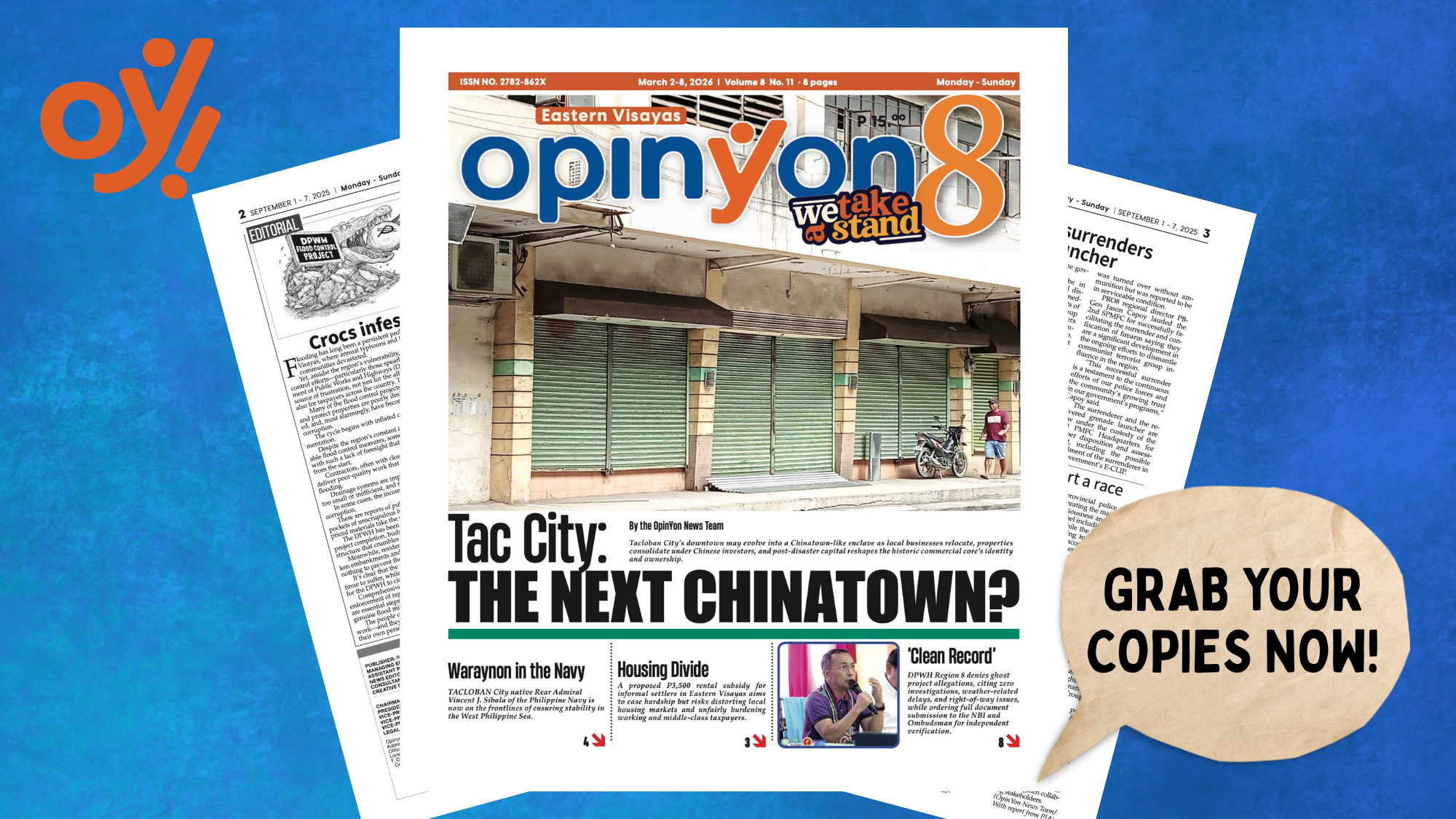

Tacloban’s downtown core has always been a story of trade. As the capital of Tacloban and the economic heart of Leyte, its streets around Avenida Veteranos and Justice Romualdez have long reflected the ebbs and flows of migration, disaster recovery, and retail change.
Now, a question is emerging among locals: could Tacloban Downtown gradually evolve into something akin to a “Chinatown,” shaped by the consolidation of Chinese-owned properties and enterprises as local businesses move outward?
While Tacloban is far from the scale of Binondo in Manila which is widely recognized as the world’s oldest Chinatown, the structural ingredients of transformation are not implausible.
Retail Migration and Hollowing of Old Cores
Across the Philippines, downtown districts have experienced retail decentralization. The rise of large malls, anchored by national developers, and mixed-use complexes has pulled foot traffic away from traditional street-front commerce.
In Tacloban, mall expansion after Typhoon Yolanda (Haiyan) in 2013 accelerated this shift. Post-disaster reconstruction brought new commercial nodes, wider parking spaces, and climate-controlled shopping environments that appeal to middle-class consumers.
When foot traffic declines in historic cores, rental yields fall. Local, family-run businesses with many already operating on thin margins, often relocate to newer developments or close altogether.
This pattern has been documented in secondary cities across Southeast Asia: downtowns hollow out, vacancy rises, and property owners seek buyers with longer-term capital.
Capital Consolidation and Diaspora Networks
Chinese-Filipino entrepreneurs have long played a role in provincial trade, particularly in wholesale, hardware, pharmaceuticals, and general merchandise.
Historically, many established businesses in port cities and regional capitals where supply chains converge.
Tacloban’s strategic location along San Pedro Bay and its role as a logistics gateway to Eastern Visayas make it commercially attractive.
In speculative scenarios discussed by local real estate brokers, properties in older downtown blocks, especially pre-war or mid-century buildings, are increasingly being sold or leased long-term to investors with access to pooled capital.
These buyers often renovate minimally, focusing instead on consolidating adjacent lots for warehousing, dormitories for staff, or multi-story mixed retail-storage buildings.
If such acquisitions cluster geographically, the visual and commercial identity of the area can shift.
Storefronts with “Chinese” signage, import-focused retail, appliance and hardware wholesalers, and specialty groceries could gradually dominate specific streets.
Post-Disaster Ownership Shifts
After major disasters, property ownership patterns can change significantly. Following Yolanda, many long-time families faced capital constraints during rebuilding.
Insurance coverage gaps and limited liquidity forced some to sell. Investors with ready cash, whether Manila-based conglomerates or diaspora-linked networks were positioned to acquire distressed assets.
While there is no comprehensive public database showing the ethnic ownership of Tacloban’s downtown properties, anecdotal reports suggest that a meaningful portion of commercial rebuilding capital came from outside Leyte or Waraynons residing outside of the region.
Over time, that can alter who controls prime frontage.
Urban Identity Through Commercial Density
Chinatowns typically emerge not solely from ownership, but from density and cultural signaling, clusters of businesses serving both co-ethnic and broader markets.
If Tacloban Downtown were to become dominated by Chinese-owned hardware depots, construction suppliers, electronics wholesalers, and specialty food stores, a de facto thematic district could form even without formal branding.
The experience of Cebu City shows how commercial clusters can reshape perception. Although Cebu’s “Chinatown” in the downtown area was formally declared only in 2003, Chinese-Filipino commercial presence had been concentrated there for decade
Similarly, in Davao City, commercial streets near the old Chinatown saw increased consolidation before formal recognition and heritage framing.
What Would It Mean for Tacloban?
Speculatively, if current patterns continue with local retailers moving to malls, downtown rents softening, outside capital acquiring legacy buildings, Tacloban’s old commercial core could become increasingly specialized.
Rather than a mixed retail strip of sari-sari stores, tailoring shops, and independent eateries, it might skew toward wholesale trade, logistics offices, remittance centers, and Chinese-owned specialty commerce.
Such a shift would not necessarily imply displacement in a dramatic sense. It would reflect market forces: capital seeks undervalued assets; communities with strong trading networks consolidate supply chains; older districts offer proximity to ports and government offices.
However, the cultural implications would be visible. Streetscapes could change through signage, product offerings, and architectural modifications.
Festivals, temple associations, or business chambers might increase their footprint. Over time, the narrative of “downtown Tacloban” could evolve from a general civic-commercial zone into a more ethnically identified business district.
Whether that transformation becomes reality depends on policy, preservation incentives, and whether local entrepreneurs reinvest in the core.
Urban history shows that districts rarely remain static.
If Tacloban’s downtown is at an inflection point, the next decade will determine whether it disperses into decline or consolidates into a distinctly branded commercial enclave shaped by the capital and networks most willing to stay.
#WeTakeAStand #OpinYon #OpinYonNews