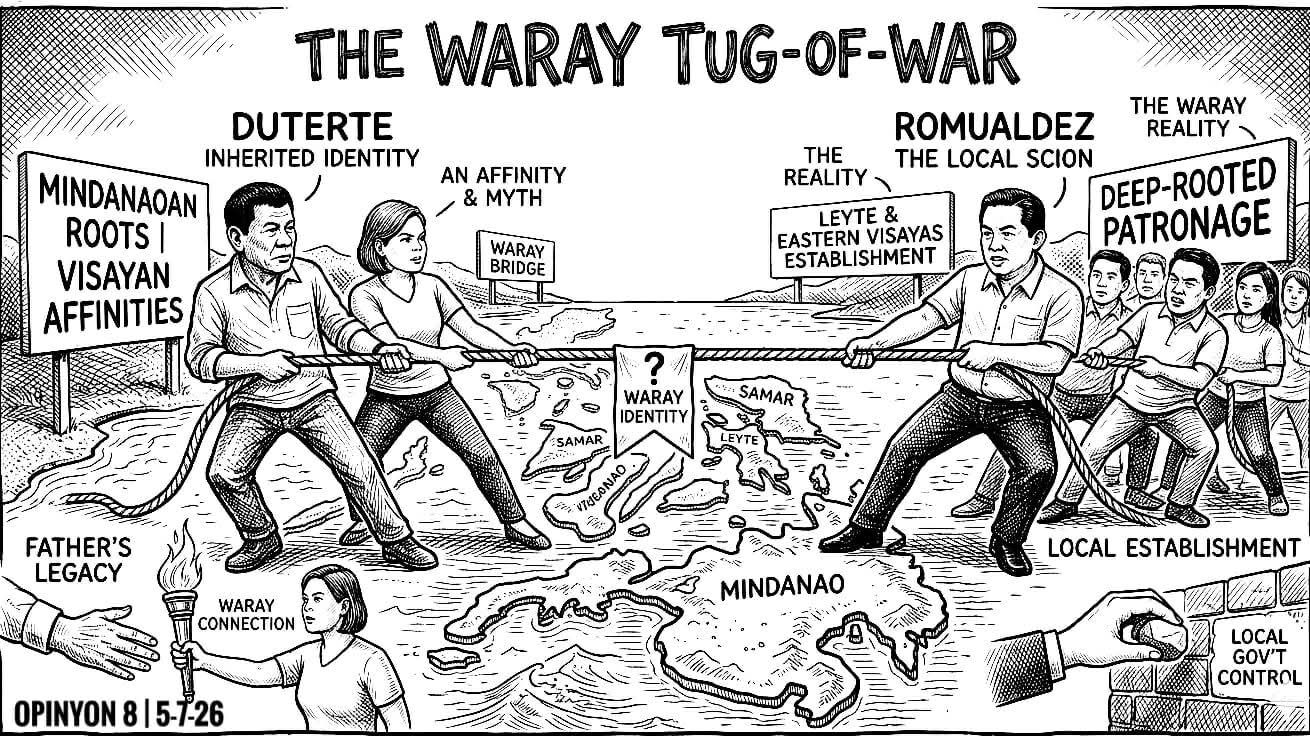

Vice President Sara Duterte is structurally positioned to secure an overwhelming electoral margin in the southern Philippines, and the explanation lies less in campaign momentum than in layered identity politics and inherited networks of power.
A central, often under examined factor is the identity signaling of Rodrigo Duterte.
Beyond his well-known association with Mindanao, he has at various points emphasized ancestral ties to Waray-speaking communities.
This claim is politically consequential. In a country where linguistic and regional affiliations shape voter alignment, invoking Waray roots functions as a bridge across parts of Eastern Visayas, subtly expanding his, and by extension his daughter’s, symbolic reach.
It reframes the Duterte identity from being narrowly Mindanaoan into something more fluid and cross-regional.
This layered identity reduces the friction typically associated with regional bloc politics. Instead of competing identities, it offers overlapping ones: Mindanaoan leadership with Visayan, and specifically Waray, affinities.
For many voters, this fosters a sense of proximity, even if indirect, reinforcing trust and familiarity.
Sara Duterte benefits from this inherited narrative architecture. Her candidacy does not need to construct new identity linkages; it activates long existing ones.
Combined with entrenched local alliances and a still-effective political machinery, this broad identification base increases the likelihood of a consolidated southern vote.
Analytically, the emphasis on Waray roots illustrates how identity claims, whether genealogically precise or politically amplified, can function as strategic assets.
In the Duterte case, such claims help transform regional strongholds into wider electoral coalitions, making a southern landslide not just plausible, but structurally predictable.
In the coming election, in a fight that could potentially be Romualdez vs Duterte, the Waray community would eventually have to pick a side.
#WeTakeAStand #OpinYon #OpinYonNews #Editorial