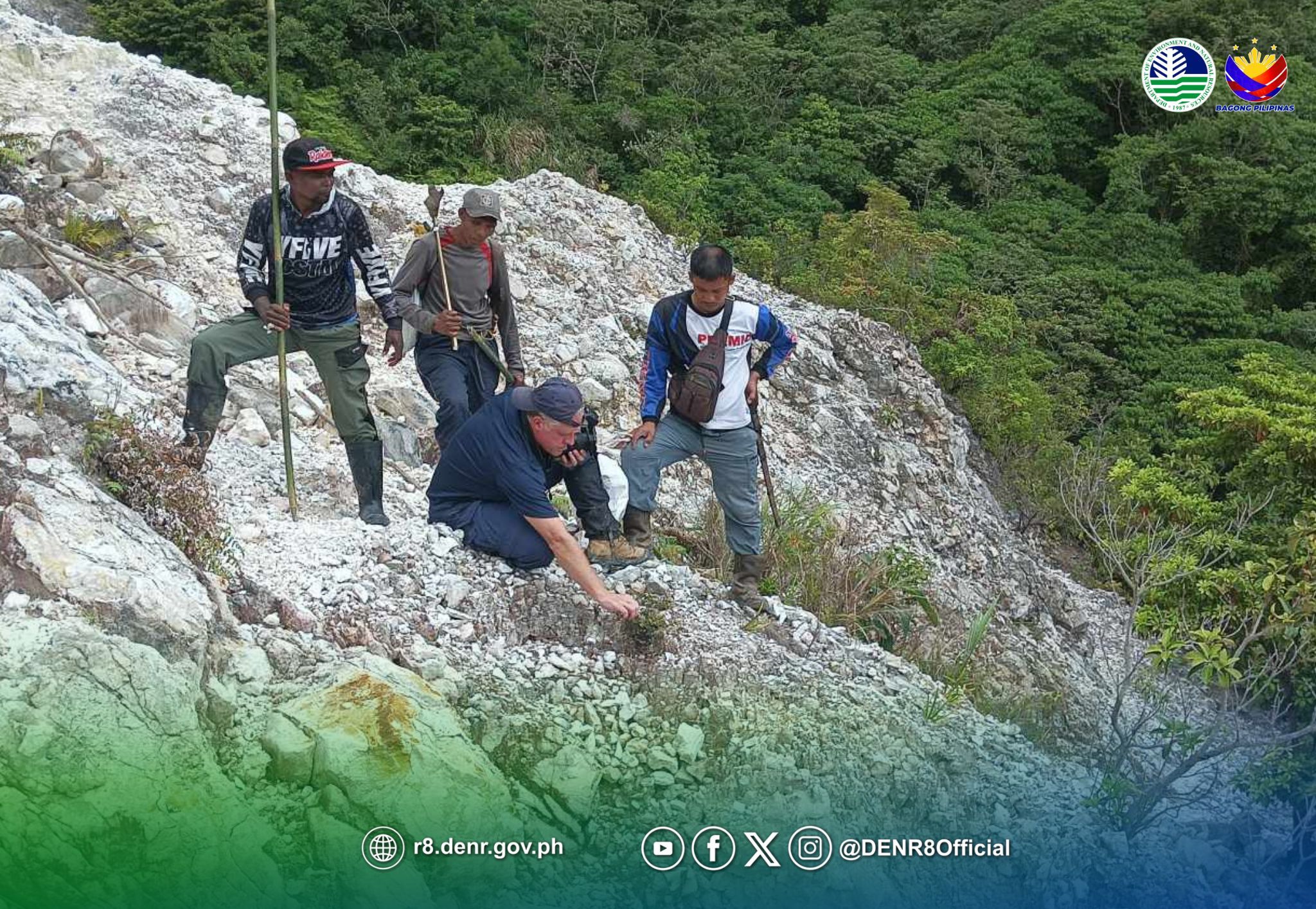

Conservation experts recently documented several plant species in the forests of Leyte in a bid to better understand and support the survival of the critically endangered Philippine eagle (Pithecophaga jefferyi).
The initiative, led by biodiversity researchers and environmental groups, focuses on identifying plant diversity within eagle habitats as an essential step in restoring ecosystems that can sustain the country’s national bird.
The Philippine eagle, one of the largest and rarest raptors in the world, relies heavily on dense forest environments for nesting and hunting.
Recent fieldwork recorded a range of plant species, including Fagraea auriculata, a rare fragrant shrub, and Phytocrene macrophylla, a woody climbing vine.
These findings highlight the ecological richness of Leyte’s forests and their importance as potential eagle habitats.
Experts say documenting plant species is critical because forest composition directly affects the eagle’s prey availability and nesting sites.
“Understanding the vegetation helps us determine whether the habitat can support breeding pairs,” one researcher noted.
However, forest loss remains one of the biggest threats to the species, alongside hunting and human disturbance.
The Philippine eagle is endemic to only a few islands including areas in Luzon, Samar, Mindanao, and Leyte and its population is estimated to be fewer than 400 breeding pairs.
Over the years, Leyte’s eagle population declined significantly, with some studies suggesting local extinction following the devastation of Typhoon Yolanda in 2013.
Efforts to restore the species in Leyte have recently gained momentum. In 2024, conservationists released two Philippine eagles into the wild in Burauen, marking a major step toward reestablishing a population on the island.
Scientists emphasize that reintroduction alone is not enough.
“We need healthy forests. Without the right plant species, the entire food chain collapses,” experts explained. Native flora support prey species such as small mammals and birds, which are crucial to the eagle’s diet.
The documentation project also contributes to broader biodiversity conservation efforts in Eastern Visayas.
Leyte’s forests are home to many endemic plants, including species like Nepenthes leyte, a carnivorous pitcher plant found in mossy forests.
Conservationists hope that combining habitat restoration, scientific research, and community involvement will improve the long-term survival prospects of the Philippine eagle.
As one expert put it, “Protecting the forest means protecting the eagle and everything else that depends on it.”
(Photo courtesy of DENR VIII-Eastern Visayas)
#WeTakeAStand #OpinYon #OpinYonNews