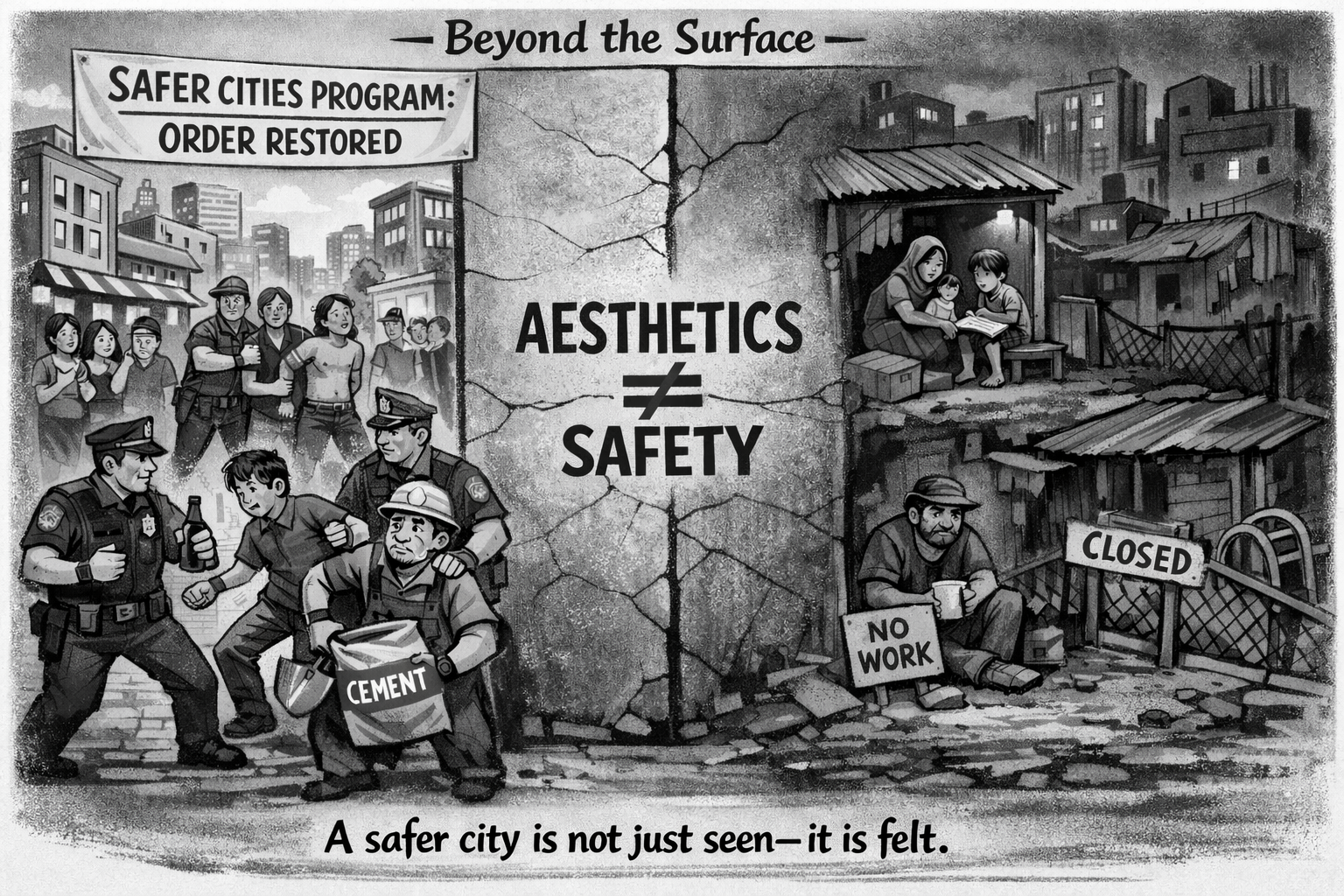

The Philippine National Police's "Safer Cities" program resulted in over 48,000 arrests across Metro Manila in a mere three days, a number that certainly catches the eye.
The Philippine National Police's "Safer Cities" program resulted in over 48,000 arrests across Metro Manila in a mere three days, a number that certainly catches the eye.
Most of these incidents were related to public drinking and smoking, minors out past curfew, people going shirtless in public, and karaoke sessions that went on well past the allowed hours.
The recent arrest of a street worker, caught mixing cement, also sparked discussion, prompting people to wonder about the rationale and justness of certain enforcement decisions.
Although these figures might suggest a return to discipline and order, a critical question arises: is it sufficient for these efforts to merely produce a city that appears "aesthetically" organized? Alternatively, should we probe further, examining whether genuine safety is being attained, rather than just a superficial semblance of order?
Policies that restrict smoking, alcohol use, and other behaviors considered public "nuisances" contribute to cleaner and more visually appealing urban areas, going beyond their basic function of maintaining order. However, a focus on minor offenses, a common feature of "Safer Cities" programs, could unintentionally divert attention from more significant societal issues.
These issues include poverty, a lack of access to good education, and the scarcity of safe public spaces that everyone can use.
To genuinely enhance urban safety, law enforcement agencies necessitate a comprehensive strategy. The scope of enforcement should extend beyond mere apprehension; it must encompass educational initiatives and explicit elucidation of the rationale behind prohibitions.
Moreover, it's crucial to protect against the potential for police actions to be misused or to encourage discriminatory practices, as this can undermine community trust and lead to further social unrest.
The creation and implementation of policies should include input from residents, youth organizations, and local leaders. Working together in this way helps me understand the issues better and encourages real support for the policies.
Moreover, many less serious offenses often indicate underlying societal issues, such as unemployment, homelessness, and substance abuse.
Therefore, it's crucial to ensure that social services, including healthcare and job opportunities, are provided adequately.
Discipline is important, but it shouldn't come at the expense of people's basic rights and dignity, especially for those who are vulnerable. Rules should be fair and reasonable, as shown by the example of a worker who was punished for doing his job.
Ultimately, the campaign must share its outcomes with the public. This includes details on the number of people helped, the instances of abuse that were addressed, and the measures in place to prevent future misuse of authority.
A "Safer City" should represent a society that goes beyond just looking appealing It should also be fair, caring, and just.
Ultimately, a truly safe city isn't just about appearances; it's a place where everyone, whether they're walking, resting, or working diligently for the community, feels secure and respected.
#OpinYonQuezonin #OpinYon #SaferCities #Safercitiesarebeyondaesthetics