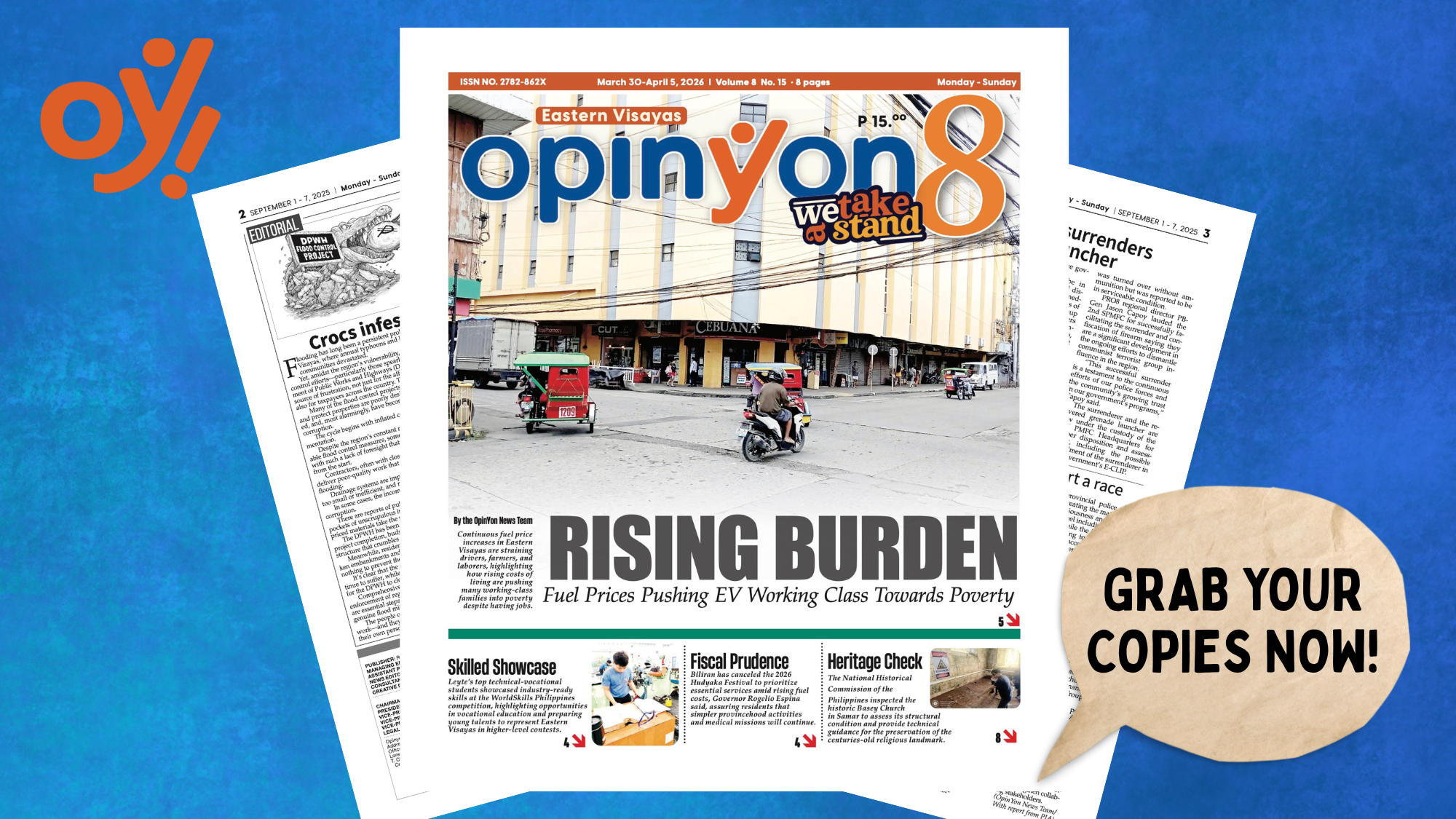

In Eastern Visayas, the steady rise in petroleum prices is no longer just an economic statistic, it has become a daily burden carried by the region’s working class.
For transport drivers, farmers, delivery workers, and other wage earners, every fuel price increase chips away at already fragile incomes, reinforcing a troubling reality: many members of the working class are now slipping into what economists increasingly describe as the “new poor.”
Across cities like Tacloban and in rural communities throughout Leyte and Samar, workers say the rising cost of diesel and gasoline has drastically changed how they earn and spend money.
Fuel prices affect nearly every aspect of daily life, from transportation fares to the cost of food and agricultural products.
The Philippines relies heavily on imported petroleum, making the country vulnerable to fluctuations in global oil prices.
When international oil markets spike due to supply disruptions or geopolitical tensions, local pump prices quickly follow. The effects are felt most deeply in regions like Eastern Visayas, where many households already live close to the poverty line.
For transport workers, the situation has become increasingly difficult. Diesel powers jeepneys, tricycles, delivery vehicles, and fishing boats, meaning every increase immediately raises operating costs.
Transport groups report that some public utility vehicle drivers are now losing around Php300 per day in potential earnings because of higher fuel expenses.
After long hours on the road, many drivers take home only about Php400 daily, if not less, barely enough to cover basic household needs.
“Before, after a full day of driving, I could still bring home enough for food and school expenses,” said Mano Mario, a jeepney driver in Tacloban. “Now, most of what I earn goes straight to fuel. Sometimes it feels like I’m just working to pay for diesel.”
The situation reflects a broader shift affecting many working Filipinos. While they remain employed, rising living costs mean their wages are no longer enough to sustain their families.
Economists have increasingly pointed out that inflation, especially driven by fuel prices, can push working households into economic insecurity even if they have stable jobs.
The ripple effect extends beyond the transport sector. Higher fuel prices raise the cost of transporting goods, increasing the prices of vegetables, rice, fish, and other basic commodities. Diesel is also essential for agricultural equipment, irrigation pumps, and cargo trucks that bring produce to markets.
For farmers in Eastern Visayas, this means higher production costs and smaller profits.
“We work hard in the fields, but expenses keep increasing,” said a rice farmer from Northern Samar. “Fuel for machines, transport for crops, everything is higher now. Even if we harvest well, the earnings are not enough.”
Government agencies have acknowledged the growing strain. The national government has prepared a P2.5-billion fuel subsidy program intended to support public transport drivers and operators affected by rising fuel prices.
However, many workers say these subsidies provide only temporary relief while the cost of living continues to rise.
For families already struggling with food, transportation, and utility expenses, the increases reinforce a painful reality: employment alone no longer guarantees economic stability.
In Eastern Visayas, the growing fuel crisis has exposed a deeper structural issue. The people who keep the region moving, drivers, farmers, laborers, and small-scale workers, are finding themselves increasingly vulnerable.
Even office workers and government workers admit that even the 4-day work week arrangement does little to bolster the effect of the high costs of transportation whether they commute or drive to work place.
“We are working every day, but it feels like life keeps getting harder,” said a tricycle driver from Leyte.
As fuel prices continue to fluctuate, the question facing many households in Eastern Visayas is no longer just how to earn a living but whether working hard is still enough to stay above poverty.
#WeTakeAStand #OpinYon #OpinYonNews #CoverStory