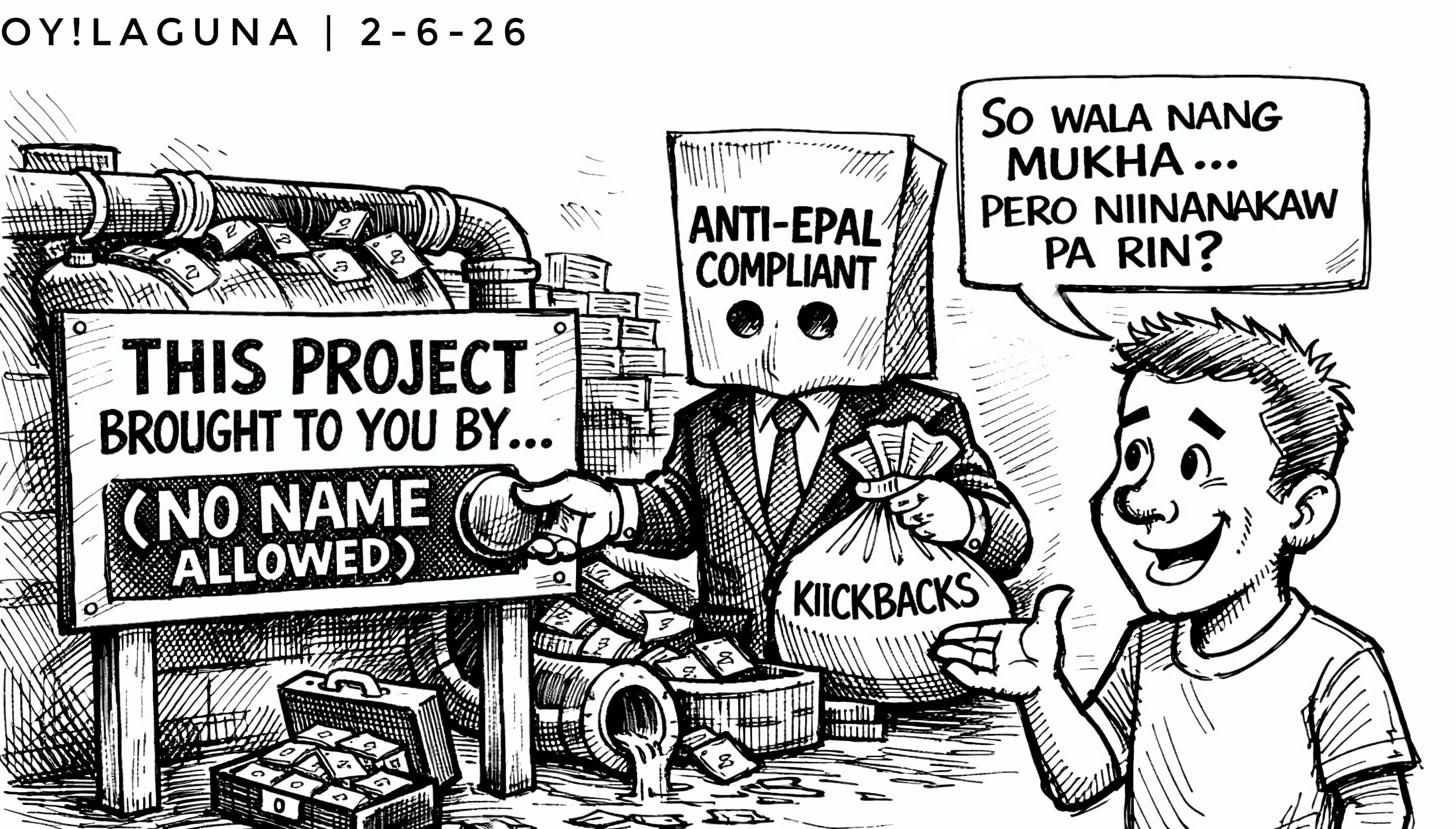

At first glance, the most recent order of the Department of the Interior and Local Government (DILG) can be called an important step forward in removing a "culture of corruption" in Philippine politics.
We're talking about the most recent "anti-epal" directive of the DILG, where it (once again) enforced the nationwide removal of names, images, and likenesses of public officials from government‑funded projects, programs, and properties.
"Epalitikos," after all, had been an ingrained aspect of Filipino politics, which since time immemorial had been personality-based rather than ideology-based.
It’s high time, some sectors argue, that public officials be reminded that it is not them but the Filipino public through their taxes who actually fund these projects.
But the "anti-epal" directive also reflects another negative aspect of Filipino governance: opting for quick fixes rather than implementing long-term solutions.
Banning politicians from plastering their faces on government projects is a step forward, but it's not the solution needed in fixing the endemic problem of corruption.
What is needed is an extensive overhaul of the way government projects are crafted, funded, and implemented in such a way that no single politician will be able to claim these projects as their own.
Not to mention that over seven months after the first big revelations of the massive corruption involving flood-control projects, no high-ranking government official has been convicted, much less jailed, for their actions.
We cannot change the culture of corruption merely by banning “epalitikos.”
We have to reform our system of governance in a way that no “epalitiko” will be able to rob the Filipino public not just of their hard-earned money they entrusted to the government, but also of the well-deserved credit for collectively building our nation.
#WeTakeAStand #OpinYon #OpinYonNews #Editorial