
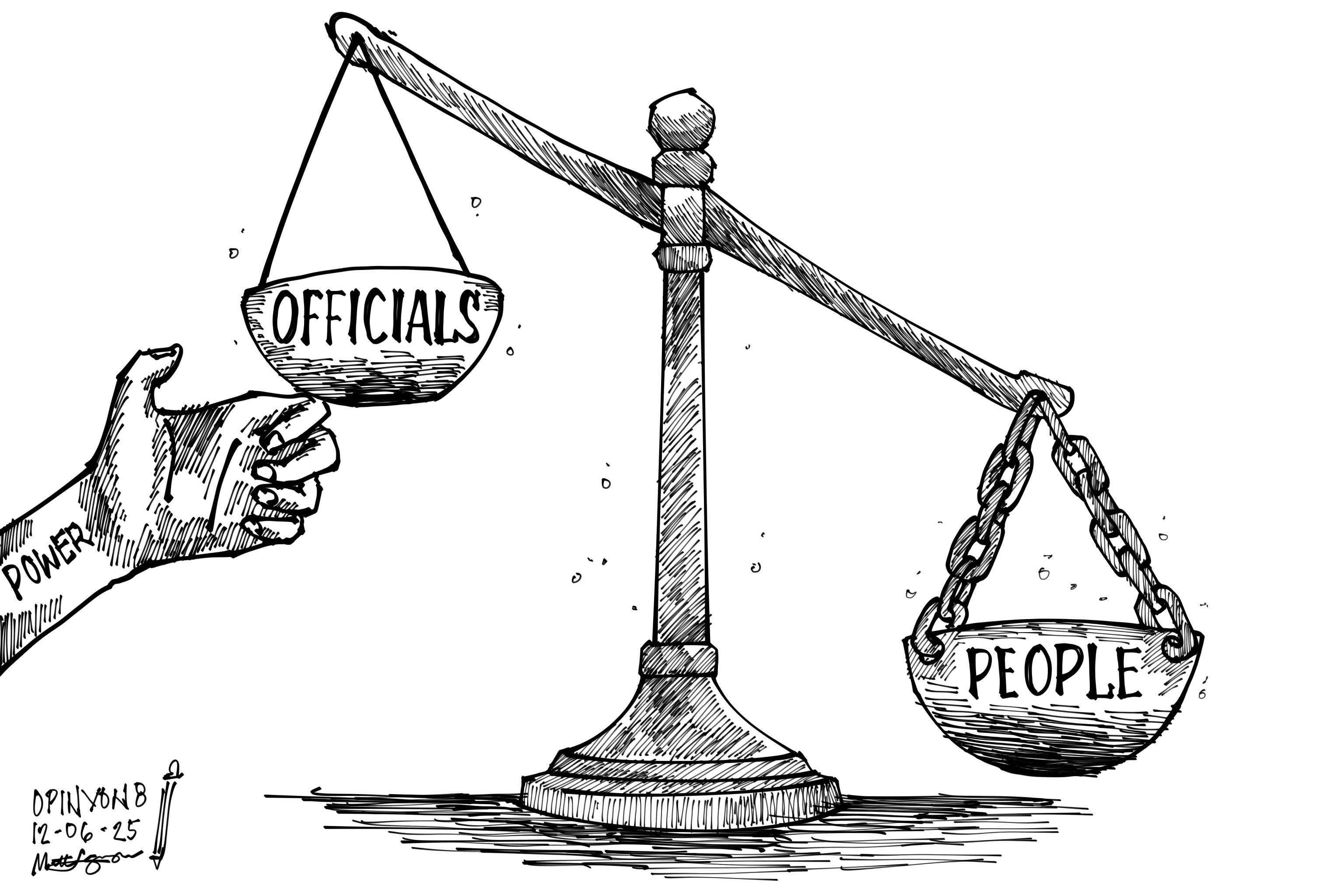



In our country, we pride ourselves on being governed by the rule of law.
Yet with every passing scandal involving public officials, it becomes harder to ignore an uncomfortable truth: the law seems to tighten around ordinary citizens while stretching generously for those in power.
When a regular person commits a minor infraction, the system reacts with startling efficiency.
Swift charges, swift penalties, and little room for excuses.
But when officials misbehave?
Suddenly the machinery of justice slows to a crawl.
Processes become murky. Definitions become flexible. And consequences become optional.
We have grown all too familiar with the ritual. A complaint surfaces, often dragged into the light by whistleblowers or angry citizens rather than proactive oversight.
There is public outrage. Statements are drafted. Committees are formed.
And then comes the great institutional sedative, the investigation.
These investigations begin with fanfare and end with fog.
Months later, we receive a brief announcement that “no sufficient evidence was found,” or that the matter has been “closed without recommendation.”
No accountability. No transparency. No meaningful consequence. It is a cycle so predictable it borders on parody.
This isn’t justice. This is theatre.
The damage is profound.
Every unpunished breach erodes public trust.
Every non-result signals to officials that misconduct carries little risk.
And every dismissed complaint tells citizens their concerns are little more than bureaucratic paperwork. Processed, filed, forgotten.
A society cannot function when its laws apply unevenly. Accountability isn’t optional for democracy; it is its foundation.
If officials can act with impunity while citizens are held to the strictest letter of the law, then we are no longer governed by justice, but by hierarchy.
It’s time to end the double standard.
Investigations must produce answers, not excuses. And power must never be treated as a shield against the consequences of wrongdoing.
#WeTakeAStand #OpinYon #OpinYonNews #Editorial