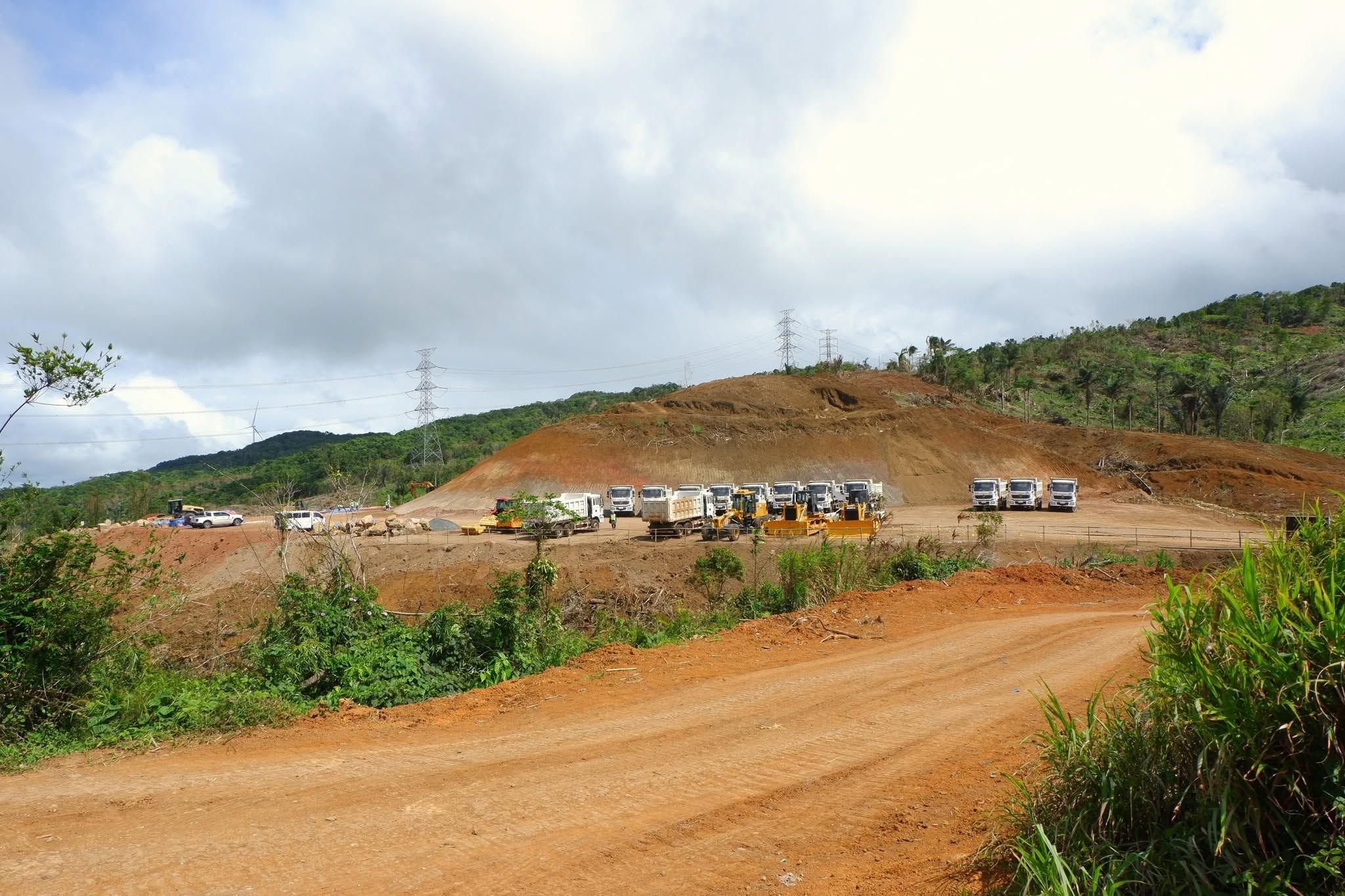

No evidence of deforestation in Pakil’s most sacred pilgrimage site.
That was the assertion by officials of the Department of Environment and Natural Resources (DENR) even as photographs shared on social media by locals clearly show clearing activities near the pilgrimage site at Mount Ping-as.
The site, which has been a popular pilgrimage site among Catholic devotees for decades, is now reportedly in danger due to the expanding construction activities related to the P1.1-billion Ahunan Pumped-Storage Hydropower Project in Pakil, Laguna.
The photographs once again stoke fear and rage among citizens and concerned sectors who have lambasted government inaction (and possibly connivance, they assert) to the destruction of Pakil’s natural defense against floods, in the name of promoting renewable energy.
DENR reply
But what is sure to cause even more anger among Pakilenos is the DENR’s assertions that no “deforestation activities” were allegedly monitored in or near Mount Ping-as.
In a message to OpinYon Laguna, Henry Adornado, DENR-Calabarzon Regional Director, said that the alleged “tree-cutting” activities shared by netizens on social media were located far away from the mountain to cause harm to its ecology.
According to Adornado, the observations were borne out of an initial investigation conducted by the DENR Community Environment and Natural Resources Office (CENRO) Sta. Cruz, Laguna last June 11, “in response to reports circulating online alleging that the ongoing Ahunan Pumped-Storage Hydropower Project had caused deforestation within the pilgrimage site of Mount Ping-as in Pakil, Laguna.”
The investigation included an ocular inspection of the area and coordination with the Municipal Environment and Natural Resources Office (MENRO) of Pakil.
And the findings: “The investigation found no evidence of development activities or tree-cutting operations within the actual pilgrimage site, particularly at the location of the stone cross situated at the summit of Mount Ping-as,” the DENR official asserted.
“Ocular inspection confirmed that the nearest tree-cutting activity is located approximately 150 meters away from the pilgrimage site and falls within an area covered by a valid DENR-issued tree-cutting permit.”
Legal?
Not only that, Adornado also asserted that whatever tree-cutting activities being undertaken by Ahunan Power, Inc. in the mountains behind Pakil are fully legal.
“Further verification showed that the tree-cutting activities being undertaken by Ahunan Power Inc. are authorized under duly approved permits issued after compliance with all applicable documentary and regulatory requirements,” the official said in his message.
“Records also indicate that the permitted areas are classified as alienable and disposable lands, and no tree-cutting permits were issued for forestland areas.”
Adornado added that he has scheduled a meeting with the concerned peoples’ organizations and other stakeholders to discuss the issues raised and clarify matters related to the project and its environmental compliance.
“Meanwhile, CENRO Sta. Cruz will continue monitoring the implementation of the permits and project activities to ensure compliance with environmental laws, regulations, and permit conditions.”
Defying cease-and-desist order?
Meanwhile, the local government of Pakil is now also coming under intense scrutiny for allegedly defying a cease-and-desist order issued by the National Historical Commission of the Philippines (NHCP) directing the immediate suspension of activities related to the 1,400-megawatt project, raising concerns about its impact on cultural heritage sites in Pakil.
Among the major sites that could be affected by the dam include the San Pedro de Alcantara Parish Church, an NHCP-marked historical structure and Grade II cultural property, and the historic Turumba Spring, a landmark tied to the town’s centuries-old devotion to Nuestra Señora de los Dolores de Turumba.
NHCP acted under the National Cultural Heritage Act, which stipulates that cultural agencies may order the suspension of activities when important cultural properties are at risk of destruction or significant alteration.
Concerned residents, however, alleged that far from implementing the order, the local government only “advised” Ahunan Power, Inc. to "take care" that the affected cultural sites will not sustain damage from the continued construction of the dam.
Meanwhile, officials of the Pakil LGU claimed that while they have received a copy of NHCP’s cease and desist order, they have no authority to implement and enforce it, as their role is limited to “coordination, monitoring and facilitation.”
Netizens, however, believe the LGU should have led the way in implementing the NHCP’s order instead of “soft-pedaling” it in favor of Ahunan Power.
“Sa kaso ng Ahunan sa Ping-as, ang kahalagahan nito ay hindi lamang nakapaloob sa isang kapilya o sa iilang estruktura. Ito ay isang buhay na pamanang kultural na binubuo ng buong lugar kung saan ginaganap ang tradisyunal na Ahunan, kabilang ang mga daanan, kagubatan, kabundukan, at iba pang bahaging may kaugnayan sa kasaysayan at pagkakakilanlan ng komunidad. Ang pagkawala o pagkasira ng alinman sa mga elementong ito ay maaaring magdulot ng hindi na maibabalik na pinsala sa pamanang pangkultura,” netizen Danilo Francisco, one of the most vocal critics of the dam project, wrote in his Facebook page.
#WeTakeAStand #OpinYon #OpinYonNews #DENR #NHCP