
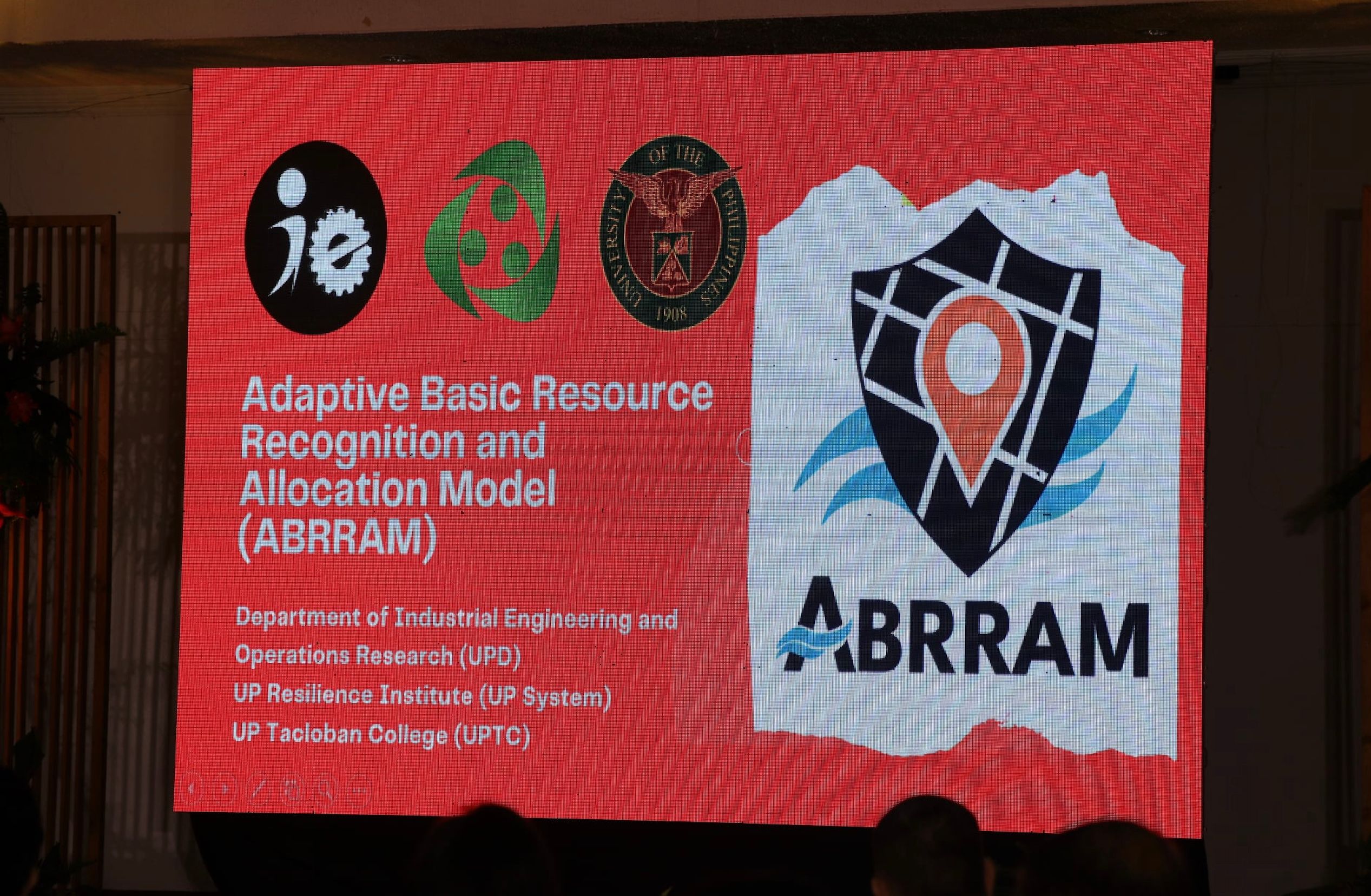



With Eastern Samar constantly under threat of natural calamities such as typhoons and earthquakes, a new tool developed by researchers from the University of the Philippines (UP) aims to help local governments in the region strengthen their response capabilities during emergencies.
The program, dubbed Project Adaptive Basic Resource Recognition and Allocation Model (Project ABRRAM), was presented at the recently held Eastern Visayas Disaster Risk Reduction and Management (DRRM) Summit at the UP Tacloban College.
Project ABRRAM is an interdisciplinary initiative dedicated to enhancing disaster risk reduction and management through resource identification, allocation, and optimized distribution.
As a tool, ABRRAM can provide LGUs with a systematic approach to identifying, prioritizing, and allocating critical resources such as food supplies, medical aid, shelter needs, and logistical support in times of disasters or public health emergencies.
By analyzing a community’s demographic profile, hazard exposure, and existing resource capacities, the model helps LGUs in determining where shortages may occur and what interventions are needed.
According to UP Assistant Professor Raymond Freth Lagria, ABRRAM project leader and UP Department of Industrial Engineering and Operations Research chairperson, the new tool aims to provide accurate resource identification, timely allocation, and optimized distribution for LGUs during times of calamities.
“Clear identification of available resources, proper allocation based on real-time needs, and efficient distribution systems can spell the difference between life and death,” Lagria, a native of Borongan City, explained.
He further explained that many communities struggle not due to lack of resources, but because supplies are not pre-positioned, not matched with actual demand, or delayed by logistical bottlenecks.
He emphasized the importance of integrating technology into disaster logistics and the need for LGUs to establish updated inventories, adopt data-driven allocation tools, and coordinate closely with national agencies and local responders.
(With report from PIA)
#WeTakeAStand #OpinYon #OpinYonNews