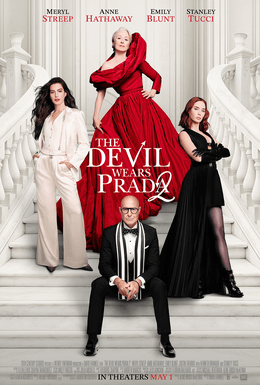

The Devil Wears Prada 2 (2026)
Twenty years had passed since Andrea “Andy” Sachs had walked away from the glossy chaos of Runway magazine. Back then, she had been a young assistant trying to survive the impossible standards of Miranda Priestly, the legendary editor-in-chief whose icy stare alone could terrify an entire office. Now, Andy had built a name for herself in New York City as a respected investigative journalist. She had earned awards, bylines, and the admiration of her peers through years of hard work. Unlike the shallow celebrity gossip and fashion fluff she once endured at Runway, Andy focused on meaningful stories about politics, labor rights, and social inequality. She finally had the career she once dreamed of.
But success in modern media was fragile.
During a glamorous journalism awards gala in Manhattan, Andy stood beneath sparkling chandeliers surrounded by reporters, editors, and television personalities. The night should have been a celebration. Instead, phones across the ballroom suddenly buzzed at once. Confused murmurs spread through the crowd as journalists checked their messages. Andy opened hers and felt her stomach drop.
Her entire newsroom had been shut down.
No warning. No meeting. No farewell speech. Just a corporate text message informing employees that the publication had been dissolved effective immediately.
Around her, seasoned reporters stared blankly into space while others broke into angry conversations. Some laughed bitterly in disbelief. Years of loyalty and work had ended in a single sentence. Andy quietly stepped away from the crowd, trying to process the humiliation and uncertainty. In an industry collapsing under shrinking budgets and digital algorithms, even respected journalism was disposable.
At the same time, another media storm was brewing elsewhere in Manhattan.
Miranda Priestly, still ruling over Runway magazine, found herself under intense criticism after the publication released a glowing feature about a luxury fashion label later exposed for using overseas sweatshop labor. Social media erupted. Activists accused Runway of protecting exploitative corporations, while younger audiences mocked the magazine as out-of-touch propaganda for the wealthy elite.
The scandal deeply embarrassed Elias-Clarke, the massive publishing company that owned Runway. Irv Ravitz, the aging head of Elias-Clarke and Miranda’s longtime ally, knew the magazine needed credibility fast. To Miranda’s horror, Irv decided there was only one person capable of helping save Runway’s reputation: Andy Sachs.
Without even consulting Miranda, Irv hired Andy as Runway’s new features editor.
Miranda was furious.
When Andy entered the Runway offices for the first time in decades, the atmosphere felt strangely familiar yet painfully different. The elegant fashion closets and immaculate hallways remained, but the energy had changed. Younger employees rushed through the office filming short videos for social media. Influencers wandered in and out with ring lights and smartphones. Designers begged for online engagement instead of prestigious print covers.
The mighty Runway empire was struggling to survive in the age of instant content.
Miranda herself seemed changed too. Though still impeccably dressed and sharp-tongued, she lacked the overwhelming force she once carried. Years of HR complaints and corporate oversight had softened some of her crueler habits. Employees no longer trembled the way they once had. Her legendary outbursts had become carefully restrained remarks. Even Miranda appeared exhausted by the modern world of trending hashtags and disposable online fame.
Yet outside of work, her life had improved. Unlike the loneliness she once hid behind her intimidating persona, Miranda now shared a surprisingly stable and affectionate relationship with her husband, Stuart. For the first time in years, she seemed to have a personal life untouched by fashion politics.
Still, Runway itself was deteriorating.
Nigel, Miranda’s loyal creative director and closest confidant, privately explained the situation to Andy. Print magazines barely mattered anymore. Readers consumed fashion through thirty-second clips and viral posts. To stay profitable, Runway had been forced to chase clickbait headlines and cheap online content that contradicted everything the magazine once stood for.
One of Runway’s most important advertisers was Dior, whose communications director happened to be Emily Charlton — Miranda’s former assistant and Andy’s old workplace rival.
Emily had transformed dramatically over the years. Once desperate for Miranda’s approval, she had become a powerful executive in her own right: polished, ruthless, and politically savvy. Seeing Runway weakened by scandal, Emily cleverly used the moment to secure favorable media coverage for Dior. Miranda reluctantly assigned Andy to conduct the interview.
The reunion between Andy and Emily was tense from the start.
Their conversation quickly evolved into an argument about the state of modern fashion. Emily defended luxury brands, insisting exclusivity and prestige were essential to the industry’s identity. Andy countered that fashion houses had become obsessed with artificial scarcity and outrageous pricing that alienated ordinary consumers. What once represented creativity and artistry now often felt like a playground for billionaires.
Their disagreement reignited old tensions between them, but also revealed how much they had both changed since their Runway days.
Despite Andy’s efforts to produce meaningful journalism for Runway, her serious articles attracted little attention online. Deep investigations and thoughtful essays were ignored while celebrity gossip thrived. Frustrated but determined, Andy realized she needed something bigger.
Her opportunity came through Sasha Barnes, the famously reclusive ex-wife of a Silicon Valley billionaire. Sasha had disappeared from public life after a vicious divorce that dominated headlines for years. Using her investigative skills and industry connections, Andy secured an exclusive interview nobody else could obtain.
The interview became a sensation.
For the first time in years, Runway was being discussed for quality journalism instead of shallow trends. Traffic exploded. Critics praised the magazine’s new direction. Even Miranda begrudgingly acknowledged Andy’s value.
Impressed, Irv privately promised Miranda an enormous promotion: global head of content for all Elias-Clarke publications.
But before the announcement could become official, tragedy struck.
At his lavish seventy-fifth birthday party, Irv collapsed from a sudden heart attack and died.
His death sent shockwaves through the company.
Control of Elias-Clarke passed to his son Jay, a cold and pragmatic businessman who lacked any emotional attachment to fashion publishing. Unlike his father, Jay viewed Runway as just another asset on a spreadsheet. He immediately froze Miranda’s promotion and hired consultants to examine budget cuts across the company.
To Andy’s surprise, Miranda endured the humiliation quietly. The woman who once destroyed careers over minor mistakes now tolerated endless meetings with consultants half her age explaining internet metrics and financial projections.
Meanwhile, Andy’s personal life began unraveling.
Her relationship with her boyfriend Peter, a hardworking apartment renovator, grew strained. Under mounting stress about her own uncertain future, Andy accidentally belittled his profession during an argument. Though she immediately regretted it, the damage lingered between them.
At the same time, a publisher approached Andy with a tempting offer: write a tell-all book about Miranda Priestly and the toxic world of Runway. The contract promised enormous money and guaranteed bestseller status.
Andy seriously considered it.
Part of her believed exposing Miranda would finally free her from the shadow of Runway forever. Yet another part of her knew the story was more complicated than simple revenge.
Everything came to a head during Milan Fashion Week.
Nigel organized what many feared would be Runway’s final grand gala — an extravagant event headlined by Lady Gaga herself. Beneath the glamorous spectacle, however, desperation filled the air. Employees whispered about layoffs while executives negotiated behind closed doors.
Determined to save the magazine, Andy developed a bold plan.
She approached Benji, Sasha Barnes’s wealthy ex-husband and Emily’s current boyfriend, convincing him to purchase Runway from Jay. Andy believed outside investment could preserve the magazine’s independence and creative identity.
But when Andy and Emily presented the proposal to Miranda, the editor reacted with fury.
Miranda knew Emily secretly hoped to replace her once ownership changed hands. She admitted she had pushed Emily out of Runway years earlier because, despite Emily’s competence, she lacked true creative instinct.
Then Miranda overheard Benji discussing his long-term plans for Runway — including replacing much of the editorial staff with artificial intelligence systems capable of generating articles, styling advice, and marketing campaigns instantly.
For the first time in years, Miranda looked genuinely afraid.
She realized the threat was no longer irrelevance. It was extinction.
Determined to stop Benji and protect the human creativity behind Runway, Miranda turned to Andy for help. Together, they searched for another solution.
Andy ultimately convinced Sasha Barnes to buy not only Runway, but the entirety of Elias-Clarke Publications. Sasha saw potential in rebuilding quality journalism and restoring artistic integrity to media brands destroyed by corporate greed.
Jay accepted the offer, abandoning his deal with Benji.
As the acquisition finalized, Miranda experienced a rare moment of self-awareness. She admitted she had taken Nigel’s loyalty for granted for decades. To honor him, she invited Nigel to deliver the gala’s keynote speech instead of herself, finally giving him the public recognition he deserved.
Meanwhile, Sasha officially granted Miranda the global leadership role Irv had once promised her.
Returning to New York after the chaos of Milan, Miranda privately confessed something unexpected to Andy: Andy’s stubborn idealism had inspired her to fight for Runway instead of surrendering to corporate decay.
She also revealed she knew about Andy’s plans to write the tell-all book.
Rather than stopping her, Miranda encouraged Andy to write honestly — including every painful and ugly truth about her.
Andy finally reconciled with Peter, apologizing sincerely for losing perspective amid her professional fears. She also repaired her friendship with Emily, who had broken up with Benji after realizing his ambitions would destroy everything they cared about.
Finally, Nigel admitted a secret he had kept for years.
He had been the one who convinced Irv to hire Andy back at Runway in the first place because, despite everything that happened long ago, he had always believed in her talent.
With Runway entering a new era, Miranda rewarded Andy with a spacious office of her own. And though Miranda emerged from the ordeal wiser and more appreciative of the people around her, one thing never truly changed.
As assistants once again hurried through the office carrying impossible requests, Miranda Priestly returned to work with renewed confidence, sharper than ever — her commanding voice once again echoing through the halls of Runway magazine.
#WeTakeAStand #OpinYon #OpinYonNews #MovieGuide #TheDevilWearsPrada