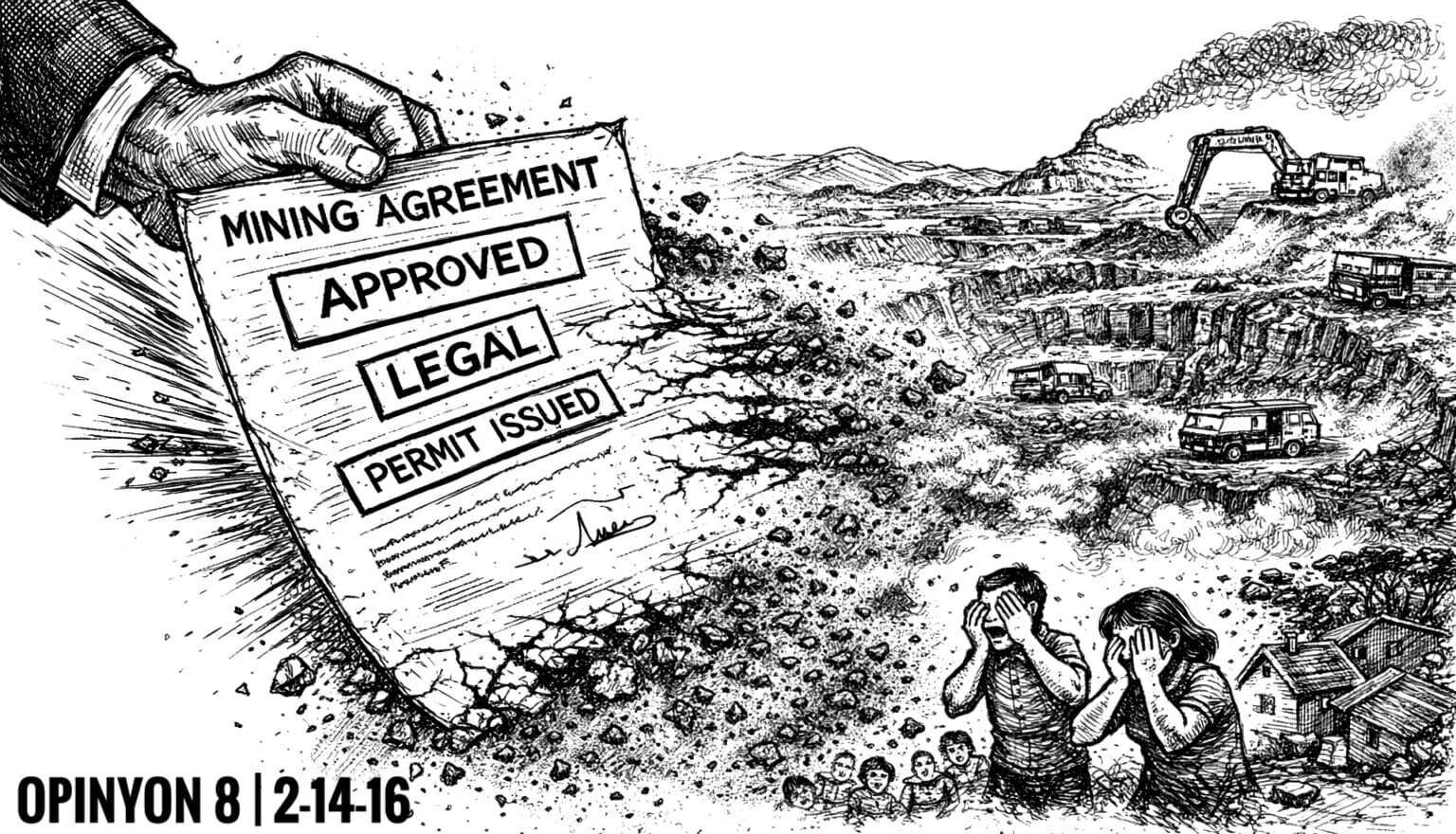

In law, the path seems clear: landowners may sell their property to mining companies, and companies may extract minerals within regulatory boundaries.
Contracts are signed, permits are issued, and legality is satisfied.
Yet, legality is only one measure of justice. For the residents living near these sites, the law often feels like a paper shield, offering protection to transactions while leaving communities exposed to dust, noise, and the slow erosion of their environment and way of life.
The tension is stark. On one hand, landowners exercise their rights, often receiving financial incentives that can change lives.
On the other, neighbors who may not own a single parcel face consequences they neither signed for nor profit from.
Their protests are not merely “Not-In-My-Backyard-ism”; they are a call for a more holistic understanding of rights, one that includes environmental stewardship, public health, and intergenerational responsibility.
Mining, in this context, becomes a mirror reflecting broader societal questions: Should economic gain justify environmental and social risk?
Does the sale of a few plots legitimize the disruption of an entire community?
And most critically, can legal frameworks evolve fast enough to reconcile private property rights with collective well-being?
The answers are uncomfortable because they demand compromise. Companies must transcend transactional relationships, engaging genuinely with affected communities.
Governments must weigh approval not just against regulations but against the moral calculus of public good. Residents, too, are challenged to balance immediate concerns with long-term advocacy.
Legality may clear the path, but legitimacy builds the road.
If society neglects the latter, mining may succeed on paper yet fail in the hearts and futures of those it touches most.
True balance lies not in contracts alone but in conscience, dialogue, and the courage to question whether what is legal is truly right.
#WeTakeAStand #OpinYon #OpinYonNews #Editorial