
Modernization - at the cost of the environment?
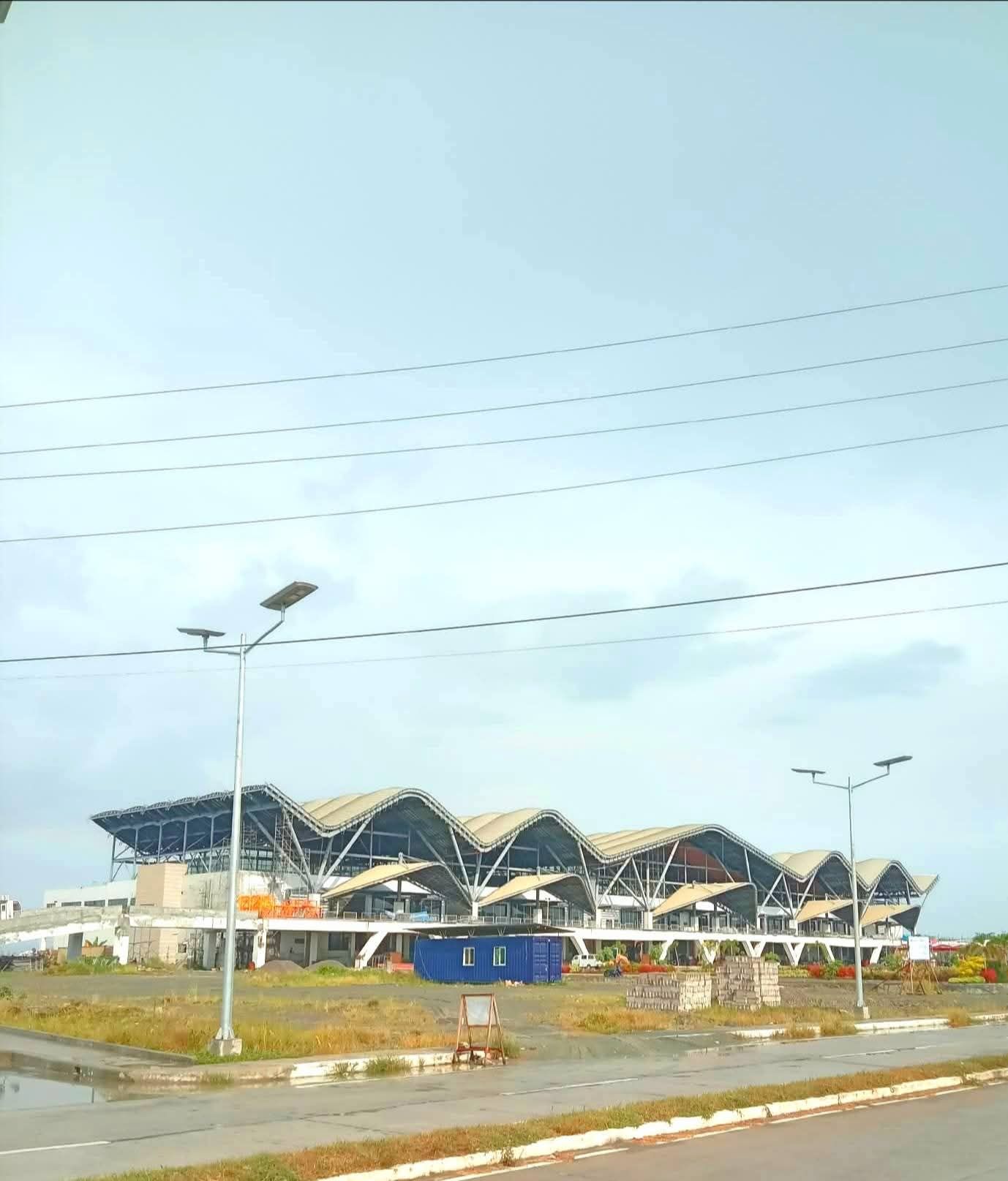
That was the difficult dilemma the Department of Transportation (DOTr) faced as it continues to push through with the much-anticipated expansion of the Daniel Z. Romualdez Airport in Tacloban City.
The airport modernization is among the government's priority transport projects and aims to transform the Tacloban gateway into an international-standard facility capable of accommodating larger aircraft, increasing passenger traffic, and strengthening Eastern Visayas' connectivity.
One particular concern of environmentalsists and concerned groups is the impact of the airport's modernization program on the mangroves in Cancabato Bay, long a trusted barrier against heavy flooding.
The DOTr now proposes relocating mangroves that will be affected by the 130-hectare development works along the new airport complex, instead of simply removing them.
The approach follows the Department of Environment and Natural Resources' (DENR) interim guidance allowing the "earth-balling" and relocation of mangroves in exceptional circumstances for nationally significant infrastructure projects, subject to scientific assessment and environmental safeguards.
The policy, however, remains under review following concerns raised by environmental organizations and marine scientists.
For Tacloban, the issue carries particular significance.
Mangrove forests surrounding Cancabato Bay have long been recognized as natural barriers against storm surges and coastal erosion.
Following the devastation of Super Typhoon Yolanda in 2013, both government agencies and private organizations invested heavily in restoring degraded mangrove areas to strengthen the city's coastal resilience.
Earlier this year, the DENR partnered with PH Haiyan Advocacy Inc. to rehabilitate and maintain a 74-hectare mangrove plantation in Tacloban under the National Greening Program.
Officials said the initiative seeks to improve biodiversity while protecting vulnerable coastal communities from future disasters.
Environmental experts have stressed that relocating mangroves is considerably more complex than transplanting ordinary trees.
Success depends on factors such as species selection, tidal conditions, soil quality, and long-term monitoring.
Studies on mangrove restoration in the Philippines have likewise emphasized that community participation and science-based site selection are critical to ensuring transplanted mangroves survive and continue providing ecological benefits.
Despite the environmental challenges, government officials maintain that the airport expansion remains vital for the region's economic growth, tourism, disaster response capability, and investment prospects.
The upgraded facility is expected to improve passenger services while positioning Tacloban as a stronger transport hub in Eastern Visayas.
As construction moves forward, environmental groups say the project's success should not be measured solely by new infrastructure, but also by whether the mangroves that have protected Tacloban's coastline for generations are effectively conserved or restored.
The balancing act between development and environmental stewardship is expected to remain under close public scrutiny as the airport project progresses.
#WeTakeAStand #OpinYon #OpinYonNews