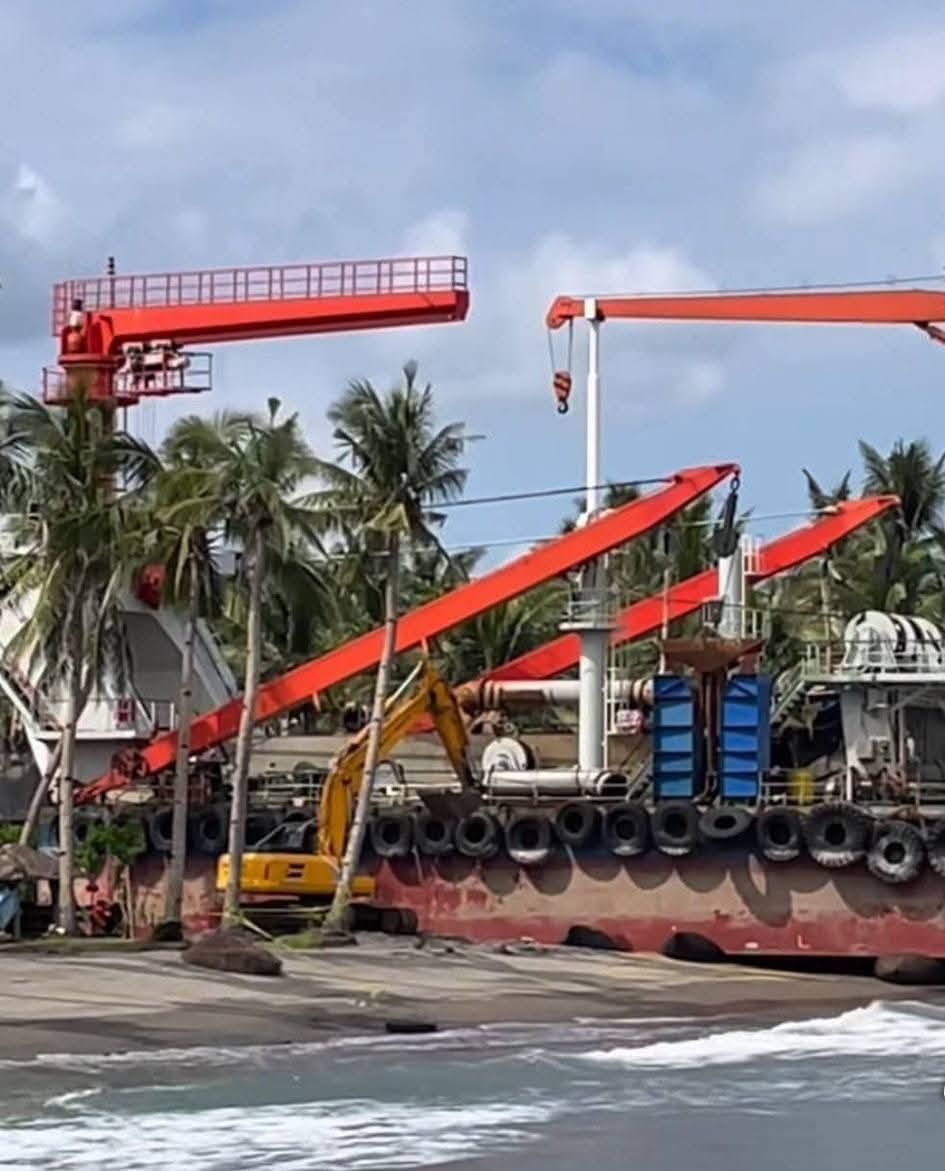

A chorus of resistance is rising from the coastal and farming villages of MacArthur, Leyte as residents push back against the impending operation of a massive dredger for black sand mining, an activity they fear will irreversibly damage their land, livelihoods, and future.
The dredger, operated by MacArthur Iron Sand Project Corp. (MIPC), arrived in late January and is expected to begin large-scale extraction of magnetite-rich black sand in nearby agricultural and coastal areas.
While the company maintains that it has secured the necessary permits, many locals say the project has already left scars, both literal and social, on their community.
“They have destroyed our lands, now they want to destroy our lives,” said Patrocenia Rael, a farmer whose fields were allegedly turned into waterlogged pits during initial site preparations.
“We reported this to our barangay officials, but until now, nothing has been done.”
Her frustration echoes across the town. Farmers complain of blocked access roads and damaged irrigation, while fisherfolk fear that dredging will disrupt nearshore ecosystems they depend on for daily survival.
For these residents, the arrival of the dredger is not a symbol of development, but a warning bell.
MIPC administration manager Laurence Medua has insisted that the firm is operating legally and that landowners may coordinate with the company regarding access.
“The company is compliant with existing regulations,” Medua said in an interview. Yet legality, locals argue, does not automatically translate to legitimacy, especially when consent feels coerced or absent.
Environmental advocates back these concerns with science. Black sand plays a crucial role in protecting coastlines and riverbanks from erosion.
Its removal has been linked in other parts of the country to accelerated coastal retreat, flooding, and loss of marine habitats. In a country battered yearly by typhoons, weakening natural defenses is a dangerous gamble.
During a recent hearing at the Leyte provincial board, Father Amadeo Alvero, parish priest of St. Isidore the Worker, warned officials against prioritizing short-term profit over long-term survival.
He stressed that unchecked extraction threatens food security and environmental stability, calling for a precautionary halt to operations.
Nationally, the issue has drawn legislative attention. A proposed measure seeking to ban black sand mining altogether argues that continued extraction could cause land subsidence severe enough to place communities underwater within decades.
While the bill remains pending, its message resonates strongly in Leyte, where residents feel they are being used as test subjects for a risky industry.
Proponents of mining often point to job creation, and it is true that in some impoverished villages, black sand operations have provided temporary employment. But critics counter that these gains are fleeting, while environmental damage is permanent.
The resistance in MacArthur is not merely emotional, it is rational, rooted in lived experience and hard lessons from other mining-affected communities. As one resident put it during a protest, “You cannot eat magnetite.”
If authorities fail to listen, the screams of resistance may soon turn into a requiem for land, livelihood, and trust.
(Photo courtesy of Jaypee Camposano)
#WeTakeAStand #OpinYon #OpinYonNews