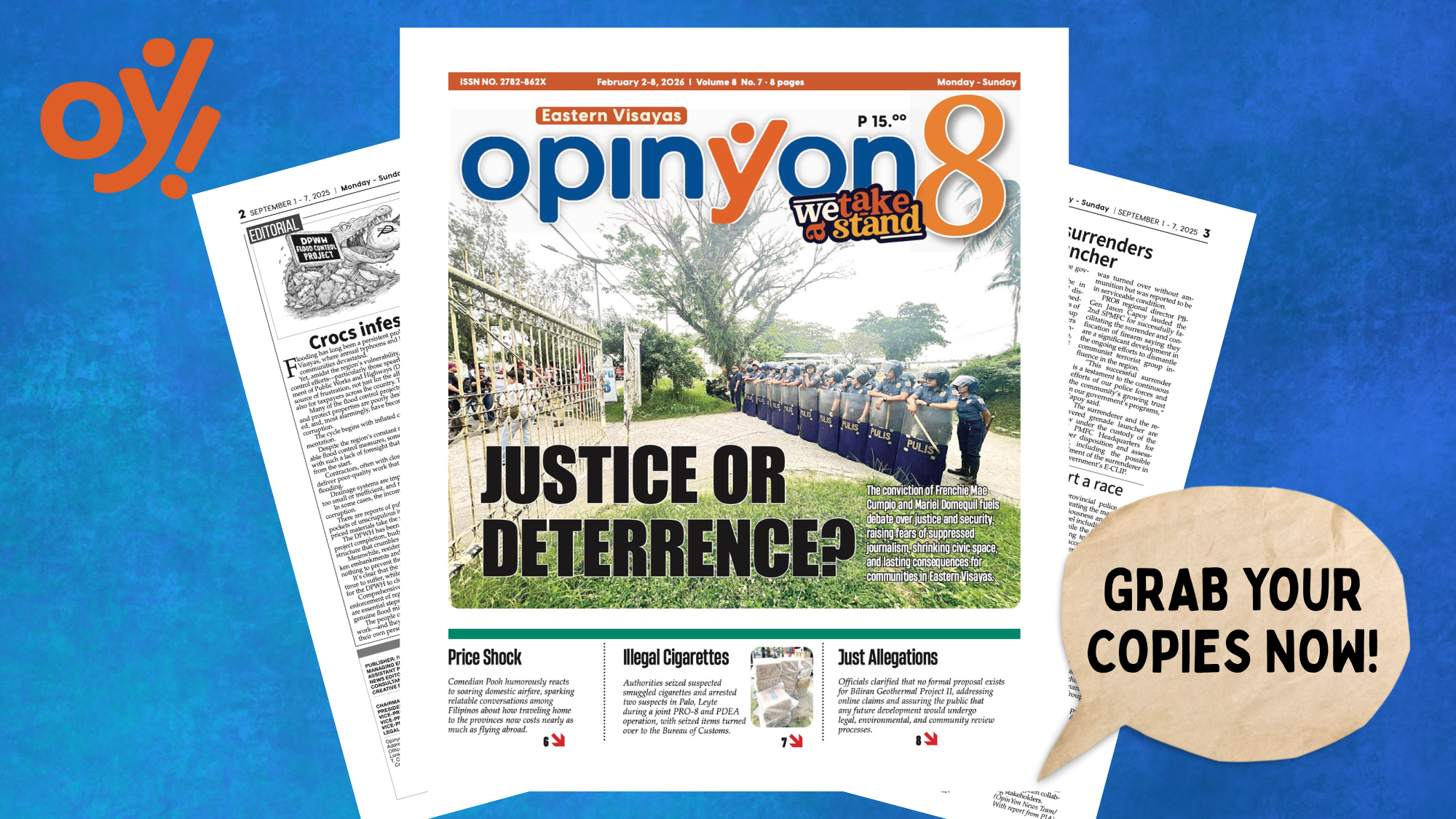

A regional court’s conviction this month of community journalist Frenchie Mae Cumpio and human-rights advocate Mariel (Marielle) Domequil on terrorism financing charges has struck at the heart of debates over press freedom, civil liberties and national security in the Philippines.
The ruling, which draws heavy criticism from media and human-rights organizations, comes amid growing concern over the legal environment for journalists and activists, particularly in regions like Eastern Visayas where militarization and insurgency have long shaped everyday life.
Judge Georgina Perez handed down 12–18 year prison sentences following a trial that spanned nearly six years, even as the court acquitted the pair of illegal weapons charges originally lodged in connection with their 2020 arrest.
Prosecutors alleged Cumpio and Domequil had financially supported the New People’s Army; both deny any involvement.
For supporters and press freedom advocates, the verdict is a sobering moment.
In Manila, Beh Lih Yi, Asia-Pacific director of the Committee to Protect Journalists, said the ruling reveals a “blatant disregard for press freedom” and “underscores the lengths that Philippine authorities are willing to go to silence critical reporting.”
She noted that Cumpio had been targeted after reporting on alleged police and military abuses affecting rural farmers.
International organizations rallied to Cumpio’s defense in the months leading up to the verdict. In a coalition letter signed by more than 250 journalists worldwide, advocates urged President Ferdinand “Bongbong” Marcos Jr. to intervene, warning that her continued detention was “a denial of justice” and a “contradiction of your stated commitment to press freedom.”
The National Union of Journalists of the Philippines and allied groups also condemned the verdict. In a relayed statement from a key supporter, protest leaders described the ruling as prolonging “the suffering of … our family, and fellow human rights workers.”
They pointed to a mounting tally of political prisoners, “now 761 strong as of February 2025” , underscoring wider concerns about the Philippines’ handling of dissent.
Such responses speak to a broader fear that the case will reinforce a chilling effect among independent media practitioners.
Local journalists in Eastern Visayas had long viewed Cumpio as a rare voice documenting land rights issues, rural displacement, and alleged abuses by security forces.
With her conviction, many fear others will think twice about reporting on sensitive issues. Signs of this tension appear in interviews with regional reporters who describe persistent harassment, red-tagging and surveillance even before Cumpio’s arrest, practices that undermine confidence in press freedom protections.
Cumpio herself, writing from detention before the verdict, characterized the accusations against her as “a story that’s so absurd that if this was a class debate, you wouldn’t even try to rebut.”
She lamented the years spent in prison as robbing her of “time, family, dreams, plans, future” while vowing to hold on despite profound fear.
On the other side of the debate, officials with the government’s anti-insurgency task force defended the conviction as an appropriate application of the law, insisting critics are trying to shield criminal liability under the guise of press freedom.
“They were convicted for financing a terrorist organization, plain and simple,” one task force undersecretary said, urging detractors to consider appeals rather than delegitimizing the judiciary.
For residents of Eastern Visayas, the fallout is deeply personal. What began as a local journalist’s struggle to report on community issues has become a national flash point over free expression and civic space.
Many locals express concern that independent reporting, once a lifeline for marginalized voices, will wither under pressure from both state security rhetoric and a shrinking public sphere wary of government scrutiny.
Human rights defenders outside the region echo these anxieties. Mia Tonogbanua, vice-chairperson of Amnesty International Philippines, warned that the case exemplifies a playbook of intimidation, combining red-tagging, surveillance, and legal harassment, especially targeting young activists and journalists.
“This unfair and deplorable practice has to end,” she said in a widely circulated statement.
As Cumpio and Domequil prepare to appeal, their case continues to resonate far beyond a courtroom in Leyte. Whether seen as a necessary affirmation of state security law or a landmark setback for civil liberties, the verdict has intensified an already fraught national conversation about the role of the press, the boundaries of dissent, and the future of democratic space in the Philippines.
The verdict, and the many voices it has animated, reflect a nation at a crossroads, struggling to balance security with the fundamental rights of expression, association, and truth-telling.
#WeTakeAStand #OpinYon #OpinYonNews