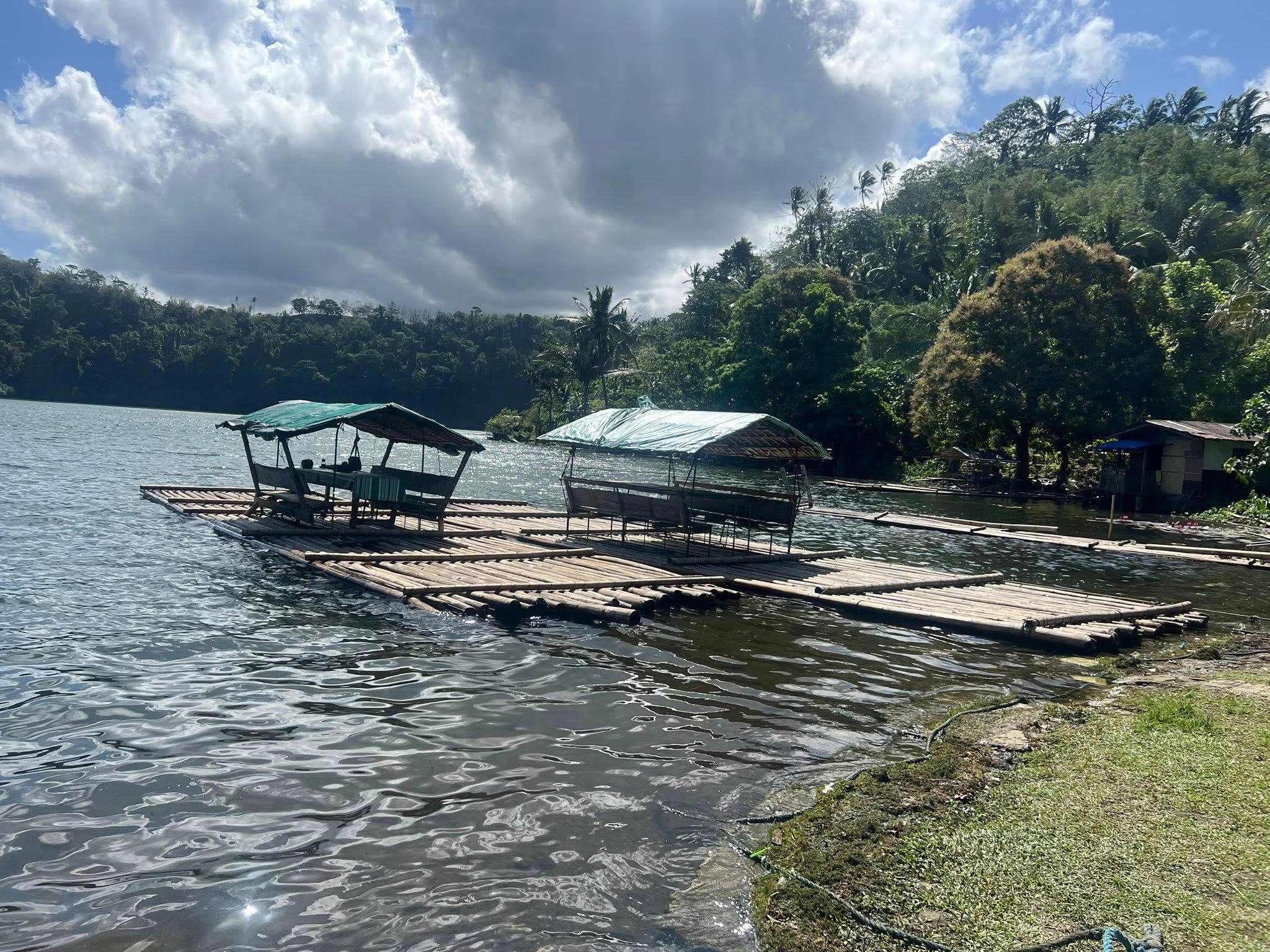

The Seven Lakes of San Pablo City, Laguna has long been a source of livelihood for the city’s residents, both as a food source and as a magnet for tourists.
Now the city government of San Pablo wants to showcase the Seven Lakes as a top tourist destination, starting with the launch of the Yakap Lawa: San Pablo City of Lakes Festival last May 9.
Not so fast, according to a group dedicated to the preservation of the Seven Lakes, as it called out the apparent lack of direct and efficient access to these lakes to the public.
Accessibility issues
The issue of public accessibility was recently raised by Mary Ann Buncayo Torres, a member of the Friends of the Seven Lakes Foundation (FSLF), in a recent post on the Facebook group San Pablo Public Forum (SPPF).
According to Torres, a recent ocular inspection made by members of the FSLF at the seven lakes reveal a disturbing lack of public access to most of these lakes, which the San Pablo City LGU have pointed out have a high potential for nature tourism.
“Six out of the seven lakes are not genuinely accessible to the average San Pableño. Access often requires passing through other municipalities or paying fees to private establishments,” was how she summarized the SLSF findings.
That lone exception was Sampaloc Lake, the largest and most prominent of the Seven Lakes, whose proximity to the city center (near the Old City Hall and the Dona Leonila Park) have made it an easy destination both for locals and for tourists.
And even that, Torres lamented, can be questioned as a recent ban on vehicles near the lake have reduced direct access, not to mention reduced income for the vendors who cater to visitors.
Restricted
Meanwhile, the Bunot, Calibato, Palakpakin, Mohican and Pandin have been classified as “limited,” “restricted” or “controlled” access, as they were surrounded by private subdivisions, resorts, and informal settlers.
While the Pandin Lake was effectively managed by the local government and community of Barangay Santo Angel through an organized eco-tourism program, entrance fees still apply.
“It is well-managed and serves as a best-practice model, though it does not offer free public access,” Torres noted.
Two lakes – Bunot and Yambo – cannot be directly accessed or viewed from the city, and visitors must pass through the nearby towns of Rizal and Nagcarlan, respectively.
“This situation contradicts Presidential Decree 1067 (Water Code of the Philippines), which designates a three-meter easement along shorelines as public domain. In practice, these easements are either encroached upon or physically unsafe for use,” Torres added.
Recommendations
Torres and the FSLF have made a series of recommendations to the San Pablo LGU and the Laguna Lake Development Authority (LLDA), which also manages the Seven Lakes, to improve public accessibility to these areas.
These include conducting a comprehensive survey of all seven lakes to identify, mark, and recover easements currently occupied by private structures; ensuring that there are at least two accessibility entry points at each lake; and working with other municipalities to establish direct and convenient access routes from San Pablo to Calibato and Yambo Lakes.
“The Seven Lakes of San Pablo should not become “museum pieces” visible only in photographs or accessible only to those who can afford to pay. They are a shared natural heritage that belongs to every San Pableño,” Torres emphasized.
#WeTakeAStand #OpinYon #OpinYonNews