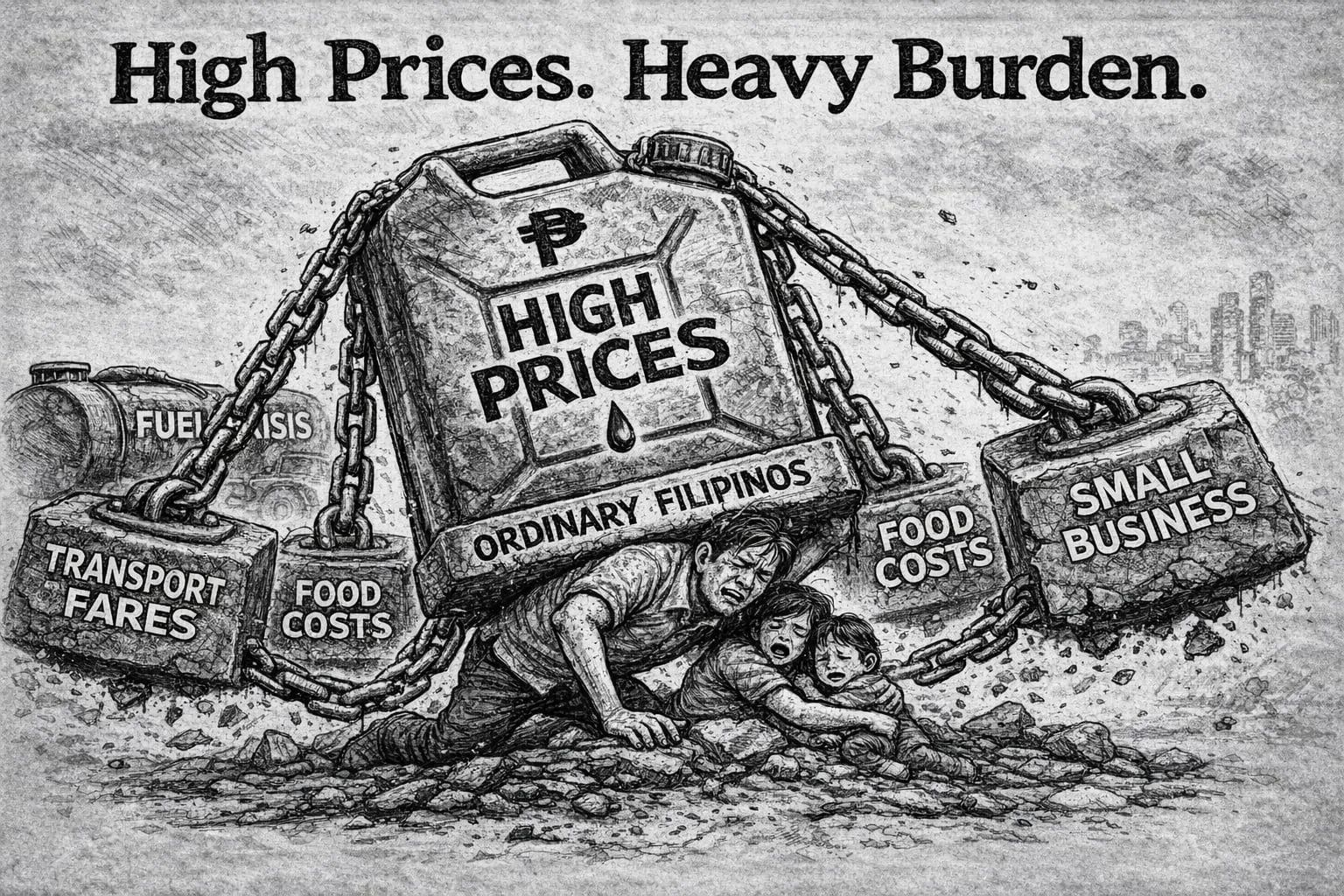

The Philippines has once again found itself at the top of an unwelcome list: the steepest fuel price hikes in Asia.
For a country where millions depend on daily commuting, public transport, and small-scale livelihoods, the surge in fuel prices is not just an economic statistic, it is a daily struggle felt in every jeepney fare, every market stall, and every household budget.
Several factors have fueled this painful climb.
The country imports the vast majority of its oil, leaving it vulnerable to global price shocks and currency fluctuations.
When international oil prices spike, Filipino consumers feel it almost immediately.
Add to this the peso’s periodic weakening against the U.S. dollar, and the cost of importing fuel becomes even higher.
Taxes under existing fuel policies further amplify the final price paid at the pump.
Yet the deeper concern is not only the rise itself, it is what may happen when the global fuel crisis eventually subsides.
History suggests that prices rarely fall as quickly as they rise.
Once transport operators, businesses, and supply chains adjust to higher operating costs, those increases tend to linger.
What begins as a temporary surge risks becoming the new normal.
For ordinary Filipinos, the consequences are severe.
Transportation fares creep upward. Food prices rise as logistics costs increase.
Small businesses struggle to stay afloat, while workers already stretched thin by inflation find their purchasing power shrinking even further.
The poorest households, who spend the largest share of their income on basic needs, are hit the hardest.
If fuel prices remain high even after the crisis eases, the burden will not be carried by oil companies or international markets, it will be carried by the Filipino public.
This moment demands vigilance and accountability.
Policymakers must examine whether current pricing structures, taxes, and market practices truly protect the public interest.
Without decisive action, the Philippines risks locking its people into a cycle where every global shock becomes a permanent domestic hardship.
#WeTakeAStand #OpinYon #OpinYonNews #Editorial