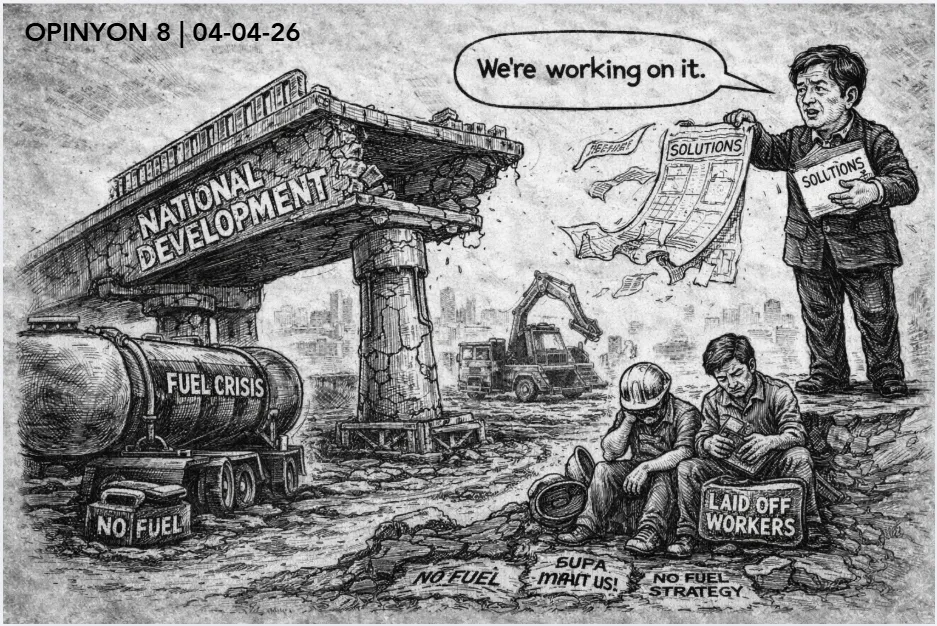

The construction industry, one of the primary drivers of infrastructure and economic development, is grinding to a halt as the ongoing fuel crisis continues to push operational costs to unsustainable levels.
Heavy equipment, transportation of materials, and daily site operations depend heavily on fuel.
When fuel prices surge and supply becomes unstable, the entire construction pipeline slows down.
Unfortunately, the government’s response to this growing problem has been inadequate, leaving contractors, workers, and communities to bear the consequences.
Across the country, construction firms are delaying projects, scaling back operations, or halting work altogether.
The rising cost of diesel alone has significantly increased the expenses associated with operating machinery such as excavators, cranes, and dump trucks.
Smaller contractors, who operate on tighter margins, are particularly vulnerable. Many cannot afford the sudden cost spikes, forcing them to suspend projects and lay off workers. As a result, thousands of laborers who rely on daily wages are losing their livelihoods.
What makes the situation more troubling is the lack of a clear and targeted government strategy to support the construction sector.
While officials acknowledge the broader fuel crisis, little has been done to mitigate its direct impact on infrastructure development.
There have been no substantial fuel subsidies for construction companies, no temporary tax adjustments to ease fuel costs, and no comprehensive policy to stabilize supply for critical industries.
Infrastructure projects such as roads, bridges, schools, and housing are essential for long-term national development.
When these projects stall, the effects ripple throughout the economy. Delayed infrastructure slows business growth, weakens public services, and ultimately burdens citizens.
A proactive government would recognize construction as one of the priority sectors during a fuel crisis.
Instead of reactive statements, policymakers should implement targeted relief measures, negotiate fuel price stabilization mechanisms, and create contingency plans for industries most affected.
The current construction slowdown is not merely a consequence of global fuel challenges; it is also a reflection of domestic policy gaps.
Without decisive action, the government risks allowing a temporary crisis to become a long-term setback for national development.
#WeTakeAStand #OpinYon #OpinYonNews