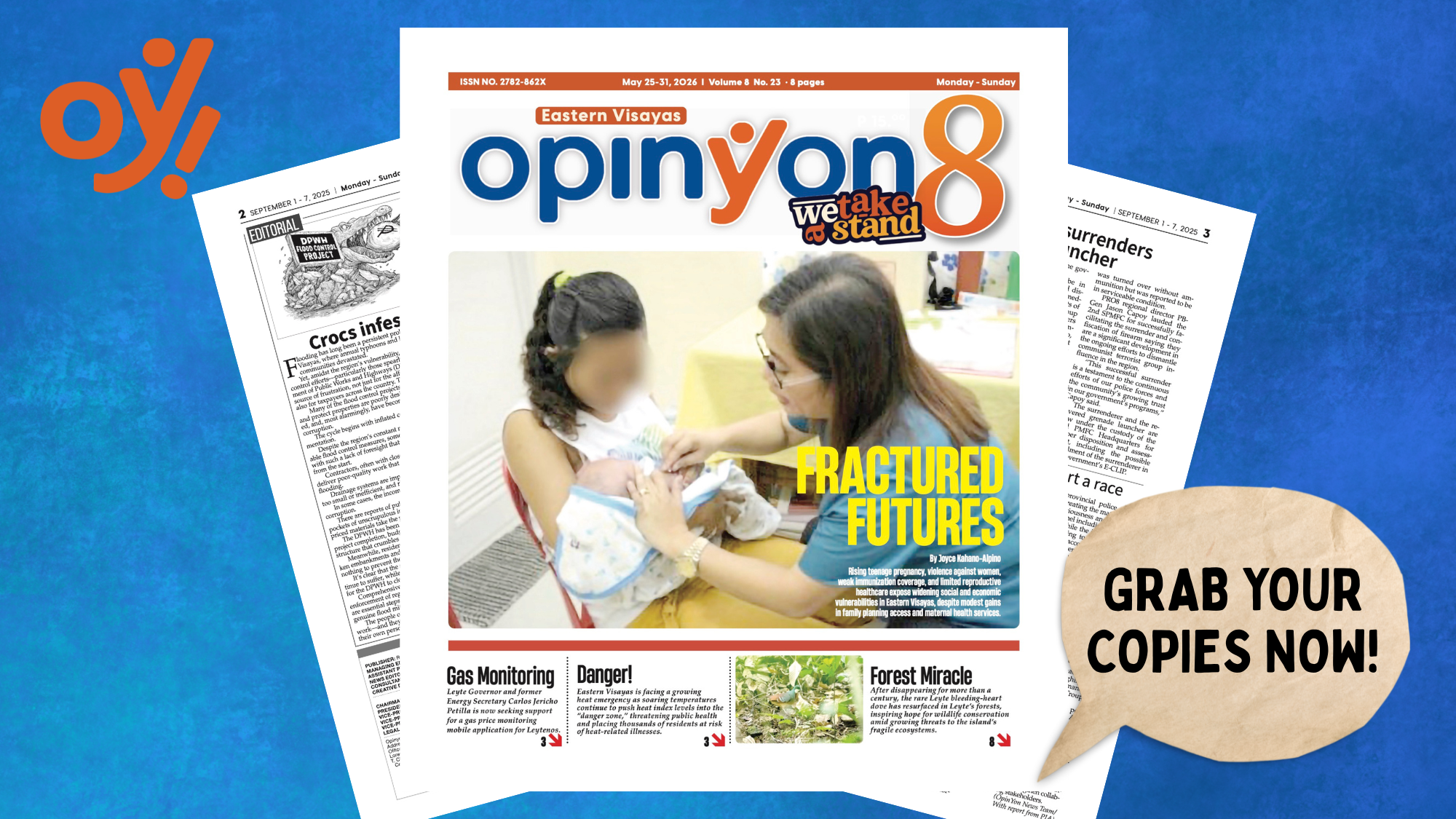

The numbers are stark, unsettling, and impossible to ignore.
The latest findings from the 2025 National Demographic and Health Survey (NDHS) reveal a region caught between progress and persistent crisis.
In Eastern Visayas, teenage pregnancy is rising, violence against women remains widespread, and thousands of children are still missing critical vaccines which are exposing deep cracks in the region’s social protection and healthcare systems.
According to data from the Philippine Statistics Authority (PSA), teenage pregnancy in Eastern Visayas climbed to 6.0 percent in 2025, higher than the national average of 4.9 percent.
Behind the statistic are interrupted educations, young mothers forced out of school, and families pushed deeper into poverty.
Health experts warn that adolescent pregnancy is not merely a health issue but a development crisis tied directly to inequality, limited access to reproductive education, and weak healthcare reach in remote communities.
The World Health Organization (WHO) noted that many areas in Samar and Southern Leyte continue to struggle with access to youth-friendly health services, particularly in rural barangays.
At the same time, violence against women continues to cast a long shadow across the region.
NDHS data show that many women aged 15–49 who had intimate partners experienced emotional, physical, or sexual violence.
Advocates believe the true number could be even higher because many cases remain unreported due to fear, stigma, and economic dependence.
Women’s rights groups say the persistence of abuse reflects broader structural problems which includes poverty, weak reporting mechanisms, and limited access to legal and psychological support services.
Meanwhile, family planning access has shown only modest improvement.
Modern contraceptive use among married women in Eastern Visayas rose slightly to 44 percent, yet more than one-third of women still reported using no contraceptive method at all.
Population experts argue that this gap continues to fuel unintended pregnancies, maternal health risks, and economic hardship for already vulnerable households.
The region’s child immunization data also raised concern.
While vaccine coverage for individual diseases remains relatively high, only 62.1 percent of children aged 12 to 23 months in Eastern Visayas are fully vaccinated according to the national schedule.
Health officials warn that incomplete immunization leaves children vulnerable to preventable diseases such as measles, polio, and pneumonia.
The PSA also emphasized that the NDHS is designed to guide policymakers in evaluating programs related to maternal health, child welfare, family planning, and violence prevention.
Development agencies and public health workers say the challenge now is no longer simply gathering data but turning statistics into action.
Programs such as the Joint Programme on Accelerating the Reduction of Adolescent Pregnancy (JPARAP), supported by WHO, UNICEF, and UNFPA, have already shown signs of progress in parts of Samar and Southern Leyte through youth leadership and mobile healthcare initiatives.
But experts say isolated successes will not be enough.
Eastern Visayas still faces the long-term effects of poverty, disaster vulnerability, healthcare shortages, and education gaps.
Without sustained investment in community health systems, comprehensive sexuality education, women’s protection services, and accessible vaccination programs, the region risks raising another generation trapped by the same cycles.
The 2025 NDHS does not merely present numbers.
It presents a warning.
#WeTakeAStand #OpinYon #OpinYonNews #PSA #WHO #UNICEF