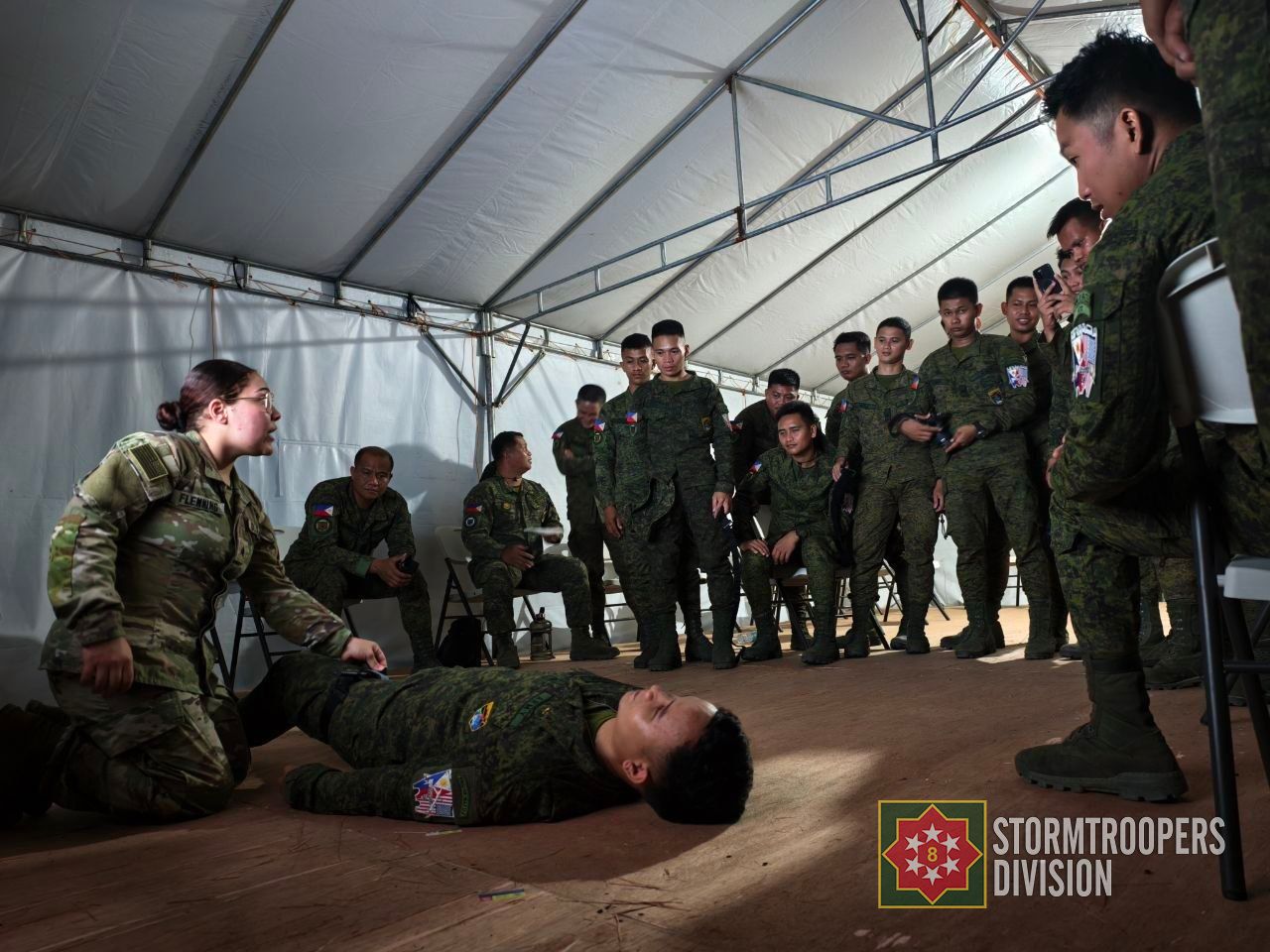

The annual Balikatan military exercises have reached Eastern Visayas this year, placing Tacloban and nearby areas at the center of one of the largest defense training events ever staged in the Philippines.
While Balikatan has long been associated with northern Luzon and western coastal provinces, the inclusion of Eastern Visayas signals a broader geographic focus as the Philippines and its allies prepare for both security threats and disaster response.
According to local officials and military planners, Tacloban City was selected as one of the exercise venues months before the April opening ceremonies.
Preparations included site inspections, traffic and logistics planning, and coordination with local government agencies.
Authorities also said public information campaigns were launched to explain troop movements and temporary disruptions residents might notice during the drills.
Balikatan 2026 officially opened on April 20 and is scheduled to run until May 9, giving the exercises a total duration of 20 days.
It is the biggest edition of the annual drills to date, involving around 17,000 troops from the Philippines, the United States, Australia, Japan, Canada, France, and New Zealand.
Activities during the three-week exercise include amphibious landings, maritime patrols, air defense simulations, cyber training, and humanitarian assistance missions.
For Eastern Visayas, the significance goes beyond military training. The region remains one of the country’s most disaster-prone areas, still marked in public memory by the devastation of Super Typhoon Yolanda in 2013.
Security analysts note that staging activities in Leyte and Samar allows participating forces to train in logistics, engineering support, rapid deployment, and emergency coordination which are skills that are valuable during typhoons, earthquakes, and other crises.
Residents in Tacloban have reported seeing increased transport activity, equipment deliveries, and visiting personnel in recent weeks.
While some have expressed concerns over traffic congestion and temporary restrictions, others see economic opportunities for hotels, transport services, restaurants, and other small businesses serving participants and support staff.
Since the drills last nearly three weeks, local enterprises may benefit from a sustained flow of visitors rather than a brief surge.
The exercises also reflect changing strategic priorities in the region.
Recent Balikatan drills have focused more heavily on territorial defense, maritime security, and interoperability among allies amid rising tensions in the South China Sea.
By expanding activities to Eastern Visayas, planners appear to be emphasizing the need for mobility across the Philippine archipelago, not only in contested western waters but also in central transit hubs such as Leyte.
For many in Eastern Visayas, Balikatan 2026 is both a reminder of the region’s strategic location and a test of how military exercises can coexist with civilian life.
As convoys move through Tacloban’s roads and foreign troops train nearby over the 20-day period, the event has turned the region into a temporary stage for international cooperation and local scrutiny.
#WeTakeAStand #OpinYon #OpinYonNews