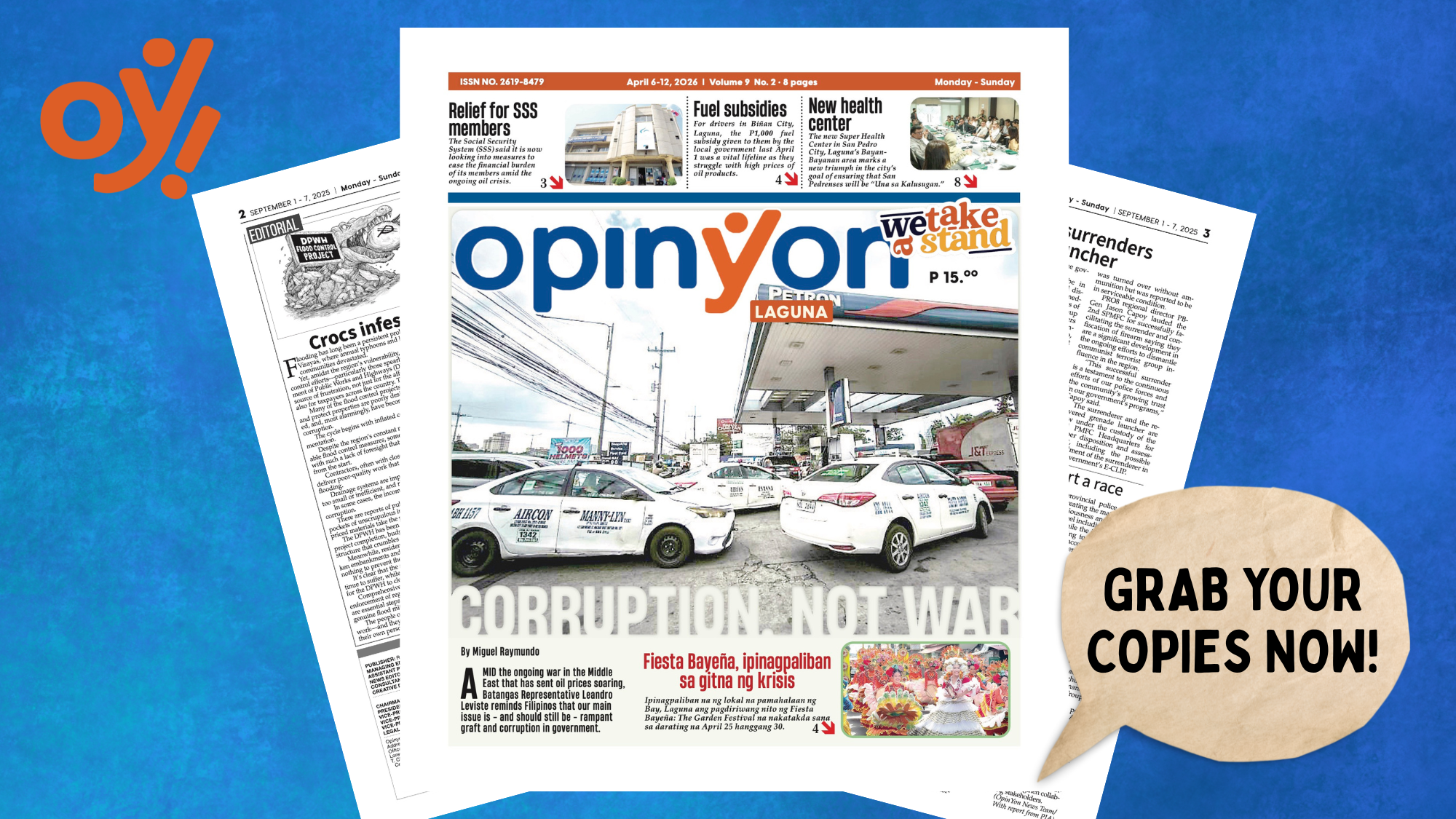

The ongoing crisis in the Middle East that has sent gasoline prices soaring in the past few weeks has become the “hot topic” in the Philippines, primarily due to its direct impact on ordinary Filipinos.
And that has had some sectors worried.
The main worry is the primary issue that still haunts Philippine governance and society might become forgotten amid the struggle of ordinary Filipinos for survival.
That primary issue: rampant graft and corruption in public governance.
For Batangas 1st District Representative Leandro Leviste, the war in the Middle East is just another episode that exposed our vulnerability to the effects of the wholesale robbery of public funds.
Corruption as the root cause
In a video posted on his social media page last March 26, Leviste was blunt in pointing out the root cause of our social ills.
“Ang tunay na problema ng Pilipinas ay hindi ang giyera sa Middle East, kundi ang pagwawaldas ng buwis,” was how he put it in his video.
“Mahigit ₱300 billion ang mawawala sa ating ekonomiya ngayong taon dahil sa pagtaas ng presyo ng langis. Pero dahil sa pagwaldas ng pera noong wala pang krisis, ang ating pambansang utang ay lalampas na sa ₱19 trillion,” he added.
In effect, Leviste reminded Filipinos that graft and corruption – which have worsened to an unimaginable degree during the first three years of the administration of President Ferdinand Marcos, Jr. – have served to exacerbate the effects of the global conflict on the national economy.
With the peso now sinking to its lowest (₱60.69 to the US dollar as of March 31), we could expect our national debt to double, even triple, as the ripple effects of the Iran war is expected to continue in the coming weeks.
And as if corruption isn’t bad enough, there is also the apparent reluctance of the Marcos administration to implement long-range policy measures that would have spared Filipinos from the long-range effects of soaring gas prices.
Critics, for instance, have called the declaration of a State of National Energy Emergency as purely “performative” – that is, giving the appearance of doing something without actually doing something.
What should be done?
Just as he was blunt in pointing out the root cause of our current woes, Leviste was blunt enough in his suggested long-range measures to mitigate the impacts of the current oil crisis.
Among the measures Leviste suggested was to lower the value-added tax rate (VAT) and replace it with a more progressive taxation system.
The solon’s suggestion echoes the measures recently filed by his mother, Senator Loren Legarda, which were specifically aimed at easing the burden on low-income households.
Senate Bill No. 1851, (Differentiated Value-Added Tax Rates Act) aims to reduce VAT rates for goods and services for poor and middle-class Filipinos to 10 percent, while retaining the 12-percent rate for luxury and "sin" products.
Senate Bill No. 1857, (Murang Bilihin at Serbisyong Medikal Act), on the other hand, aims to fully exempt goods and services tied to daily subsistence and public health from VAT.
Moreover, VAT exemption also extends to basic household electricity up to a monthly threshold (non-essential and industrial use remains taxable); and basic internet access for personal, educational, and essential communication (excluding premium digital services).
By setting reasonable electricity and water consumption thresholds eligible for VAT exemption, the measure encourages responsible household use while easing pressure on energy and water systems.
Hold officials accountable
But more than simply reforming our taxation system, Leviste once again called for another reform that aims to eradicate the “culture of corruption” that has become part and parcel of Filipino governance.
Two of his “suggestions” hit hard on the very root cause of our socio-economic woes: the unfettered greed and duplicity among government officials.
Those suggestions: one, remove all government officials – including members of the Cabinet – who are responsible for the current misery of the Filipino people; and two, continue to raise the alarm on the flood-control issue.
The fact, unfortunately, is that nine months after the first revelations of the billions of pesos allocated to flood-control projects that turned out to be mirages, no high official has been convicted or even charged of this wholesale robbery.
In fact, the Independent Commission on Infrastructure (ICI) concluded its mission and wound up its operations last month without even a clear conclusion on who should be held accountable. (Leviste, for instance, reportedly waited in vain last March 31 for the results of the ICI’s investigation into the flood-control issue.)
Leviste’s message is blunt, but clear: like the monsoon rains that served as the catalyst for the revelation of billions of pesos lost in anomalous flood-control projects, the Iran war just exposed how our public officials have done little in the way of ensuring that Filipinos will be protected from the shocks of global instability.
#WeTakeAStand #OpinYon #OpinYonNews