
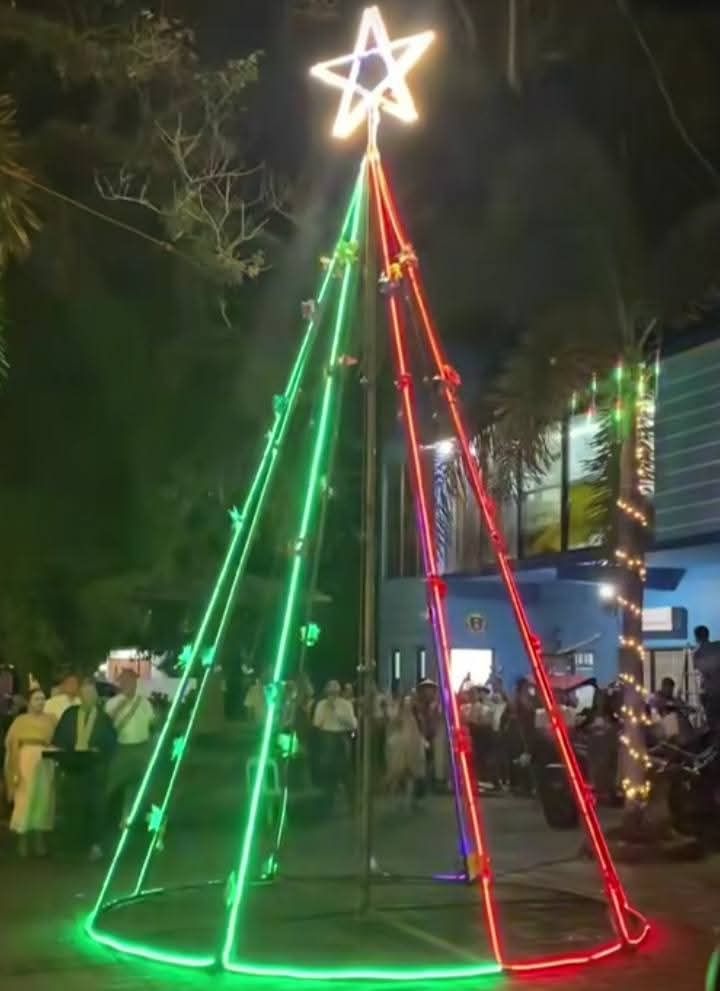



What was expected to kindle festive cheer in this small town has instead ignited a wave of criticism online.
The recently unveiled Christmas tree in the municipal plaza has gone viral but not for its grandeur, rather for what many netizens describe as a “shameful” display that reflects poor priorities and wasted resources.
On social media platforms, comments ranged from disappointed to scathingly sarcastic.
A widely shared post on Facebook labeled the tree “bagat kalansay” (skeletal), lamenting what looked more like a bare frame hastily adorned with minimal lights than a holiday symbol meant to uplift spirits.
Another user mockingly called the event “Christmas gas-lighting,” suggesting that the town leadership was using holiday aesthetics to mask deeper issues of underfunded services, neglected infrastructure, and community needs.
Some defenders attempted to reframe the narrative around simplicity and modesty.
One Facebook post described the tree as a “simple” but sincere effort, a stark contrast to flashy and expensive holiday displays elsewhere.
Yet for many concerned residents and netizens, the modesty feels less like humility and more like half-heartedness.
A tone-deaf choice at a time when communities are still grappling with recovery from calamities, tight local budgets, and real, pressing needs.
The controversy of the tree is not just about aesthetics, it is about governance and symbolism.
In a region where holiday trees have been used with pride and creativity (such as the praised bamboo-based Christmas tree of Palo, Leyte) to reflect environmental values and community resilience, the stark failure of Capoocan’s tree sends a different message of mismanaged funds, lack of vision, and disregard for public feedback.
As the festive season unfolds, the social media uproar in Capoocan may serve as a warning for other municipalities: when symbolism overshadows substance, even Christmas lights can dim public trust.
#WeTakeAStand #OpinYon #OpinYonNews #Christmas #OpinYon8