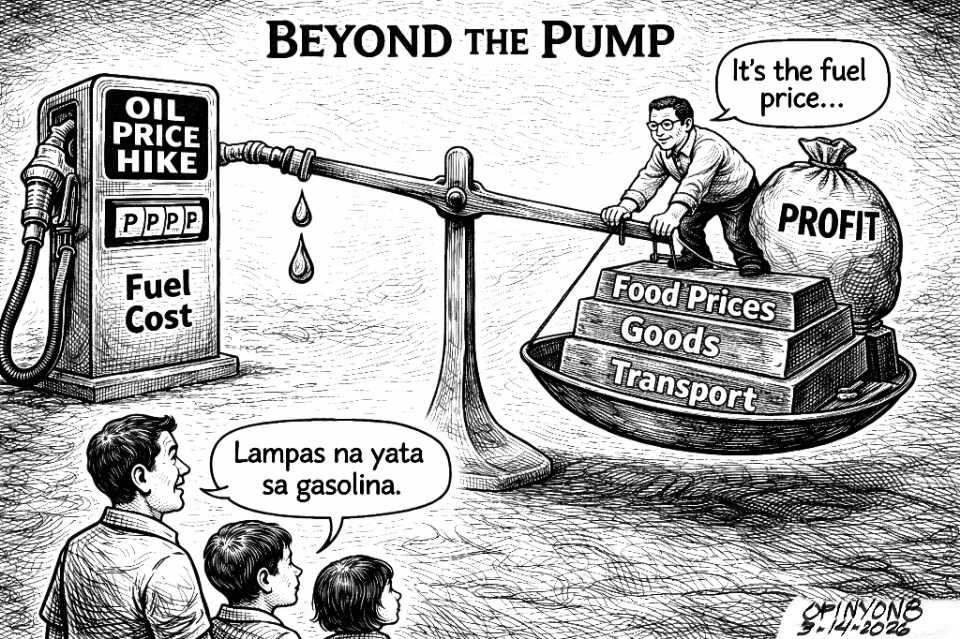

Oil price increases rarely remain confined to fuel stations. Once global oil prices rise, the shock travels rapidly through supply chains, transportation networks, and retail markets.
For businesses, the surge in fuel costs is not merely a challenge but also a strategic moment that can reshape pricing decisions and profit margins.
Fuel is a foundational input in modern economies. It powers delivery trucks, fishing vessels, farm equipment, factory machinery, and public transportation.
When oil prices climb, operational costs inevitably follow. Businesses, therefore, often respond by raising prices to protect margins. In principle, this adjustment is economically rational.
However, the dynamics of price transmission reveal a more complex picture. Cost increases tend to move quickly through the supply chain, while cost decreases move far more slowly.
Economists often describe this as the “rockets and feathers” phenomenon: prices shoot up like rockets when costs rise but drift down like feathers when costs fall.
This asymmetry creates opportunities for businesses to maintain higher prices even after the initial pressure eases.
Another factor is information imbalance. Consumers rarely know the precise share of fuel costs embedded in the final price of goods.
Because fuel expenses are difficult to verify, businesses can justify broader price adjustments under the general label of “higher operating costs.”
In highly competitive markets this effect may be limited, but in sectors with fewer players or weak regulatory oversight, the room for price expansion widens.
Expectations also play a powerful role. When oil price hikes dominate headlines, inflationary expectations rise. Businesses anticipate higher costs across the economy and adjust prices preemptively.
In doing so, some firms may not only cover current expenses but also buffer themselves against future uncertainty.
The key issue is not whether businesses should adjust prices, because they must. The issue is proportionality and transparency.
Without careful monitoring and competitive pressure, oil price shocks can become catalysts for broader price escalation that extends beyond actual cost increases.
In the end, oil price hikes reveal more than energy volatility. They expose how pricing power, market structure, and consumer perception interact, often determining who ultimately absorbs the cost and who quietly benefits from it.
#WeTakeAStand #OpinYon #OpinYonNews