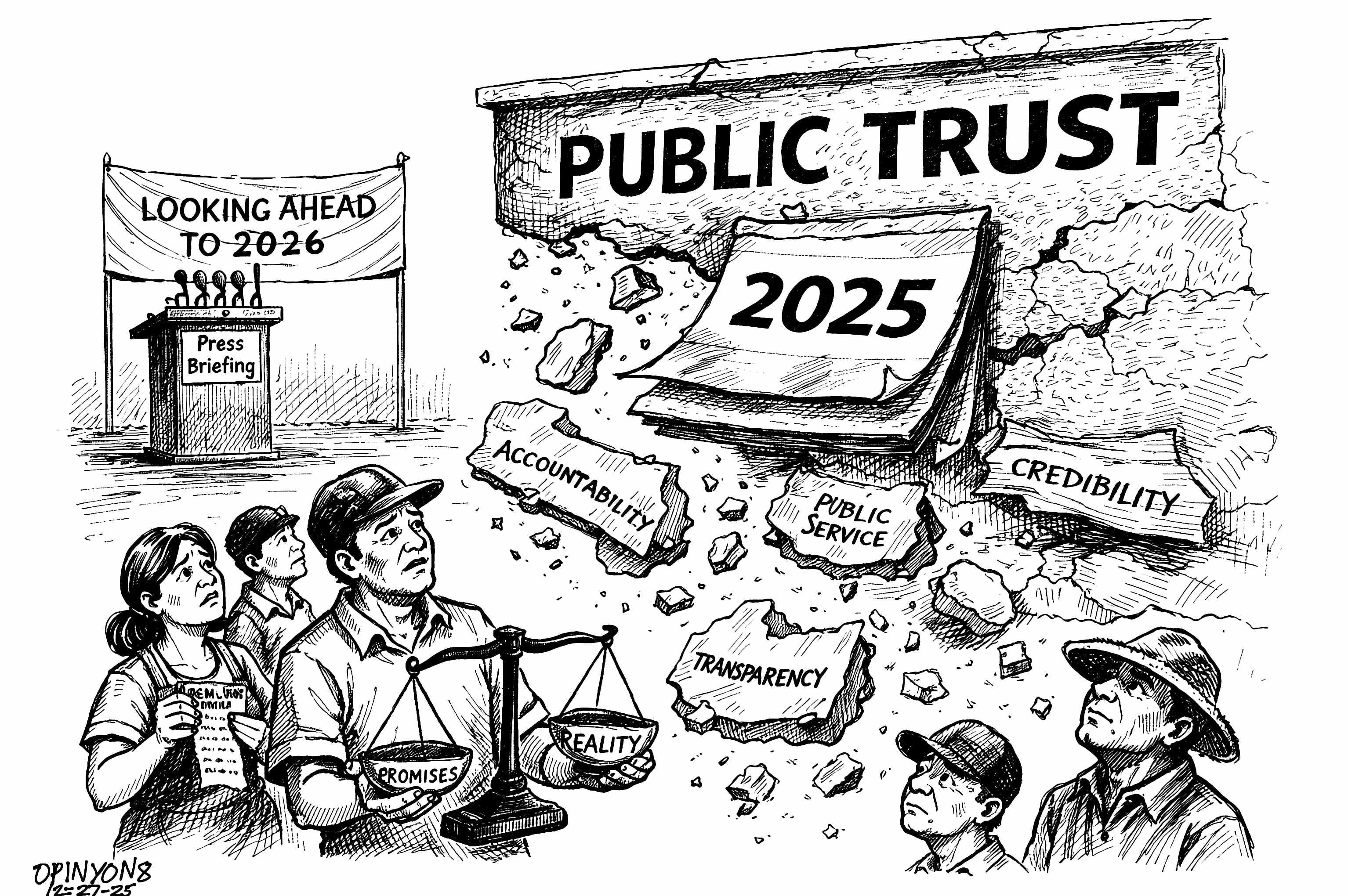

As 2025 draws to a close, Filipinos are left reflecting not on achievements but on the widening gap between government promises and public reality.
Once again, the year has ended with accountability largely absent, and citizens questioning whether those entrusted with public service truly serve the people.
Scandals, delayed projects, and unresolved issues have dominated headlines, leaving ordinary Filipinos frustrated and disillusioned.
Trust, once a fragile yet vital bond between the state and its people, has eroded further.
Public confidence is not merely about policy or governance, it is about integrity, transparency, and a sense that leaders answer to the citizenry rather than political expediency.
Instead, repeated lapses have reinforced a perception of impunity and negligence.
Programs meant to alleviate poverty, improve healthcare, and address corruption have too often fallen short, leaving the most vulnerable segments of society to bear the consequences.
Looking ahead to 2026, the stakes are high. The Philippines faces critical challenges. rising inflation, climate vulnerabilities, infrastructure gaps, and a need for more robust economic recovery post-pandemic.
Political campaigns loom, and the decisions made now will shape both governance and public perception.
Without substantial reform and tangible accountability, citizens’ trust will likely continue to wane, further destabilizing an already fragile social contract.
The coming year demands more than rhetoric, it demands action.
Lawmakers and public officials must recognize that trust is earned through transparency and responsiveness, not merely invoked during election season.
Filipinos deserve leaders who confront issues head-on, prioritize public welfare over self-interest, and acknowledge mistakes when they occur.
As 2026 approaches, the question remains: will the government rise to restore faith, or will it let another year slip by, leaving citizens once again disappointed?
#WeTakeAStand #OpinYon #OpinYonNews