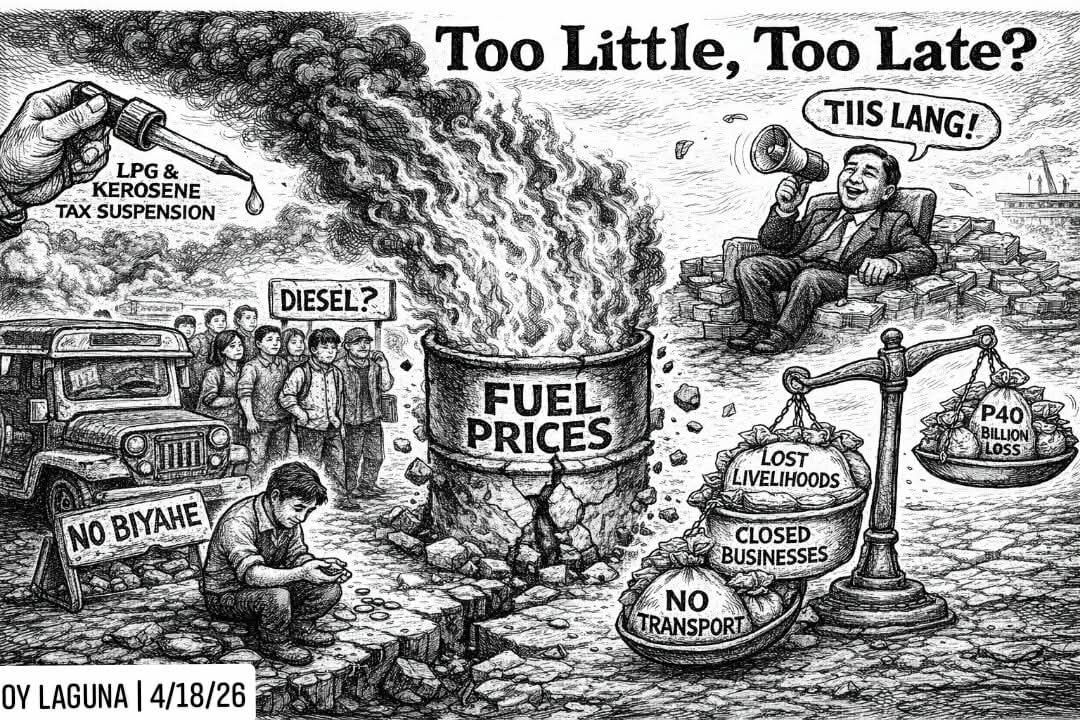

The decision of the administration of President Ferdinand "Bongbong" Marcos, Jr. to suspend excise taxes on certain gasoline products came off as "too little, too late."
The decision of the administration of President Ferdinand "Bongbong" Marcos, Jr. to suspend excise taxes on certain gasoline products came off as "too little, too late."
To borrow a unique Filipino term, the move came across to Filipinos still struggling with high prices of petroleum products as "mema" – purely for show.
And why else would it be for show?
Simple: the suspension of excise taxes was limited to two gasoline-based products, liquefied petroleum gas (LPG) and kerosene.
Notably, the suspensions exempted the main petroleum products such as gasoline and diesel, the mainstay of our public transport sector.
And it comes amid reports that some transport companies have been forced to suspend operations due to high prices of diesel, jeopardizing the lives of their commuters.
To add insult to injury, several members of the President's financial team have closed their ranks against calls by multiple sectors to suspend excise taxes and value-added tax (VAT) on oil products.
Here's their ready statistics: the government could lose up to P40 billion in three months should it suspend excise taxes on gasoline products.
But even that is a relatively small amount compared to the trillions in lost economic opportunities, closed shops, drivers who were forced to halt operations - the cumulative impact of the government's stubbornness and short-sightedness.
As a Laguna solon so perfectly put it, the government has continually told the people to endure sacrifices amid the oil crisis – so why is it afraid to make its own sacrifices?
Or, to borrow a phrase that has become popular in the 2000’s, why can’t government officials “moderate their greed”?