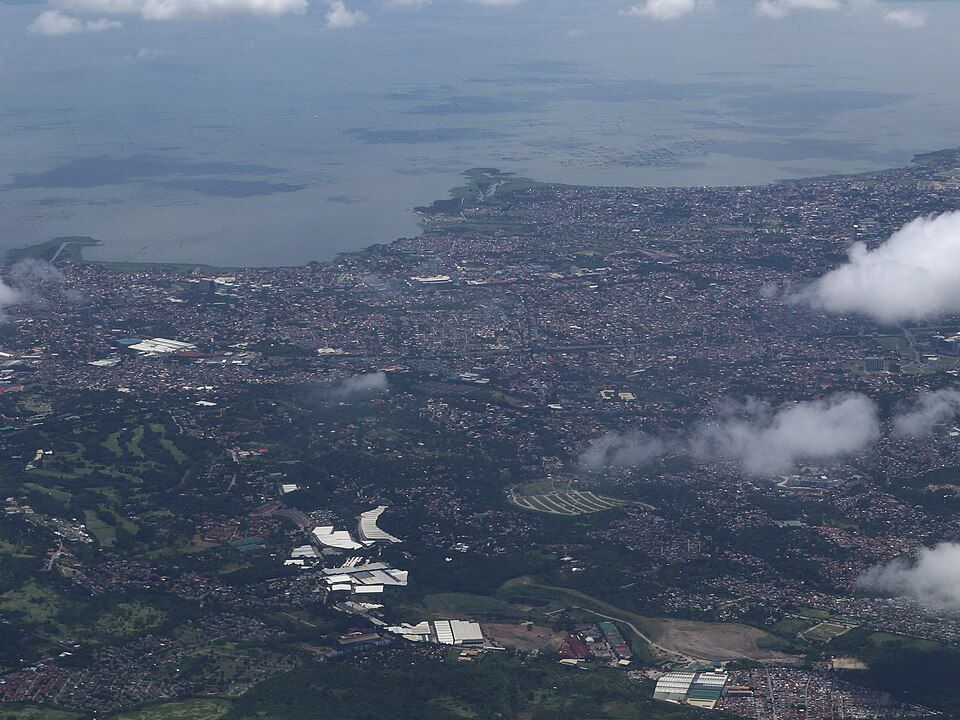

People move in two directions. Every day, people travel toward Metro Manila for work, school, and opportunities. At the same time, others move south toward Laguna, seeking more space, quieter communities, and an escape from the capital’s congestion.
For years, Laguna has served as that escape. Its proximity to Metro Manila allows people to remain connected to the capital while offering a less dense environment to live in.
But as more people, businesses, and industries move south, Laguna is beginning to face an uncomfortable question: what happens when the very place people escape to begins to resemble the place they escaped from?
The escape
Laguna’s appeal is partly rooted in its location, as the province is conveniently and almost strategically positioned near southeast of the Metro, with its major highways (e.g. South Luzon Expressway) making urban services relatively accessible without requiring people to live within the metropolitan’s dense environment.
For someone who seeks a quieter life outside the fast-paced Metro, Laguna offers a strong compromise: the convenience of the province’s proximity to the capital without squeezing oneself into its crowded corners.
But being located within the center of a highly industrialized CALABARZON region, the province not only attracts people, but also businesses and corporations. And so, the same accessibility that made Laguna attractive is also what makes it vulnerable to the disproportionate speed of rapid development.
From escape to trap?
Laguna is no longer simply a residential alternative to Metro Manila. Its cities and municipalities are increasingly becoming economic centers of their own.
This is reflected in the province's economic output, with Laguna being the top contributor to the CALABARZON region’s gross domestic product (GDP). The Philippine Statistics Authority (PSA) reported a record of P1.14 trillion, up from the P1.08 trillion the previous year, cementing the province’s top spot among other provinces in the region in 2024, and third on the national ranking with a 4.9 percent share of the country’s GDP in 2025.
These numbers matter not merely because of the zeroes they contain, but because they reflect that the province is becoming a destination not only for living, but also for commercial production and businesses, and this shift matters because it changes how people use space.
More businesses require more workers. More workers require housing and transportation. Businesses and residential developments require land, while growing communities require roads, utilities, and other infrastructure.
In other words, the same growth that gives Laguna economic opportunities also creates pressure on the systems meant to support that growth.
The ‘Next Metro’ problem
Laguna’s own Provincial Development and Physical Framework Plan 2021–2030 recognizes the province’s continuing development, particularly along growth corridors connected to the South Luzon Expressway. These areas have attracted businesses, manufacturing companies, and commercial establishments.
As commercial and residential areas expand, land becomes increasingly valuable, and for a province with an established agricultural sector, this creates a difficult balance. Economic expansion may improve livelihoods for some while reducing the space available for agriculture and changing the character of communities that have long depended on the land.
Transportation also presents another challenge. More businesses and residents mean more movement. Without sufficient public transportation and infrastructure, economic growth can translate into heavier traffic and longer travel times.
The irony is difficult to ignore: people may move to Laguna to escape Metro Manila’s congestion, only to encounter yet another replica of the same problem.
No one is to blame, but good foresight is non-negotiable.
The problem begins when development grows faster than the infrastructure, transportation systems, and land-use policies needed to support it.
Metro Manila provides a warning.
Decades of urban expansion have produced economic opportunities, but they have also produced severe congestion, heavy dependence on private vehicles, pressure on public transportation, and the loss of open spaces.
Laguna does not have to repeat all of these problems before recognizing them as problems – it should not have to choose between remaining a provincial escape and becoming an economic center, because it can be both. It still has the opportunity to plan ahead.
As the province is set to be the next major economic center in the country, it should first make sure it does not become the next Metro Manila in all the ways that people are trying to escape.
(Sherlyn Zabate)
#OpinYonLaguna #LagunaNews