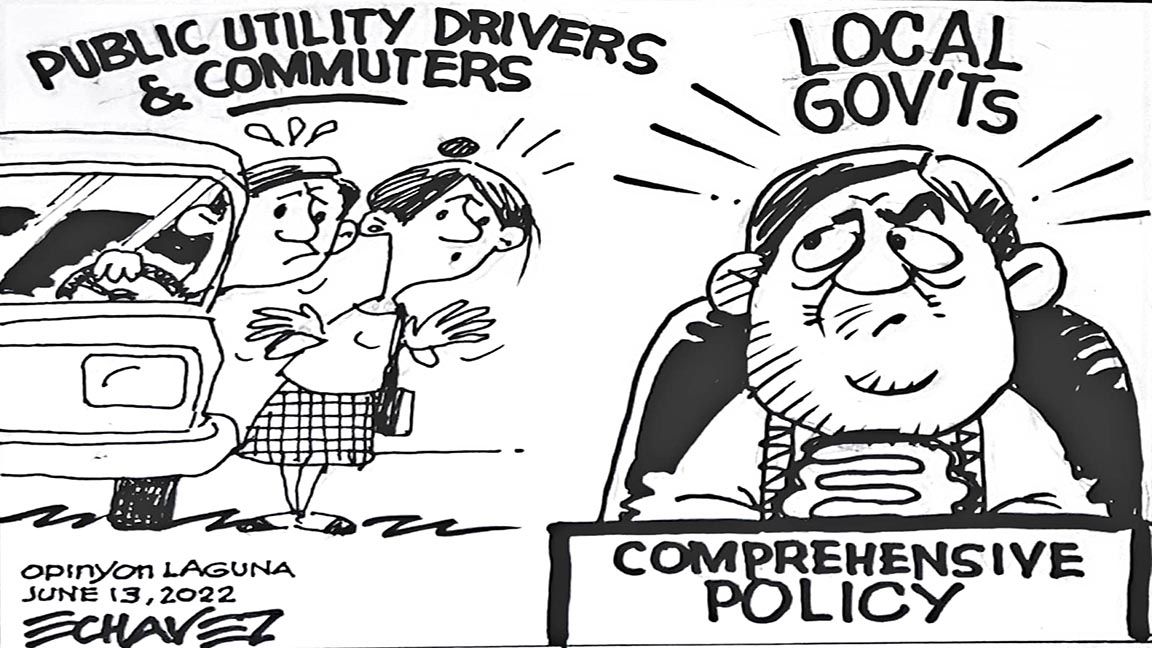

We don’t want to be doomsayers here, but here’s a blunt fact: the current rise in the price of oil products is already creating a domino effect that will directly impact commuters in Laguna province.
Recently, there have been reports of public utility drivers in the province being forced to stop plying their routes and look for other sources of income.
The reason: the recent series of oil price hikes, coupled with low passenger demand – even as economic sectors reopened after two years of restrictions due to the Covid-19 pandemic – has proved to be a “death blow” for many PUV drivers whose livelihood were also affected by the pandemic.
The result: commuters who have also suffered due to the lack of reliable public transportation during the pandemic may find their commute more stressful than ever.
The Land Transportation Franchising and Regulatory Board (LTFRB) has responded by a token one-peso provisionary fare hike for jeepneys in Calabarzon region. But many believe this measure is “too little, too late” to help our jeepney drivers.
And if we believe officials from the Department of Energy, the price of oil products is expected to rise even further – and an official’s pronouncement that they hope that the current price won’t zoom up to P100 per liter is optimistic at best, but unrealistic at worst.
Local governments in Laguna province should immediately make a concerted effort to stave off the domino effect of the current oil price hike – and we’re not just talking about providing more aid to drivers or deploying additional vehicles to help out commuters.
What is needed here is a comprehensive policy that ensures the continuity of our public transport especially as our businesses recover from the economic impacts of the two-year-long pandemic.