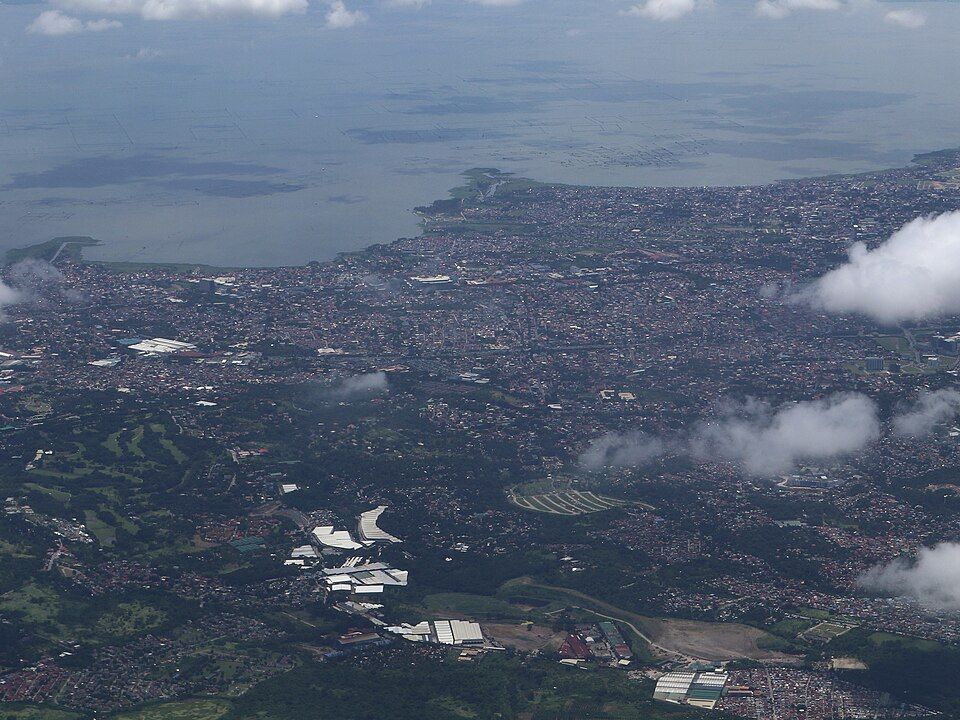

Is Calabarzon fast shedding its "taga-bundok" at "probinsyano" stereotypes?
Almost three-fourths of Calabarzon's residents are now considered to be "urban" residents, according to latest data released by the Philippine Statistics Authority (PSA).
The data was compiled by PSA as part of its "Compendium of Philippine Environment Statistics 2016-2025," which underscored the rapid changes in the economic and social landscape in the Philippines in the past decade.
Rapid growth
Citing data collected from past censuses in 2010, 2015, 2020 and 2024, PSA noted that the level of urbanization in the Calabarzon region reached 73.1 percent in 2024 - a 13.4-percent increase compared to the 59.7 percent recorded in 2010.
This is equivalent to 12.3 million Calabarzon residents considered as living in an urban environment, compared to just over 7.5 million in 2010.
The growth of the region's urban population also exceeds the national average of 9.9 percent between 2010 and 2024.
On the other hand, the region's rural population declined by 13.3 percent - from 40.3 percent (5.08 million) in 2010 to just 27 percent (4.56 million) in 2024.
While the PSA did not cite reasons for this trend in urbanization, the rapid rise of urban areas in Calabarzon, particularly in Laguna and Quezon provinces, is indicative of a possible trend towards "megalopolis," or an urban belt from San Pedro City in Laguna to Lucena City in Quezon.
Improving standards of living?
This growing trend towards urbanization has also resulted in a gradual improvement in living standards in the region, according to data cited by the PSA.
For instance, the number of households with access to improved water supply in the region rose from 87.90 percent in 2011 to 98.6 percent in 2024.
This meant that 4.415 million households in the region now have access to improved water supply in 2024.
Still, that number remains subjective as in the case of Laguna and Quezon provinces, where households served by PrimeWater Infrastructure Corporation (now Hiraya Water Corporation) have long complained about poor water service.
The rapid urbanization has also resulted in the growth of motor vehicles in the region.
For instance, the number of private vehicles in the region rose from 1.01 million in 2016 to 2.08 million in 2024.
The numbers also indicated a slow, but rising growth in the number of electric vehicles in the region – from just over six vehicles in 2016 to 1,942 in 2025.
While urbanization has brought rapid economic development, particularly in these two provinces, this has also brought problems such as environmental degradation, increased risk of natural and man-made calamities, and increased strain among local government units in delivering basic services to their growing populace.
(OpinYon News Team)
#OpinYonLaguna