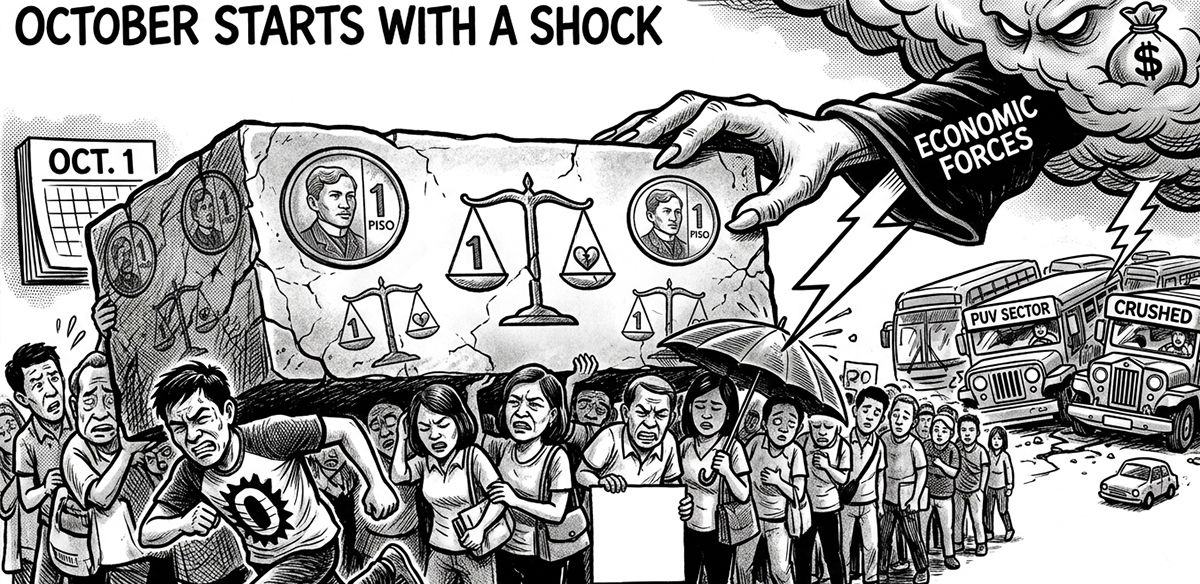

Commuters started the first half-week of October with a shock: fare hikes for almost all modes of public transport starting September 28.
A one-peso (minimum) fare increase may not sound much, but for ordinary workers still living under the shadow of high inflation rates, even a measly peso means a big difference between life and death.
For the average jeepney driver, on the other hand, every added peso on their daily fare also means a big difference between life and death for their own families.
To be fair, however, the transport industry as a whole has also borne the weight of the high prices of petroleum products, never mind the high costs of maintaining their units as they face intense pressure to “modernize” their units.
Recently, even the biggest bus operators in the Philippines put out an appeal to the President: if we don’t raise fares soon, we may be forced to stop operations.
Our transport industry is caught in a dilemma: continue operating at a loss, affecting the quality of their operations, or simply stop operations, risking the loss of their franchises – not to mention robbing a commuting public already suffering from lack of viable transportation options.
And all the while the national government has been reluctant to implement long-term measures such as temporarily suspending taxes on oil products.
The reason, after all, is too obvious: suspending taxes could rob (what a laughable thought) our leaders of the ready pipeline to transfer “maletas” of cash to their own pockets.
Not to mention that major transportation projects that had been the hallmark of the Duterte administration’s “Build, Build, Build” program are still years away from completion or are now facing budget cuts.
In the meantime, the ordinary public gets robbed again and again.
Robbed not only of their hard-earned pittance, but also of the right to a safe, efficient and reliable public transportation.
#OpinYonLaguan #Editorial #commuters